
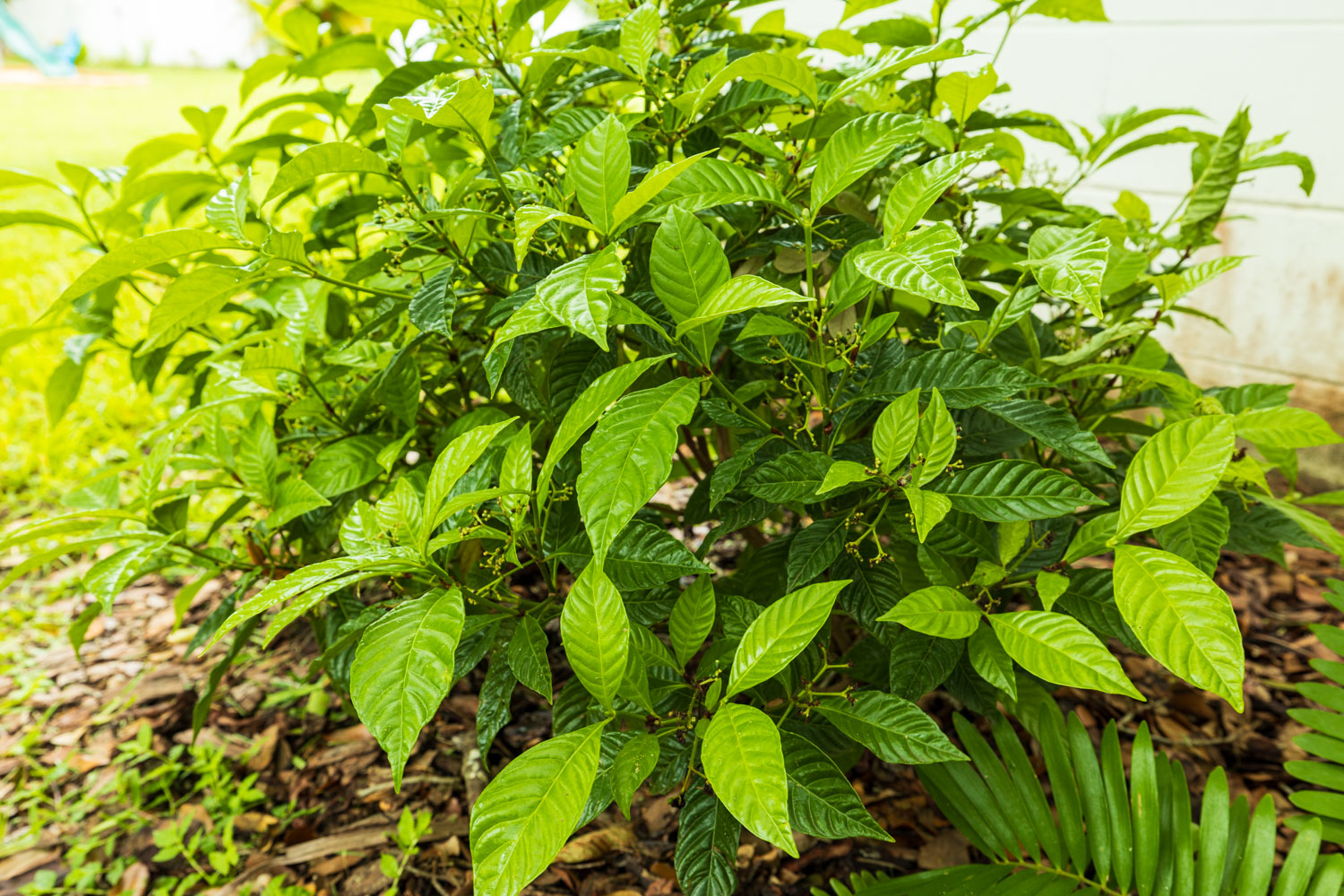
Wild Coffee (Psychotria nervosa)
Price range: $9.50 through $44.00
Wild Coffee (Psychotria nervosa) is a Florida-native evergreen shrub with glossy, deeply veined leaves, small white flowers, and red fruits that attract birds. Typically growing 4–6 feet tall and 3–5 feet wide, it thrives in partial to full shade and is suited to woodland understories, foundation plantings, informal hedges, and native landscape beds.
- Description
- Additional information
- Quick Care
- Sun & Shade
- Spacing & Companions
- Maintenance
- Sources
- Reviews (1)
Description
Wild Coffee (Psychotria nervosa)
Wild Coffee (Psychotria nervosa) is a Florida-native evergreen shrub valued for its glossy, deeply veined foliage, naturally rounded growth habit, and suitability for shaded landscapes. It is commonly found in Florida’s hammocks and woodland understories, where it grows beneath established tree canopies.
Small white flowers appear primarily during spring and summer, followed by red fruits that provide food for birds and other wildlife. Its dense foliage makes Wild Coffee useful for foundation plantings, informal hedges, native understory gardens, and mixed shrub borders.
For a closer look at this Florida-native shrub, including its use as a hedge, growing conditions, and relationship to commercial coffee, read Pennate’s article Florida’s Wild Coffee: Can You Grow It, Brew It, or Hedge It?
Plant Highlights
- Botanical name: Psychotria nervosa
- Common name: Wild Coffee
- Plant type: Evergreen woody shrub
- Native status: Florida native
- Light requirements: Partial shade to full shade
- Mature height: Typically 4–6 feet
- Mature spread: Approximately 3–5 feet
- Growth rate: Moderate under favorable conditions
- Foliage: Glossy, dark-green leaves with prominent veins
- Flowers: Small white flowers, primarily spring through summer
- Fruit: Red, berry-like drupes
- Wildlife value: Flowers attract insects; fruit provides food for birds
- Soil: Well-drained sandy or loamy soils with moderate organic matter
- Water requirements: Moderate during establishment; lower supplemental needs in suitable shaded conditions after establishment
- Drought tolerance: Moderate once established, particularly in shade
- Cold tolerance: Best suited to USDA Zones 9b–11; exposed plants may experience cold damage
Light Conditions
Wild Coffee performs best in partial to full shade. It is particularly suited to filtered light beneath oak canopies, palms, and other established trees. Bright indirect light generally supports dense foliage and a naturally rounded growth habit.
Plants can tolerate some direct morning sunlight, especially where soil moisture is adequate. Prolonged exposure to intense afternoon sun may cause leaf scorch, wilting, or reduced foliage quality.
Light conditions beneath trees can change throughout the year as sun angles and canopy density shift. Planting locations should be evaluated for their most exposed seasonal conditions rather than their appearance at a single time of day.
Mature Size and Growth Habit
Wild Coffee commonly reaches approximately 4–6 feet tall and 3–5 feet wide in cultivated landscapes. Mature dimensions vary with soil conditions, moisture availability, light exposure, and pruning.
The shrub naturally develops a rounded to broadly spreading form with dense foliage. Plants grown in deeper shade may exhibit a more open branching structure, while those receiving bright filtered light often develop fuller crowns.
Wild Coffee responds to selective pruning and can be maintained as an informal hedge or foundation shrub. Its natural form is generally better suited to loose, rounded plantings than tightly sheared geometric hedges.
Typical Nursery Sizes
Wild Coffee may be available in several nursery container sizes. The dimensions below are general planning estimates, not guaranteed measurements of available inventory. Actual plant height and fullness vary by grower, production conditions, and individual specimen.
| Container Size | Approximate Plant Height | Typical Application |
|---|---|---|
| 1 Gallon | 8–14 inches | Small plantings, understory establishment, and larger groupings |
| 3 Gallon | 18–24 inches | Residential landscape beds, foundation plantings, and shrub groupings |
| 7 Gallon | 30–36 inches or greater | Projects requiring larger initial plants and more immediate visual presence |
Container size describes the nursery production container, not a standardized plant height. Actual sizes and availability should be confirmed before ordering.
Plant Spacing
Spacing depends on whether Wild Coffee is intended to form a continuous shrub mass or remain visually distinct as individual plants.
- Mass plantings: Approximately 4–5 feet on center, allowing plants to develop toward their natural mature spread.
- Informal hedges: Approximately 3–4 feet on center where a more continuous planting is desired.
- Individual accents: Allow sufficient clearance for a mature spread of approximately 3–5 feet, accounting for nearby plants, walls, and walkways.
Closer spacing can create earlier visual continuity but may increase competition and maintenance requirements as plants mature. Final spacing should reflect the intended appearance and available growing space.
Water and Soil Requirements
Wild Coffee grows in well-drained sandy and loamy soils and generally benefits from organic matter and a protective mulch layer. It is naturally associated with woodland environments where fallen leaves and other organic materials help moderate soil moisture.
Newly installed plants require regular watering while their roots establish in the surrounding soil. Irrigation frequency depends on container size, soil texture, rainfall, temperature, and site exposure. A fixed 60- or 90-day watering period is not appropriate for every installation.
Once established, Wild Coffee can tolerate periodic dry conditions, particularly beneath shaded canopies. Plants exposed to more sunlight, reflected heat, or competition from established tree roots may require supplemental irrigation during extended dry periods.
Wild Coffee is not suited to prolonged standing water or persistently saturated root zones. Good drainage remains important even where regular irrigation is provided.
For additional information about irrigation following installation, see Pennate’s guide to the establishment period.
Flowers, Fruit, and Wildlife Value
Wild Coffee produces clusters of small white flowers, primarily during spring and summer. These flowers attract visiting insects and are followed by small fruits that gradually mature from green to red.
The red fruits are consumed by birds and contribute to the shrub’s value in native wildlife plantings. Fruit production varies with growing conditions, flowering success, and seasonal weather.
Wild Coffee is particularly useful in layered native landscapes where understory shrubs complement larger canopy trees and other shade-adapted vegetation.
For more information about the ecological functions of native plants, see Pennate’s guide to native host plants and pollinators.
Companion Plants
Wild Coffee combines well with other Florida-native plants that tolerate partial shade and similar soil conditions. Suitable companions depend on canopy density, soil moisture, and the available growing space.
- Coontie (Zamia integrifolia): A low-growing evergreen cycad suited to partial shade and well-drained soils. Its arching foliage provides textural contrast beneath Wild Coffee.
- Beautyberry (Callicarpa americana): A deciduous native shrub suited to woodland edges and areas receiving partial sunlight. Its seasonal purple fruit contrasts with Wild Coffee’s evergreen foliage.
- Simpson’s Stopper (Myrcianthes fragrans): An evergreen native shrub or small tree that can provide a taller structural layer in suitable partially shaded plantings.
Firebush (Hamelia patens) can be used nearby where the landscape transitions into brighter conditions, but it generally flowers more heavily with greater sunlight exposure and is not a direct substitute for a deep-shade companion.
Plant combinations should reflect the actual conditions of the site rather than botanical compatibility alone. See Pennate’s guide to designing with native plants for broader planting considerations.
Maintenance
Wild Coffee is a relatively low-maintenance shrub when planted in appropriate light and soil conditions. Its natural growth habit generally requires only occasional selective pruning.
Pruning: Remove damaged, dead, or crossing branches as needed. Light tip pruning can encourage branching and maintain a fuller appearance. Repeated heavy shearing is generally unnecessary and may produce an unnatural growth habit.
Growth rate: Wild Coffee grows at a moderate rate under favorable conditions. Annual growth varies considerably with plant maturity, shade, soil moisture, and seasonal temperatures, so a fixed number of inches per year should not be assumed.
Irrigation: Established plants typically require less supplemental irrigation in shaded conditions than in exposed locations. Extended dry periods may still require watering, particularly where mature tree roots compete for available moisture.
Mulching: Maintain a moderate layer of organic mulch over the surrounding soil to reduce weed competition and moisture fluctuations. Keep mulch away from direct contact with the main stems.
Rejuvenation: Older or leggy plants may benefit from selective removal of declining stems. Severe cutting to a fixed height should not be treated as routine maintenance and should be considered only when plant condition warrants it.
Frequently Asked Questions
Is Wild Coffee native to Florida?
Yes. Psychotria nervosa is native to Florida and occurs naturally in shaded woodland and hammock habitats.
Can Wild Coffee grow in full shade?
Yes. Wild Coffee is well adapted to shaded conditions, although very deep shade can produce a more open growth habit and reduce flowering and fruit production.
How large does Wild Coffee grow?
Wild Coffee commonly reaches approximately 4–6 feet tall and 3–5 feet wide in cultivated landscapes.
Is Wild Coffee evergreen?
Yes. Wild Coffee is generally evergreen in suitable Florida climates, although cold injury or environmental stress can cause temporary foliage loss.
Does Wild Coffee attract birds?
Yes. Its red fruits provide food for fruit-eating birds, while its foliage contributes cover within native shrub plantings.
Is Wild Coffee drought tolerant?
Established plants tolerate periodic dry conditions, particularly in shade. Prolonged drought or competition from nearby tree roots may increase irrigation requirements.
Can Wild Coffee be used as a hedge?
Yes. Its naturally rounded form makes it suitable for informal hedges and shrub borders. It is less appropriate for tightly sheared formal hedges.
Is Wild Coffee related to commercial coffee?
Wild Coffee belongs to the Rubiaceae family, which also includes commercial coffee plants. However, it is a different genus and is not a source of conventional coffee beans.
Additional information
| Size | 1 gallon, 3 gallon, 7 gallon |
|---|
Quick Care
Sunlight:
See the Sun & Shade tab for optimal light ranges.
Watering:
Water regularly for 3–4 months post-install, then only as needed. Frequency depends on species and exposure.
Growth Rate:
Varies by species — generally slow to moderate for Florida natives. Plan spacing accordingly.
Fertilization:
Most natives do not require supplemental fertilizer. If used, apply a slow-release product during active growth periods.
Sun & Shade
Light Preferences
Florida-adapted plants are categorized by light needs — from full sun to deep shade. This refers to the average amount of unfiltered sunlight the plant receives daily.
Filtered Light & Seasonal Shifts
Canopies often change throughout the year due to deciduous leaf drop or trimming. This can expose understory plants to increased light or UV, especially in dry winter months.
Visit our Sunlight Guide for more detail.
Spacing & Companions
Spacing
Spacing depends on the plant’s mature size and intended use:
- 🌿 Hedges & Screens: 2–3 ft apart
- 🌼 Informal Groupings: 3–5 ft apart
- 🌱 Specimen Placement: Allow space for mature canopy & airflow
Companion Planting
Consider pairing with species that share similar light and water needs. Plant-specific suggestions are included in each product listing.
Maintenance
Establishment & Watering
Most plants require consistent watering during the first 60–90 days after installation. Water slowly and deeply. Mulch 2–3 inches away from the stem to retain moisture and reduce weed competition.
Post-Establishment
Watering frequency should taper depending on species, location, and seasonal rainfall. Irrigation may be beneficial during dry spells or in high-exposure areas.
Trimming & Pruning
Shaping is optional. Florida-native plants respond well to light pruning for density or form. Avoid heavy shearing.
Sources
Show References
- Florida Native Yard – Judy Gillan & Craig N. Huegel
- Florida’s Best Native Landscape Plants – Gil Nelson
- Residential Landscape Architecture – Booth, Hiss, & LaGro
- Horticulture Professional Manual – FNGLA
Reviews
You must be logged in to post a review.
Related products
-
Croton ‘Gold Dust’ (Codiaeum variegatum)
Price range: $9.50 through $44.00Select options This product has multiple variants. The options may be chosen on the product page -
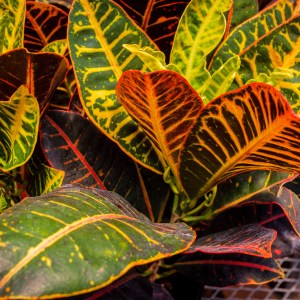
Petra Croton (Codiaeum variegatum ‘Petra’)
Price range: $19.00 through $32.50Select options This product has multiple variants. The options may be chosen on the product page -

Coontie (Zamia integrifolia)
Price range: $9.50 through $24.00Select options This product has multiple variants. The options may be chosen on the product page -
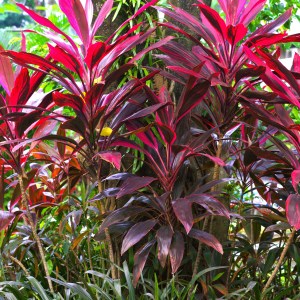
Cordyline fruticosa ‘Red Sister’ (Cordyline ‘Red Sister’)
Price range: $9.50 through $44.00Select options This product has multiple variants. The options may be chosen on the product page
Brent –
Test