
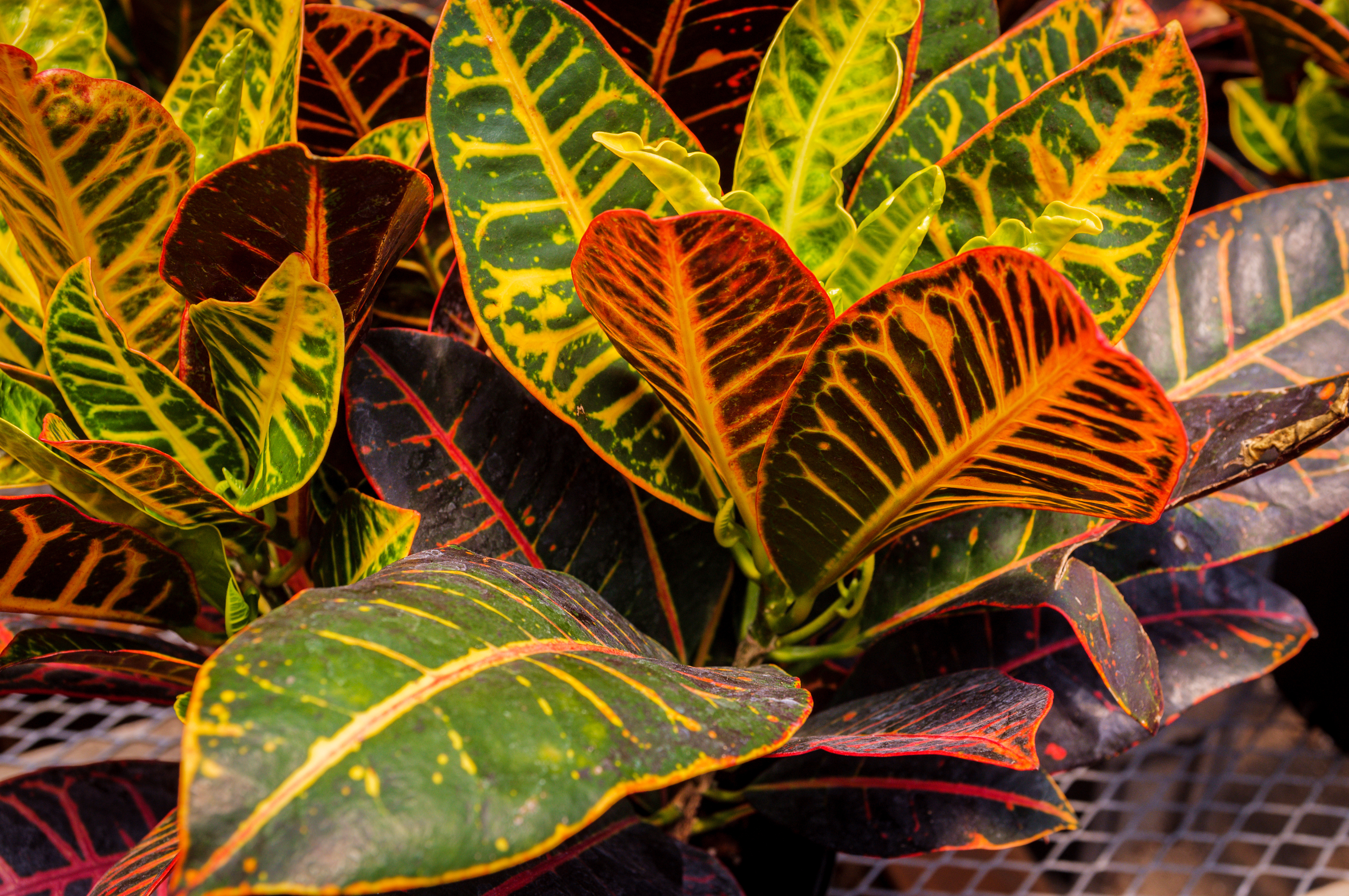
Petra Croton (Codiaeum variegatum ‘Petra’)
Price range: $19.00 through $32.50
Petra Croton (Codiaeum variegatum ‘Petra’) is a tropical evergreen shrub with broad, colorful leaves featuring yellow veins and shades of green, orange, red, and burgundy. Typically growing 3–6 feet tall and 3–5 feet wide, it performs in full sun to partial shade and is suitable for foundation plantings, tropical borders, informal hedges, and containers. Plant approximately 3–4 feet on center for grouped landscape applications. Frost-sensitive and harmful if ingested.
Description
Petra Croton (Codiaeum variegatum ‘Petra’)
Petra Croton (Codiaeum variegatum ‘Petra’) is a tropical evergreen shrub recognized for its broad, leathery leaves with prominent yellow veins and changing shades of green, orange, red, and burgundy. Its colorful foliage provides year-round ornamental interest in warm Florida landscapes.
Commonly growing approximately 3–6 feet tall and 3–5 feet wide, Petra is suited to tropical borders, foundation plantings, informal hedges, grouped shrub plantings, and large containers. It performs best in bright light, well-drained soil, and locations protected from damaging cold temperatures.
For a broader explanation of croton varieties, sunlight requirements, placement, and growing conditions, see Pennate’s Crotons in Florida: Care, Varieties, Placement & Growing Guide.
Plant Highlights
- Botanical name: Codiaeum variegatum ‘Petra’
- Common name: Petra Croton
- Plant type: Evergreen tropical shrub
- Native status: Non-native ornamental
- Light requirements: Full sun to partial shade
- Mature height: Commonly 3–6 feet
- Mature spread: Approximately 3–5 feet
- Growth rate: Moderate under favorable conditions
- Foliage: Broad, leathery leaves with green, yellow, orange, red, and burgundy coloration
- Flowers: Small and inconspicuous
- Soil: Well-drained sandy or loamy soils
- Water requirements: Regular during establishment; moderate once established
- Drought tolerance: Limited to moderate once established; prolonged dryness can cause leaf loss
- Cold tolerance: Frost-sensitive
- Florida suitability: South Florida and protected Central Florida locations
- Toxicity: Harmful if ingested; sap may irritate skin and eyes
Light Conditions
Petra Croton grows in full sun to partial shade. Bright light supports its characteristic foliage coloration, particularly the yellow, orange, and red pigments that develop as leaves mature.
In lower light, foliage may become predominantly green and growth may become more open. However, intense afternoon sunlight can scorch leaves, particularly on plants recently moved from shaded nursery production areas.
Morning sun with some afternoon protection is often suitable in exposed Central Florida landscapes. Plants already acclimated to full sun may tolerate greater exposure when soil moisture is adequate.
Sudden changes in light exposure can cause stress and leaf drop. Gradual acclimation is preferable when moving container-grown crotons from shaded conditions into direct sunlight.
For additional context, see Pennate’s guide to plant light requirements in Florida.
Mature Size and Growth Habit
Petra Croton commonly reaches approximately 3–6 feet tall and 3–5 feet wide in cultivated Florida landscapes. Older plants in consistently warm, favorable conditions may become larger if left unpruned.
The cultivar develops an upright, branching structure with large leaves concentrated along its stems. Younger plants often appear compact and densely foliated, while older specimens may develop more visible woody branching.
Petra can be maintained as an informal hedge or individual accent through selective pruning. Its broad leaves and colorful branching structure are generally better suited to natural or lightly shaped plantings than frequent close shearing.
Typical Nursery Sizes
Petra Croton is commonly produced in several nursery container sizes. The following dimensions are approximate planning estimates rather than guaranteed measurements of available inventory. Actual height, width, and fullness vary by grower and individual plant.
| Container Size | Approximate Plant Height | Typical Application |
|---|---|---|
| 1 Gallon | 10–14 inches | Small landscape accents, container arrangements, and larger group plantings |
| 3 Gallon | 18–24 inches | Foundation beds, tropical borders, and residential landscape installations |
| 7 Gallon | 30–36 inches or greater | Larger initial accents and plantings requiring greater immediate foliage presence |
Container size does not establish a standardized plant height. Actual plant dimensions, container options, and availability should be confirmed before ordering.
Plant Spacing
Petra Croton spacing depends on the desired appearance, mature plant spread, and whether the planting will be maintained as a continuous shrub grouping or as individual specimens.
- Mass plantings: Approximately 3–4 feet on center for a grouped foliage display.
- Informal hedges: Approximately 30–36 inches on center where a more continuous planting is desired and periodic pruning is anticipated.
- Individual specimens: Allow approximately 4–5 feet of lateral growing space for mature development.
- Foundation plantings: Position plants far enough from walls, windows, and walkways to accommodate mature spread and maintenance access.
Closer spacing creates earlier visual continuity but may increase competition and maintenance as plants mature. Wider spacing allows individual shrubs to retain their natural form.
Spacing should be measured from the center of one plant to the center of the next. Final placement should also account for nearby vegetation, access requirements, and the expected mature size of the planting.
Water and Soil Requirements
Petra Croton performs best in well-drained sandy or loamy soils with adequate moisture during active growth. It tolerates many Florida landscape soils, although extremely dry, compacted, or persistently saturated conditions can reduce plant vigor.
Newly installed plants require regular watering while roots establish in the surrounding soil. Irrigation frequency depends on container size, soil texture, rainfall, temperature, and sunlight exposure rather than a fixed establishment period.
Once established, Petra tolerates occasional dry conditions but may develop wilting, leaf curling, or premature leaf drop during prolonged drought. Plants receiving intense sunlight or growing near competing tree roots may require additional irrigation.
Excessive irrigation and poorly drained soils can contribute to root decline. The objective is adequate root-zone moisture without prolonged saturation.
A moderate layer of organic mulch helps reduce weed competition and moisture fluctuations. Keep mulch away from direct contact with the main stems.
For additional information about watering newly installed plants, see Pennate’s guide to the establishment period.
Foliage Color and Seasonal Appearance
Petra Croton is primarily grown for its large, variegated leaves. Younger foliage often displays prominent yellow veins against a green background, while older leaves may develop combinations of orange, red, and burgundy.
Leaf color varies with maturity, light exposure, and growing conditions. Individual plants may display different proportions of green, yellow, and red foliage even when grown in similar locations.
Unlike flowering ornamentals, Petra provides its primary landscape interest through foliage rather than seasonal blooms.
In warm conditions, the shrub generally retains its leaves throughout the year. Cold weather, abrupt environmental changes, and moisture stress can cause temporary leaf drop.
Cold Sensitivity and Florida Growing Conditions
Petra Croton is frost-sensitive and performs most reliably outdoors in South Florida and protected portions of Central Florida.
Exposure to frost or freezing temperatures may cause leaf discoloration, defoliation, and stem dieback. The severity of damage depends on the temperature reached, duration of exposure, wind conditions, and protection provided by surrounding structures or vegetation.
In the Tampa Bay region, protected locations near buildings or beneath open tree canopies may reduce exposure during brief cold events. However, these locations do not eliminate the possibility of freeze damage.
Container-grown plants can be moved into protected conditions during cold weather. After a freeze, allow time for surviving tissue to become apparent before removing damaged branches.
Companion Plants
Petra Croton combines well with tropical ornamentals that tolerate similar light, drainage, and moisture conditions. Companion plants can provide contrasting leaf shapes, textures, and heights without competing visually with Petra’s colorful foliage.
- Ti Plant (Cordyline fruticosa): Upright, strap-like foliage provides height and textural contrast in protected tropical beds. The linked Pennate article explains its light requirements and Florida growing conditions.
- Foxtail Fern (Asparagus densiflorus ‘Meyeri’): Fine-textured, arching foliage contrasts with Petra’s broad leaves. Allow sufficient space for its spreading root system and mature growth.
- Trinette Schefflera (Heptapleurum arboricola ‘Trinette’): Smaller variegated leaves provide a contrasting foliage pattern in suitable tropical plantings.
- White Bird of Paradise (Strelitzia nicolai): Large, upright leaves provide a taller structural element where sufficient space is available for the plant’s substantial mature dimensions.
- Gold Dust Croton (Codiaeum variegatum ‘Gold Dust’): Green leaves with yellow speckles provide a contrasting foliage pattern while retaining similar general growing requirements.
- Mammy Croton (Codiaeum variegatum ‘Mammy’): Narrow, twisted foliage creates a different texture alongside Petra’s broad leaves.
Plant combinations should be evaluated for mature size, sunlight, cold exposure, and available growing space. Plants with substantially different mature dimensions should be positioned accordingly rather than installed at uniform spacing.
Maintenance
Petra Croton generally requires moderate maintenance when planted in suitable conditions. Most routine care involves managing irrigation, removing damaged growth, and occasional pruning to maintain the desired form.
Pruning: Remove dead, damaged, or crossing branches as needed. Light pruning during active growth can encourage branching and help maintain a fuller appearance. Avoid removing excessive foliage from stressed plants.
Growth rate: Petra grows at a moderate rate under favorable conditions. Annual growth varies with temperature, light, moisture, nutrition, and plant maturity. A fixed number of inches per year should not be assumed.
Irrigation: Maintain consistent root-zone moisture during establishment. Established plants can tolerate occasional dryness but may lose leaves during extended dry periods.
Mulching: Maintain a moderate layer of organic mulch around the root zone, keeping it clear of the main stems.
Pest monitoring: Crotons may occasionally develop scale insects, mealybugs, spider mites, or thrips. Inspect foliage and stems when unusual discoloration, distortion, or leaf drop occurs.
Cold recovery: Following freezing weather, delay major pruning until the extent of damage becomes clear. Remove dead tissue after surviving growth can be identified.
For broader pruning principles, see Pennate’s guide to when and how to prune in Florida.
Toxicity and Handling
Petra Croton contains compounds that may cause irritation or illness if plant material is ingested. Its sap may irritate skin and eyes and can stain clothing.
Wear gloves when pruning or handling broken stems. Consider plant placement where children or pets may chew ornamental foliage.
Frequently Asked Questions
Is Petra Croton native to Florida?
No. Codiaeum variegatum is native to tropical regions of Asia and the western Pacific. Petra is a cultivated ornamental selection.
How large does Petra Croton grow?
Petra commonly grows approximately 3–6 feet tall and 3–5 feet wide in Florida landscapes. Older plants in favorable conditions may become larger.
How far apart should Petra Crotons be planted?
Approximately 3–4 feet on center is suitable for many grouped landscape plantings. Informal hedges may be planted approximately 30–36 inches on center where a more continuous planting is desired and pruning is anticipated.
Does Petra Croton need full sun?
No. Petra grows in full sun to partial shade. Bright light supports colorful foliage, although excessive afternoon exposure may damage leaves that are not acclimated to intense sunlight.
Why is my Petra Croton losing leaves?
Leaf drop may result from cold exposure, abrupt changes in light or location, drought, excessive irrigation, or other environmental stress. The cause should be evaluated before changing irrigation or pruning practices.
Can Petra Croton survive winter in Tampa Bay?
Petra can survive in protected Tampa Bay locations, but frost and freezing temperatures may cause significant damage. Long-term performance depends on site exposure and winter conditions.
Is Petra Croton suitable for hedges?
Yes. Petra can be used for informal hedges and grouped shrub borders. Its broad foliage and natural branching habit are generally better suited to lightly maintained forms than tightly sheared formal hedges.
Can Petra Croton grow in containers?
Yes. Petra can grow in containers with adequate drainage, suitable light, and regular watering. Container-grown plants can be relocated to protected areas during cold weather.
Is Petra Croton toxic to pets?
Yes. Its foliage and other plant parts contain irritating and potentially harmful compounds. Pets should not be allowed to ingest the plant.
Also Available In
Tropical Harmony Bundle includes Petra Croton alongside complementary tropical foliage plants, including Foxtail Fern and Ti Plant. Refer to the bundle listing for current contents, available sizes, and purchasing options.
Additional information
| Size | 1 gallon, 3 gallon, 7 gallon |
|---|
You must be logged in to post a review.
Related products
-

Foxtail Fern (Asparagus densiflorus ‘Meyerii’)
Price range: $11.00 through $19.50Select options This product has multiple variants. The options may be chosen on the product page -

Wild Coffee (Psychotria nervosa)
Price range: $9.50 through $44.00Select options This product has multiple variants. The options may be chosen on the product page -
Society Garlic (Tulbaghia violacea)
Price range: $9.50 through $44.00Select options This product has multiple variants. The options may be chosen on the product page -

Coontie (Zamia integrifolia)
Price range: $9.50 through $24.00Select options This product has multiple variants. The options may be chosen on the product page
Reviews
There are no reviews yet.