Florida’s Wild Coffee: Can You Grow It, Brew It, or Hedge It?
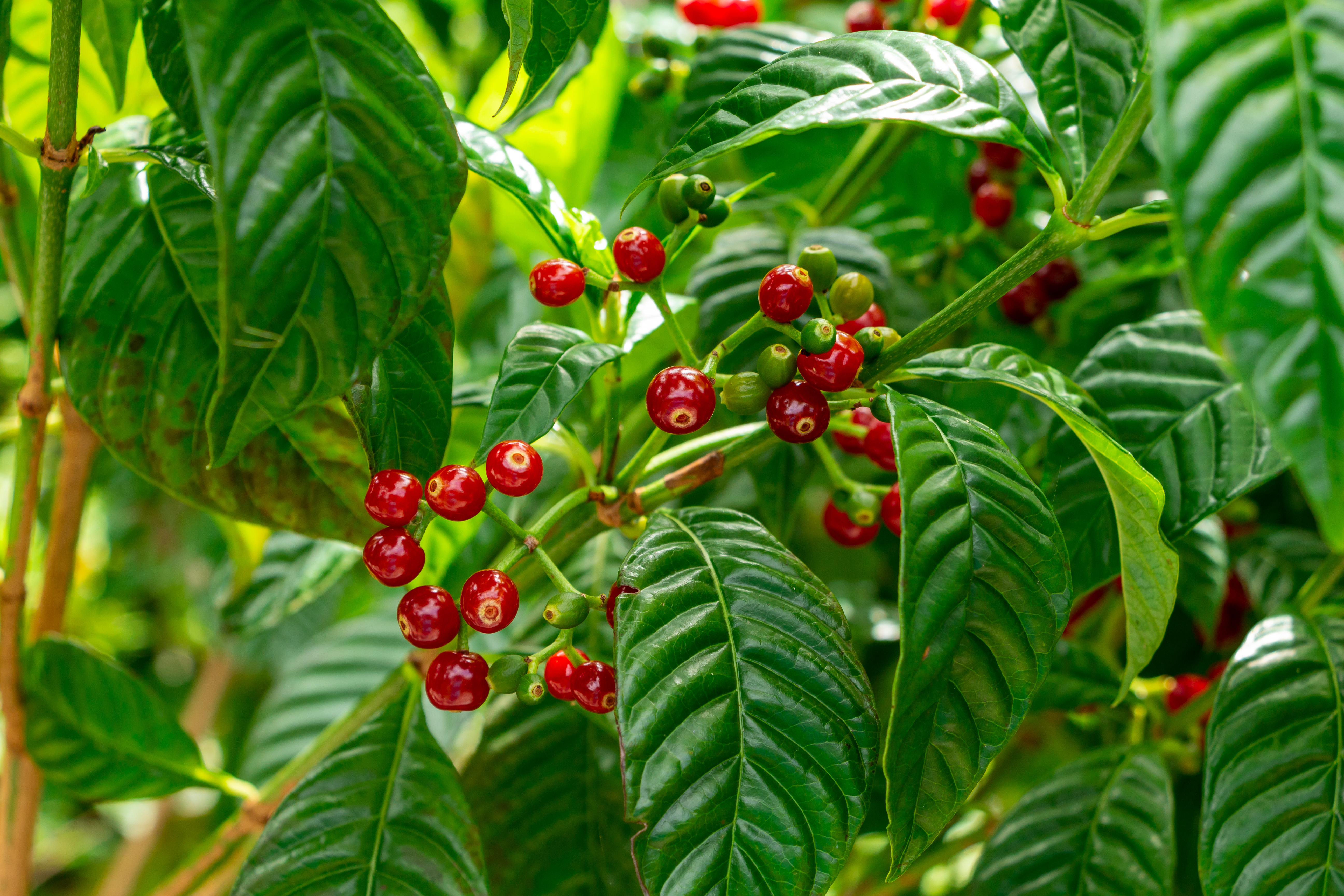
Florida wild coffee (Psychotria nervosa) is a native evergreen shrub with glossy green leaves, small white flowers, red fruit, and a natural preference for the shaded and partially shaded conditions found beneath Florida tree canopies. It can be used as an understory shrub, informal hedge, foundation plant, mass planting, wildlife plant, or simply as a good-looking evergreen where full-sun shrubs are the wrong fit.
Wild coffee is also a plant that gets oversimplified. It is native, but that does not make it appropriate for every Florida yard. It tolerates shade, but that does not mean every dark corner is a good planting site. It supports wildlife, but it is not a larval host plant for every butterfly that visits its flowers. And despite the name, planting one will not eliminate your coffee budget.
This guide covers how wild coffee grows, where it performs well, how much sun and water it needs, cold tolerance, pruning, wildlife value, propagation, common problems, landscape uses, companion plants, the differences between Florida’s native wild coffees, and what to consider when buying one.
Wild Coffee at a Glance
- Scientific name: Psychotria nervosa
- Common name: Wild coffee
- Family: Rubiaceae
- Origin: Florida native
- Plant type: Evergreen or cold-sensitive evergreen shrub
- Typical mature size: Commonly several feet tall and wide, with published ranges varying by source and growing conditions
- Light: Partial shade to shade is generally ideal; brighter conditions are possible depending on the site
- Growth rate: Moderate
- Flowers: Small white flowers
- Fruit: Red drupes
- Drought tolerance: Moderate once established
- Wildlife value: Flowers provide resources for insects and fruit is eaten by birds and other wildlife
- Common landscape uses: Understory planting, massing, informal hedge, foundation planting, specimen, border, and wildlife garden
What Is Florida Wild Coffee?
Psychotria nervosa is a native Florida shrub in the Rubiaceae family, the same botanical family that includes commercial coffee. It occurs naturally as an understory plant in protected Florida habitats, which helps explain why it is so useful in residential landscapes with filtered light and tree canopy.
The foliage is one of its best identifying features. The leaves are opposite, glossy, and prominently veined. Those impressed veins give the leaves a textured appearance that makes a mature plant visually interesting even when it is not flowering or fruiting. Small white flowers are followed by fleshy fruits that eventually become red.
That combination is part of the reason wild coffee works well in designed landscapes. Many plants are selected primarily for a short flowering period. Wild coffee earns most of its visual value from foliage and form, while flowers, fruit, and wildlife activity add seasonal interest.
Is Wild Coffee Actually Coffee?
Not in the sense most people mean when they say coffee. Wild coffee is related to commercial coffee botanically, but Psychotria nervosa is not the coffee crop grown to produce the caffeinated beans sold for drinking.
The common name comes from the resemblance of its fruits and seeds to coffee. Older references and gardening discussions sometimes mention using the seeds as a coffee substitute, but wild coffee should be valued as a landscape and ecological plant rather than as a backyard source of espresso.
Does Wild Coffee Contain Caffeine?
Wild coffee is not considered a source of the caffeine associated with commercial coffee. Being in the coffee family does not mean every member of that family produces the same compounds or has the same culinary use.
Are Wild Coffee Berries Edible?
Some horticultural references describe the fruit or seeds as having historical or limited human uses, but Pennate does not recommend treating landscape-grown wild coffee as a food crop. The much clearer role of the fruit in a landscape is as a wildlife resource, particularly for birds.
If edible landscaping is the objective, select plants with well-established food uses and grow them accordingly rather than choosing wild coffee because its common name sounds culinary.
How Do You Identify Wild Coffee?
The glossy foliage and pronounced leaf veins are usually the easiest features to notice. Psychotria nervosa has opposite leaves with veins that appear impressed into the leaf surface. Mature plants develop a woody, branching shrub form rather than behaving like an herbaceous perennial.
White flowers and red fruit can help with identification when present, but foliage is available for much more of the year. Scientific names become especially important when purchasing because Florida has more than one native species commonly described as wild coffee.
How Big Does Wild Coffee Get?
Wild coffee should generally be treated as a medium to large shrub. UF/IFAS has published mature dimensions around 4 to 10 feet tall and 4 to 8 feet wide for Psychotria nervosa, while other Florida references and more recent publications give somewhat different typical ranges. The variation is reasonable because mature size is affected by genetics, age, light, water, pruning, competition, and climate.
For landscape design, the exact maximum is less important than planning for a plant that can occupy meaningful space. A one- or three-gallon wild coffee may look small when installed, but the landscape should be designed around the mature shrub rather than the nursery container.
If a planting bed can only accommodate a shrub two or three feet tall without blocking a window or walkway, standard wild coffee may create a permanent pruning problem. A dwarf selection or a naturally smaller species may be a better fit.
Is There a Dwarf Wild Coffee?
Yes. Dwarf selections of Psychotria nervosa are available, including Little Psycho™ and other compact forms. These selections can provide the foliage character and many of the landscape benefits of wild coffee while remaining considerably shorter than the standard species.
Little Psycho™ is generally described as having a low, spreading form rather than developing into the larger upright shrub typical of the species. It can make sense near low windows, along the front of deeper planting beds, in smaller courtyards, or anywhere standard wild coffee would eventually overwhelm the available space.
Do not assume a plant is dwarf simply because it is currently sold in a small container. Look for the actual cultivar or selection name.
Does Wild Coffee Prefer Sun or Shade?
Wild coffee generally performs best in partial shade, filtered light, or shade. It is naturally an understory shrub, and that background is a useful guide when deciding where to plant it.
It can tolerate brighter conditions, and recent Florida horticultural references describe a fairly broad light tolerance. That does not mean every full-sun exposure will produce the same plant quality. A site receiving gentle morning sun and filtered afternoon light is very different from a bed receiving intense western sun reflected from pavement or a stucco wall.
Plants exposed to more sun may require different moisture conditions and can show more stress than plants in protected locations. When appearance matters, the entire microclimate matters more than the label “sun” or “shade.”
Can Wild Coffee Grow in Full Shade?
Yes. Shade tolerance is one of the main reasons wild coffee is useful in Florida landscapes. It can provide evergreen shrub mass beneath tree canopy and in other locations where many flowering shrubs become thin or perform poorly.
Very deep shade can still affect plant density and flowering. A plant growing in low light may develop a looser form than one receiving brighter filtered light. Shade also does not correct unrelated problems such as compacted soil, poor drainage, severe root competition, or inadequate establishment irrigation.
Can Wild Coffee Grow in Full Sun?
Wild coffee can tolerate substantial sun under some conditions, but full sun should not automatically be treated as its ideal exposure. If the site is hot, exposed, dry, surrounded by pavement, or subject to reflected afternoon heat, another shrub may provide more reliable performance.
This is one reason plant recommendations based only on a USDA zone and a sun icon can fail. Two properties in the same ZIP code can create very different growing environments.
What Soil Does Wild Coffee Prefer?
Wild coffee tolerates a relatively broad range of soils. UF/IFAS describes it as adaptable to acidic and alkaline conditions and to sand, loam, and clay. In Florida residential landscapes, however, drainage, moisture behavior, and root-zone disturbance are often more important than the soil category alone.
A sandy yard can still have compacted layers beneath the surface. A planting bed beside a downspout can remain much wetter than the surrounding property. Tree roots can remove moisture rapidly from an otherwise suitable bed. Construction fill can create conditions that bear little resemblance to the natural soil a few feet away.
Before planting, pay attention to how the location behaves after irrigation and heavy rain. If water remains around the root zone for long periods, or if the area dries almost immediately because of exposure and root competition, that information is more useful than simply knowing that wild coffee can grow in sandy soil.
How Much Water Does Wild Coffee Need?
Established wild coffee has moderate drought tolerance, but newly installed plants still need reliable establishment irrigation. A plant does not become drought tolerant the day it leaves the nursery.
Initially, most of the roots remain inside the original container root ball. That small volume can dry differently from the surrounding landscape soil. Irrigation needs to keep the root zone adequately moist while encouraging roots to expand into the surrounding soil.
As the plant establishes, irrigation can be reduced according to rainfall, season, soil, exposure, and plant response. The goal is not to keep an established native shrub permanently dependent on frequent irrigation if the site can support it without that input.
Is Wild Coffee Drought Tolerant?
Moderately. It is more accurate to call wild coffee moderately drought tolerant after establishment than to describe it as a plant that never needs supplemental water.
Drought performance also depends on exposure. A mature plant beneath a canopy with mulch over the root zone experiences a different moisture environment from the same species planted beside a west-facing driveway.
Should Wild Coffee Be Mulched?
Mulch can help moderate soil temperature, conserve moisture, suppress weeds, and add organic material as it breaks down. Apply it over the surrounding root zone rather than piling it against the stems or crown of the plant.
Mulch does not compensate for poor grading or chronic drainage problems. If the planting area stays saturated, adding more organic material on top does not address the underlying water movement.
Does Wild Coffee Need Fertilizer?
Wild coffee should not automatically be placed on a heavy fertilization program simply because it is a landscape shrub. Nutrient needs depend on the soil, plant condition, and site. If a plant is growing normally with healthy foliage, routine high-input fertilization may provide little benefit.
If foliage becomes chlorotic or growth is poor, first consider light, irrigation, drainage, root condition, soil chemistry, and other site stresses rather than assuming fertilizer is the answer. Similar symptoms can have very different causes.
Can Wild Coffee Grow in Zone 9?
Yes, but cold damage becomes a more important design consideration toward the northern edge of its range. Published Florida references differ somewhat on hardiness. Older UF/IFAS landscape guidance emphasizes warmer portions of Florida, while newer UF/IFAS material discusses wild coffee in Zones 9A through 11 and notes that prolonged freezes can cause dieback.
This is a good example of why a USDA zone should not be interpreted as a guarantee of appearance. A plant may survive a cold event but lose foliage or stems and require time to recover. A protected plant beneath canopy may also experience significantly less cold stress than an exposed specimen nearby.
Will Wild Coffee Survive a Freeze?
It can survive cold events, particularly once established, but the outcome depends on temperature, duration, wind, microclimate, plant maturity, and the severity of the event. Freeze damage can include leaf injury and stem dieback. Established plants may recover from the roots or undamaged wood after conditions warm.
In colder parts of Central and North Florida, place wild coffee where some protection exists if maintaining winter appearance is important. Tree canopy, nearby structures, and other vegetation can create meaningful microclimate differences.
Is Wild Coffee Salt Tolerant?
Wild coffee should not be treated as a highly salt-tolerant coastal shrub. Florida’s coastal environments vary enormously, and being native to Florida does not mean a species is adapted to direct salt spray or highly saline soils.
For properties exposed to significant salt spray, coastal wind, or saline flooding, use species with stronger documented tolerance for those conditions. Wild coffee may still work in protected coastal locations where direct salt exposure is limited.
When Does Wild Coffee Bloom?
Wild coffee produces clusters of small white flowers, with flowering occurring during the warmer growing season and potentially varying with location and conditions. The flowers are relatively understated compared with plants selected primarily for large blooms.
That is not necessarily a disadvantage. Wild coffee is usually selected for the combination of foliage, form, flowers, fruit, shade tolerance, and wildlife value rather than for one dramatic flowering event.
Does Wild Coffee Produce Berries?
Yes. The flowers are followed by fleshy fruits, botanically drupes, that mature to red. The red fruit contrasts well with the dark green foliage and provides a seasonal wildlife resource.
Are Wild Coffee Berries Messy?
Wild coffee is not generally considered a major nuisance-fruit tree, but fruit-bearing plants can drop ripe or damaged fruit. If the planting is immediately beside a highly maintained hardscape, pool deck, or other surface where any organic debris is objectionable, that should be considered when selecting the location.
In a mulched planting bed or naturalistic understory, the fruit is usually much less of a maintenance concern.
What Wildlife Does Wild Coffee Attract?
Wild coffee contributes both floral and fruit resources. Its flowers are visited by insects, including butterflies, while its red fruit is eaten by birds and other wildlife. The evergreen foliage also contributes physical structure within a layered planting.
It is useful to be specific about those relationships. “Pollinator plant,” “bird plant,” and “butterfly plant” describe different interactions, and a plant that provides nectar for an adult butterfly does not necessarily provide food for its caterpillars.
Does Wild Coffee Attract Atala Butterflies?
Wild coffee can serve as an adult nectar resource for Atala butterflies where Atalas occur, but it is not the Atala’s larval host plant. That distinction matters if the goal is to support the complete butterfly lifecycle rather than simply attract adults to flowers.
Atala caterpillars feed on cycads. In Florida landscapes, native coontie (Zamia integrifolia) is the key native host plant. Adult Atalas can visit other plants for nectar while their caterpillars depend on suitable cycad foliage.
That makes wild coffee and coontie an interesting landscape combination. Wild coffee provides a woody evergreen shrub layer, flowers, fruit, and adult wildlife resources. Coontie remains lower, adds a very different foliage texture, and provides the specialized larval resource required by the Atala.
If Atalas are part of the reason you are planting, read Atala Butterflies in Florida: Lifecycle, Seasonal Behavior, and the Coontie Connection. For the larger habitat picture, see How Butterfly Gardens Work in Florida Landscapes.
Is Wild Coffee a Butterfly Host Plant?
Do not assume that it is a larval host simply because butterflies visit its flowers. Nectar plants feed adults. Host plants provide the specific plant material required by caterpillars. Some plants perform both roles for different insects, but the terms are not interchangeable.
A stronger butterfly garden combines appropriate host plants with nectar resources, shelter, suitable microclimates, and enough seasonal diversity to provide resources beyond a single bloom period. Pennate covers those relationships in more detail in Native Host Plants and Pollinators.
How to Use Wild Coffee in a Florida Landscape
Wild coffee is versatile, but its best uses take advantage of what the plant naturally does well: forming evergreen shrub mass in protected, partially shaded landscapes.
Understory Planting
This is one of the most natural uses for wild coffee. Beneath established trees, it can create a middle layer between the canopy and lower groundcovers, grasses, ferns, cycads, or perennials. That vertical layering gives a landscape more depth than a tree surrounded by mulch and scattered low plants.
Informal Hedges and Screening
Wild coffee can be planted in groups to create screening. If allowed to retain a relatively natural form, it produces a softer result than a tightly sheared hedge. It can also tolerate pruning when a more controlled appearance is desired.
Plan the spacing around the mature plant and the desired final appearance. Installing shrubs very close together creates faster initial coverage but also increases future competition and pruning requirements.
Foundation Planting
Wild coffee can work near a home where the exposure is appropriate and the bed has enough depth for the mature plant. Pay attention to windows, walkways, utility equipment, roof runoff, and access requirements. If the shrub will have to be repeatedly cut back simply to keep those features usable, select a smaller plant.
Specimen Planting
A mature wild coffee can stand on its own as an accent, particularly in a shaded garden where glossy broadleaf foliage provides contrast with finer-textured plants.
Mass Planting
Repeating wild coffee can create a strong evergreen background rather than a collection of unrelated individual shrubs. This is particularly effective in native designs where some visual repetition helps the landscape read as intentional rather than accidental.
Wildlife Gardens
The combination of flowers, fruit, evergreen foliage, and compatibility with other Florida native plants makes wild coffee useful in wildlife-oriented landscapes. It works best as one component of a larger planting rather than as the entire habitat strategy.
Can Wild Coffee Grow in a Container?
Wild coffee can be grown in a sufficiently large container, particularly compact selections, but container culture changes the plant’s water and root environment. Containers dry more quickly than in-ground soil, restrict root volume, and can experience greater temperature fluctuations.
For long-term container use, dwarf forms generally make more sense than repeatedly pruning a standard wild coffee to fit a small pot. Drainage is essential, and irrigation will need closer attention than it would for an established in-ground plant.
How Far Apart Should Wild Coffee Be Planted?
Spacing depends on the intended result. Plants intended to form a continuous screen can be placed closer than specimens that should remain individually visible. Standard wild coffee also requires considerably more space than a dwarf selection.
Consider mature width, desired time to coverage, access for maintenance, nearby structures, adjacent plants, and whether the plants should eventually touch. A commonly repeated spacing number is less useful than deciding what the planting is supposed to look like five years after installation.
Can Wild Coffee Be Used as a Hedge?
Yes. Wild coffee can be used as a hedge or screen and can tolerate pruning. It is especially attractive where a broadleaf evergreen hedge is needed in partial shade.
It does not have to be maintained as a tightly clipped rectangle. Allowing some natural branching and variation can reduce maintenance and preserve more of the plant’s natural character.
How Do You Prune Wild Coffee?
Prune to remove damaged or conflicting growth, control size when necessary, or maintain the form intended by the design. Selective pruning generally preserves a more natural appearance than repeatedly shearing the entire outer surface.
Wild coffee can tolerate more formal pruning if a hedge is the objective. The maintenance requirement should be considered during design. A plant that constantly grows into a walkway or window is usually telling you that the mature size and available space were poorly matched.
Does Wild Coffee Have Pest or Disease Problems?
Wild coffee is generally considered a relatively durable landscape plant. Scale insects can occur, and like almost any shrub it can experience problems when stressed. Pest presence should be evaluated together with the growing conditions rather than treated as an isolated issue.
If a plant is declining, check irrigation, drainage, planting depth, root condition, light exposure, cold damage, physical injury, and other site stresses before assuming an insecticide or fertilizer is the solution.
Why Are My Wild Coffee Leaves Turning Yellow?
Yellow foliage is a symptom, not a diagnosis. Possible causes include excessive exposure, moisture stress, root problems, nutrient availability, soil conditions, cold injury, transplant stress, or normal loss of older leaves.
Look for patterns. Is yellowing concentrated on older or newer foliage? Did it begin after installation, a freeze, an irrigation change, or a period of heavy rain? Is the plant in much stronger sun than nearby healthy wild coffee? Those observations help narrow the cause more effectively than treating every yellow leaf the same way.
Why Is My Wild Coffee Losing Leaves?
Leaf loss can follow transplant stress, drought, excessive moisture, cold, abrupt environmental changes, or other root and foliage stresses. In Central and North Florida, cold weather can cause substantial seasonal injury even when the plant ultimately survives.
Before removing a damaged plant after a freeze, check whether stems or the base remain alive and allow enough time for spring recovery to become apparent.
How Is Wild Coffee Propagated?
Wild coffee can be propagated from seed and through vegetative methods, but seed propagation is not always as immediate or uniform as older gardening summaries imply. Recent UF/IFAS work on Florida wild coffees discusses seed dormancy and variable germination behavior, including differences associated with collection timing and treatment.
For homeowners primarily interested in establishing a landscape, nursery-grown plants provide a much more predictable starting point. Propagation becomes more relevant when producing larger quantities, preserving particular genetics, or growing plants for restoration and horticultural purposes.
Can Wild Coffee Be Transplanted?
Container-grown wild coffee is routinely transplanted into landscapes. Moving an established in-ground shrub is more disruptive because a portion of the root system is inevitably lost. Smaller plants are generally easier to relocate successfully than large established specimens.
When transplanting, minimize unnecessary root damage, prepare the receiving location in advance, plant at an appropriate depth, and manage moisture carefully while the root system re-establishes.
Florida Has More Than One Wild Coffee
The name “wild coffee” can refer to several native Psychotria species in Florida. That matters when buying plants because related species can differ in mature size, foliage, cold tolerance, salt tolerance, and preferred growing conditions.
Psychotria nervosa — Wild Coffee
This is the species most commonly meant by Florida wild coffee in landscape discussions. It is known for glossy leaves with strongly impressed veins, white flowers, red fruit, and a medium to large shrub form.
Psychotria ligustrifolia — Bahama Wild Coffee
Bahama wild coffee is another Florida native species and is generally smaller than standard Psychotria nervosa. Its environmental tolerances and mature form differ enough that the two should not be substituted blindly in a design.
Psychotria tenuifolia — Softleaf or Velvetleaf Wild Coffee
Softleaf wild coffee has a different foliage character, including leaves that are generally less glossy than those of P. nervosa. It also differs in other botanical and horticultural characteristics.
When purchasing any wild coffee, check the scientific name. Common names are convenient, but the scientific name is what confirms which plant is actually being specified and purchased.
Wild Coffee vs. Dwarf Wild Coffee: Which Should You Choose?
Choose the standard species when the design benefits from a substantial evergreen shrub and there is enough room for it to mature. Choose a dwarf form when the same general foliage character is wanted in a lower layer or confined space.
The dwarf is not inherently better. It solves a different spatial problem. A three-foot shrub is not useful when the design requires a six-foot screen, just as a large shrub is inefficient when it has to be continually reduced to three feet.
What Plants Grow Well With Wild Coffee?
The best companions share compatible site conditions while providing a useful difference in height, texture, seasonal interest, or ecological function. Plant combinations should be based on the actual site rather than on a list of species that happen to be native.
Coontie (Zamia integrifolia) is one of the strongest combinations. It stays lower, has a completely different cycad texture, tolerates many of the same protected landscape situations, and can serve as the larval host for Atala butterflies.
Dwarf fakahatchee grass (Tripsacum floridanum) can introduce a finer grassy form where moisture and light are appropriate. Ferns can strengthen the understory character in suitable shaded conditions. Other shrubs and flowering plants can extend seasonal color and nectar resources.
The objective is not maximum species count. A smaller number of compatible plants repeated deliberately usually creates a more coherent landscape than one of everything.
Common Mistakes With Wild Coffee
Planting it because it is native without evaluating the site. Florida native plants evolved in very different habitats. Native status is useful information, not proof that a plant belongs everywhere in the state.
Ignoring mature size. Nursery plants are temporary sizes. A plant placed directly beneath a low window because the three-gallon specimen fits today may become a maintenance problem later.
Assuming shade tolerance means no light matters. Wild coffee tolerates shade well, but extremely low light can still affect density, flowering, and form.
Assuming drought tolerance eliminates establishment irrigation. The plant needs time to develop roots into the surrounding soil before mature drought tolerance becomes relevant.
Overcrowding plants for an instant finished look. Faster initial coverage can create unnecessary competition and pruning later.
Calling it an Atala host plant. Adult Atalas may use nectar plants, including wild coffee, but their caterpillars require cycads such as coontie.
Treating pruning as a substitute for plant selection. Pruning is normal maintenance. Repeatedly forcing a large shrub into a space that was never large enough for it is a design problem.
When Is Wild Coffee the Wrong Plant?
Wild coffee may be the wrong choice for a very exposed coastal site, a narrow bed that cannot accommodate its mature width, a location where severe winter damage is unacceptable, or a design requiring a low plant where only the standard species is available. It may also be unnecessary when another plant better satisfies the site’s exposure, maintenance requirements, or intended function.
Good plant selection includes knowing when not to use a plant. Wild coffee is versatile enough to be useful in many Florida landscapes, but versatility is not universality.
What Size Wild Coffee Should You Buy?
Wild coffee is produced in multiple nursery container sizes. The right size depends on budget, quantity, desired immediate impact, availability, and how quickly the planting needs to fill in.
Smaller plants can be economical for mass planting and may establish well when properly cared for. Larger containers provide more immediate visual presence but cost more to purchase, transport, and install. A larger container does not change the mature genetic size of the plant.
For larger planting plans, it can make more sense to spend money on the correct number and placement of healthy plants than to maximize the container size of every specimen.
Where Can You Buy Wild Coffee in Florida?
Wild coffee is grown by Florida native-plant and landscape nurseries, although species, cultivars, container sizes, and quantities vary throughout the year. Always confirm the botanical name when purchasing because multiple native Psychotria species and dwarf selections may be sold under similar common names.
Pennate sells and sources plants for Florida landscapes, including native species used in our design work. Availability and container sizes can change with nursery inventory and season, so current product listings should be used for purchasing information rather than assuming a particular size is always available.
Frequently Asked Questions About Wild Coffee
Is wild coffee native to Florida?
Yes. Psychotria nervosa is native to Florida and occurs naturally in protected habitats including hammock and understory environments.
Is wild coffee evergreen?
It is generally grown as an evergreen shrub in suitable warm climates. Cold weather can cause foliage loss or stem damage toward the colder portions of its landscape range.
How fast does wild coffee grow?
Wild coffee is generally considered a moderate grower. Actual growth rate depends on plant size, light, moisture, temperature, soil, establishment, and competition from surrounding vegetation.
How tall does wild coffee get?
Published ranges vary, but standard Psychotria nervosa should be treated as a substantial shrub capable of reaching several feet in height and width. UF/IFAS has published dimensions as large as approximately 4–10 feet tall and 4–8 feet wide. Dwarf selections remain much smaller.
Can wild coffee grow under oak trees?
Potentially, yes. The filtered light beneath an oak canopy can suit wild coffee well. Root competition, irrigation coverage, accumulated leaf litter, and the amount of available soil moisture still need to be considered.
Can wild coffee grow on the north side of a house?
Often, yes. A north-facing exposure can provide the lower-light conditions wild coffee tolerates well, but actual light, drainage, roof runoff, and available space should still be evaluated.
Can wild coffee grow in full sun?
It can tolerate considerable sun under some conditions, but partial shade and filtered light are generally more consistent with its natural growth habit. Hot reflected afternoon exposures deserve particular caution.
Is wild coffee drought tolerant?
It has moderate drought tolerance once established. Newly planted wild coffee still requires adequate establishment irrigation.
Does wild coffee like wet soil?
Wild coffee can tolerate moisture, but site drainage still matters. Do not assume that a plant capable of growing in moist environments will perform well with chronically waterlogged roots in an altered residential planting bed.
Can wild coffee survive a freeze?
Established plants can survive cold events, but foliage and stems may be damaged during significant freezes. Recovery depends on the severity and duration of the cold, plant maturity, and microclimate.
Does wild coffee attract birds?
Yes. Birds consume the red fruit, which is one reason wild coffee is useful in wildlife-oriented landscapes.
Does wild coffee attract butterflies?
Its flowers can provide nectar resources for adult butterflies and other insects. That does not mean it is a larval host for every butterfly that visits it.
Is wild coffee an Atala host plant?
No. Adult Atalas can use nectar plants, but their caterpillars require cycads. Native coontie (Zamia integrifolia) is the important Florida host plant. Read Pennate’s Atala butterfly guide for more detail.
Can wild coffee be used as a hedge?
Yes. It can be massed and pruned as a hedge or allowed to develop into a looser informal screen.
Can wild coffee be kept small?
Pruning can control standard wild coffee to a degree, but a dwarf selection is usually a better long-term choice when the available space requires a consistently low plant.
Does wild coffee need pruning?
Not necessarily. It can be allowed to grow in a relatively natural form where sufficient space is available. Pruning can be used for size control, shaping, hedge maintenance, or removal of damaged growth.
Is wild coffee low maintenance?
It can be relatively low maintenance when planted in an appropriate location and given enough mature space. Maintenance increases when the plant is crowded, placed in an unsuitable exposure, or repeatedly pruned to compensate for poor placement.
What is the best companion plant for wild coffee?
There is no single best companion, but coontie is particularly useful because its lower cycad form contrasts with the broadleaf shrub structure of wild coffee and it adds a specialized ecological relationship with the Atala butterfly. Other companions should be selected according to the site’s light, moisture, space, and intended design.
Using Wild Coffee Well
Wild coffee is a useful Florida landscape plant because it fills a role that is sometimes difficult to fill well: an attractive evergreen shrub for shaded and partially shaded spaces. It can provide structure beneath trees, form a screen, anchor a native planting, support wildlife, or simply provide good foliage where a more conventional flowering shrub would struggle.
Its Florida-native status is an advantage, but it is not the reason to stop evaluating the site. Mature size, light, soil moisture, drainage, irrigation, winter exposure, surrounding plants, and maintenance expectations still determine whether it is the right choice.
If those conditions line up, Psychotria nervosa is an excellent plant to have in the palette.
Related Pennate resources: Shop Wild Coffee | Shop Coontie | Atala Butterflies in Florida | How Butterfly Gardens Work in Florida Landscapes | Native Host Plants and Pollinators
Sources and Further Reading
- University of Florida IFAS Extension, Psychotria nervosa, Wild Coffee
- University of Florida IFAS Extension, How to Identify and Propagate Different Types of Wild Coffee for Your Florida Garden
- Florida Native Plant Society, Psychotria nervosa