
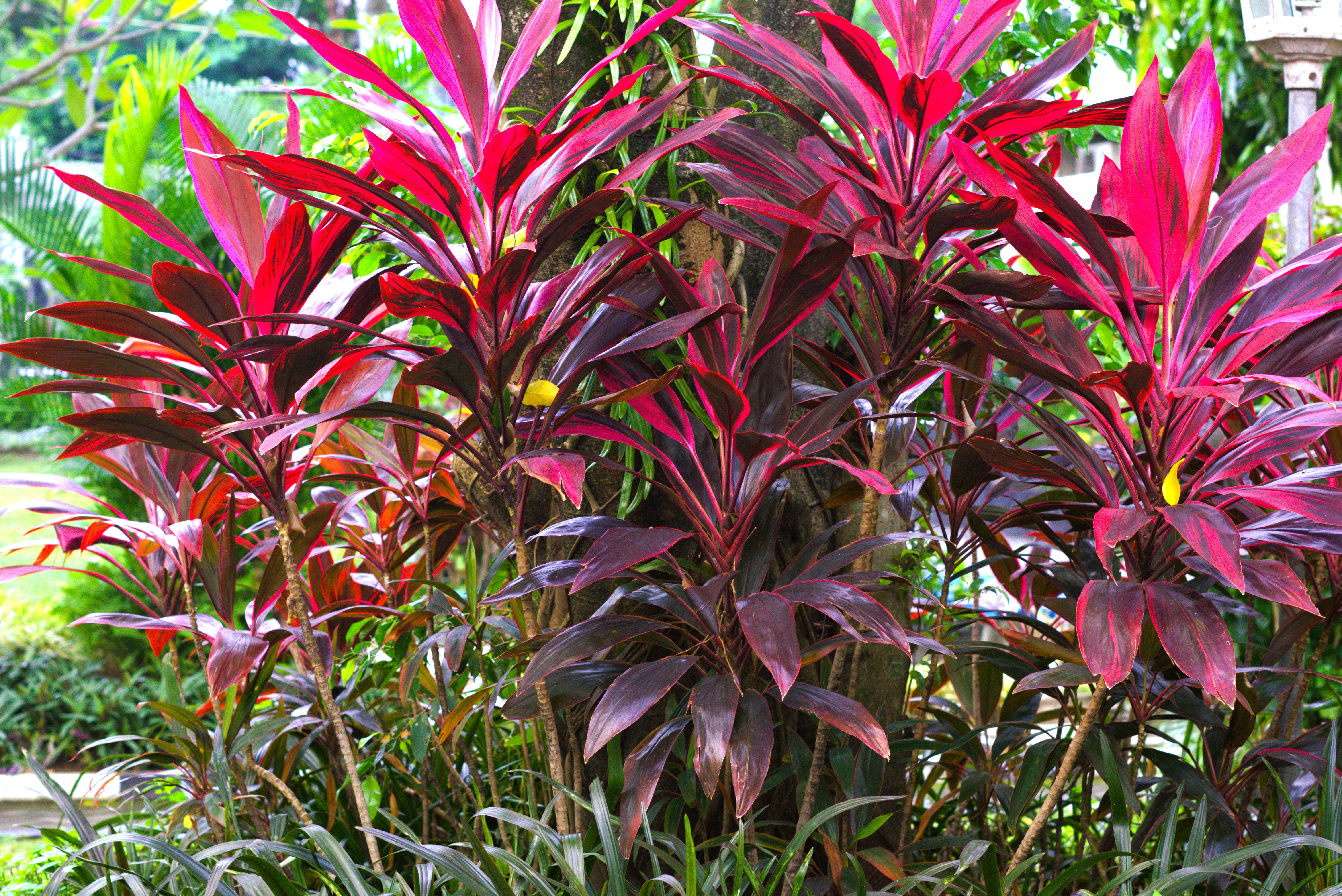
Cordyline fruticosa ‘Red Sister’ (Cordyline ‘Red Sister’)
Price range: $9.50 through $44.00
Red Sister Cordyline (Cordyline fruticosa ‘Red Sister’) is a tropical foliage plant with arching burgundy-red leaves and pink highlights. Commonly growing 4–6 feet tall and 2–4 feet wide, it adds upright color to protected Florida borders, mixed tropical beds, and containers. Prefers bright partial sun, well-drained soil, and consistent moisture. Space approximately 24–36 inches on center for grouped plantings. Frost-sensitive and non-native to Florida.
Description
Cordyline ‘Red Sister’ (Cordyline fruticosa ‘Red Sister’)
Cordyline ‘Red Sister’ is a tropical evergreen foliage plant with broad, arching leaves in shades of burgundy, deep red, and vivid pink. Also known as a Ti plant, it provides strong upright color in Florida landscape beds, tropical borders, entry plantings, and large containers. Its ornamental value comes primarily from its foliage rather than its flowers.
In suitable warm conditions, ‘Red Sister’ commonly grows approximately 4–6 feet tall and 2–4 feet wide. It is not native to Florida and is sensitive to freezing temperatures. For a closer look at how sunlight affects Ti plant color and performance, see Pennate’s Ti Plants in Florida guide.
Plant Highlights
- Botanical name: Cordyline fruticosa ‘Red Sister’
- Common names: Red Sister Cordyline, Red Sister Ti Plant
- Plant type: Tropical evergreen foliage shrub
- Native status: Non-native to Florida
- Light: Bright partial sun to partial shade; protection from intense afternoon sun may be beneficial
- Mature size: Approximately 4–6 feet tall and 2–4 feet wide in favorable conditions
- Foliage: Burgundy-red leaves with pink to reddish highlights
- Growth: Upright, often developing multiple cane-like stems with age
- Soil: Fertile, well-drained soil with consistent but not saturated moisture
- Water: Regular during establishment; moderate and consistent thereafter
- Cold tolerance: Frost-sensitive; foliage and stems may be damaged by freezing weather
- Landscape uses: Tropical borders, foliage accents, mass plantings, containers, and protected foundation beds
Sunlight and Leaf Color
‘Red Sister’ generally develops attractive coloration in bright light, including morning sun or filtered sunlight. Some direct sun can strengthen red and pink foliage tones, but prolonged exposure to intense afternoon sun, particularly with dry soil or reflected heat, may scorch leaves. Deep shade can reduce color intensity and encourage less compact growth.
Exposure should be evaluated in the context of site conditions rather than a fixed number of sunlight hours. Read more in Pennate’s Florida plant light guide.
Mature Size and Growth Habit
Plants commonly reach 4–6 feet in height with a spread of approximately 2–4 feet, although older specimens in protected tropical settings can become taller. Long, arching leaves emerge from upright stems, creating a layered vertical appearance. Lower leaves naturally age and drop, and older plants may develop visible canes.
The maintained size of a regularly cut-back specimen is not the same as its potential mature size. Allow space for foliage to arch outward without crowding walkways, walls, or nearby shrubs.
Typical Nursery Sizes
Nursery dimensions vary with grower practices, season, and the number of stems in each container. The following are illustrative planning ranges, not verified Pennate inventory specifications.
| Container | Illustrative Height | Typical Use |
|---|---|---|
| 1 Gallon | Approximately 12–20 inches | Smaller groupings and container plantings |
| 3 Gallon | Approximately 18–30 inches | Landscape beds and foliage accents |
| 7 Gallon | Approximately 30–48 inches | Larger initial accents, where available |
Confirm actual plant dimensions, stem count, and available container sizes before ordering.
Plant Spacing
Spacing depends on whether the goal is a continuous tropical foliage grouping or clearly separated individual accents.
- Mass planting: Approximately 24–36 inches on center for a relatively full grouping as plants develop.
- Mixed borders: Approximately 3–4 feet on center to allow individual plants to expand among companion species.
- Individual accents: Allow approximately 3–4 feet of lateral growing room.
- Near structures: Position plants to preserve access and accommodate mature arching leaves.
Spacing is measured from plant center to plant center. Closer installations may require more frequent thinning or selective pruning as plants mature.
Water and Soil Requirements
‘Red Sister’ grows best in well-drained soil with regular moisture. Sandy Florida soils may dry rapidly, particularly during establishment and in exposed beds. Water newly installed plants according to root-ball size, rainfall, temperature, and site drainage.
Established plants benefit from reasonably consistent moisture. Extended drought may cause leaf curling, browning, or reduced foliage quality, while persistent waterlogging can damage roots. Mulch can help moderate soil moisture, but should not be piled against the stems.
For the distinction between initial watering and longer-term irrigation, see Pennate’s establishment period guide.
Seasonal Appearance and Cold Sensitivity
In frost-free conditions, ‘Red Sister’ maintains colorful foliage throughout the year. In Central Florida, winter cold can damage leaves or stems; significant freezes may kill exposed top growth. Plants sometimes resprout from surviving lower stems or roots after cold damage, but recovery is not guaranteed.
Protected courtyards, sheltered entries, and warmer microclimates can reduce exposure. Where freezing weather is frequent, the plant may be better treated as a container specimen or seasonal tropical accent.
Flowers, when produced, are typically secondary to the foliage display. The species is cultivated primarily for its colorful leaves rather than for conspicuous blooms.
Companion Plants
Red Sister pairs with foliage plants that tolerate similar light, soil moisture, and tropical growing conditions.
- Petra Croton: Broad yellow, orange, and red leaves provide a contrasting foliage pattern in bright, protected beds.
- Mammy Croton: Narrow, twisted, multicolored leaves contrast with Cordyline’s broad arching foliage.
- Wild Coffee: A lower, glossy-leaved Florida-native shrub suitable for partially shaded plantings where moisture conditions align.
- Foxtail Fern: Fine-textured, upright foliage provides a contrasting form in suitable well-drained beds.
Allow for the mature size and cold tolerance of each companion plant. Tropical foliage combinations may have different winter appearances in colder portions of Florida.
Maintenance
Pruning: Remove dead or damaged leaves as needed. Older, elongated stems can be selectively cut back during warm growing conditions to encourage new shoots, although regrowth depends on plant health and temperature.
Watering: Maintain even moisture during establishment. Avoid prolonged drought and saturated soil.
Fertilization: Use a measured approach based on plant condition and site fertility. Excessive fertilizer does not correct poor drainage or inappropriate sunlight.
Pest monitoring: Inspect for mealybugs, scale insects, mites, and other pests when foliage becomes distorted, sticky, or discolored.
Cold weather: Protect vulnerable plants during freeze events where practical. Wait until the extent of cold injury is evident before removing potentially living stems.
For broader seasonal pruning context, see Pennate’s Florida pruning guide.
Frequently Asked Questions
Is Red Sister Cordyline native to Florida?
No. Cordyline fruticosa is a tropical species cultivated in Florida landscapes, but it is not Florida native.
How large does Red Sister grow?
Approximately 4–6 feet tall and 2–4 feet wide is a useful landscape planning range. Older plants in favorable protected locations may become taller.
Does Red Sister need full sun?
No. Bright partial sun or filtered light often provides a good balance of foliage color and leaf quality. Intense afternoon sun can scorch leaves under stressful conditions.
How far apart should Red Sister plants be spaced?
Approximately 24–36 inches on center works for many grouped plantings. Allow 3–4 feet where individual plants should have more space.
Is Red Sister drought tolerant?
It tolerates brief dry periods better after establishment, but is not a particularly drought-tolerant choice compared with many native shrubs. Consistent moisture supports better foliage quality.
Will Red Sister survive a Florida freeze?
Freezing temperatures can severely damage foliage and stems. Some plants regrow from surviving tissue, but survival depends on the severity and duration of cold and the plant’s condition.
Can Red Sister grow in a container?
Yes. Use a container with drainage, provide adequate light and moisture, and account for the plant’s eventual height and root space.
Why are the lower leaves falling off?
Older lower leaves naturally age and drop as stems elongate. Sudden or widespread leaf loss may also indicate cold injury, drought, waterlogging, or pest problems.
Additional information
| Size | 1 gallon, 3 gallon, 7 gallon |
|---|
You must be logged in to post a review.
Related products
-

Simpson’s Stopper (Myrcianthes fragrans)
Price range: $9.50 through $44.00Select options This product has multiple variants. The options may be chosen on the product page -

Petra Croton (Codiaeum variegatum ‘Petra’)
Price range: $19.00 through $32.50Select options This product has multiple variants. The options may be chosen on the product page -

Wild Coffee (Psychotria nervosa)
Price range: $9.50 through $44.00Select options This product has multiple variants. The options may be chosen on the product page -

Croton ‘Gold Dust’ (Codiaeum variegatum)
Price range: $9.50 through $44.00Select options This product has multiple variants. The options may be chosen on the product page
Reviews
There are no reviews yet.