

Hibiscus in Florida: Varieties, Care, Growth, Blooming, Landscaping, and Common Problems
Few plants are more closely associated with tropical landscapes than hibiscus. Their oversized flowers, broad range of colors, and ability to bloom through much of the year have made them a familiar sight in Florida gardens, neighborhoods, resorts, and public landscapes. For many homeowners, a hibiscus is one of the first plants that comes to mind when they picture a tropical yard.
Yet hibiscus is also one of the most misunderstood landscape plants in the state.
The word “hibiscus” can refer to dozens of different species and thousands of cultivars. Some are compact shrubs suited for containers. Others can become large landscape specimens. Some thrive in coastal conditions, while others struggle with salt exposure. Certain hibiscus species are native to Florida wetlands, while the tropical hibiscus found in most residential landscapes originated elsewhere. Even basic questions such as how fast hibiscus grows, how often it blooms, or why its leaves turn yellow often have more nuanced answers than many gardening guides suggest.
Hibiscus in Florida presents unique opportunities and challenges. The state’s long growing season allows for exceptional growth and flowering, but heat, rainfall patterns, nutrient deficiencies, insects, and occasional cold events can all influence performance. A hibiscus that thrives in Miami may behave very differently in Jacksonville. A plant growing in a container may require entirely different care than one growing in the ground.
This guide was created to serve as a comprehensive Florida-focused reference for homeowners, landscape designers, property managers, HOA board members, gardeners, and anyone interested in understanding these remarkable plants more deeply. We will explore the history of hibiscus, the species and cultivars commonly grown in Florida, growth habits, flowering behavior, environmental requirements, landscape uses, common problems, and practical maintenance considerations.
Whether you are choosing your first hibiscus, troubleshooting an established planting, comparing cultivars, designing a hedge, or simply curious about one of the world’s most recognizable flowering plants, this guide is intended to be a resource you can return to for years to come.
| Botanical Group | Hibiscus species and hybrids, most commonly tropical hibiscus in Florida landscapes |
|---|---|
| Most Common Landscape Type | Hibiscus rosa-sinensis and cultivated tropical hibiscus hybrids |
| Common Names | Hibiscus, Tropical Hibiscus, Chinese Hibiscus, Hawaiian Hibiscus, Shoeblack Plant |
| Primary Florida Use | Flowering hedges, specimen plants, tropical gardens, foundation plantings, courtyards, containers, and accent plantings |
| Best Known Feature | Large, colorful flowers that may bloom repeatedly through much of the year in warm Florida landscapes |
| USDA Zones | Commonly grown in Zones 9B–11, with strongest landscape performance in warmer, frost-limited areas |
| Cold Tolerance | Limited for tropical hibiscus; foliage, buds, and stems may be damaged by frost or freezing temperatures |
| Sun Exposure | Full sun to partial sun; flowering is usually strongest with abundant direct light |
| Salt Tolerance | Moderate; suitable for many coastal landscapes but not as salt tolerant as true coastal specialists |
| Drought Tolerance | Moderate once established, though flowering and appearance may decline during extended dry periods |
| Growth Rate | Moderate to fast depending on cultivar, irrigation, fertility, sunlight, pruning, and regional growing season |
| Typical Landscape Height | Often maintained around 4–10 feet in Florida landscapes |
| Mature Size | Varies widely; compact cultivars may stay under 4 feet, while vigorous forms can exceed 10–12 feet with time |
| Bloom Season | Nearly year-round in warm South Florida conditions; more seasonal in cooler parts of the state |
| Evergreen | Generally evergreen in frost-free conditions, but may thin, yellow, or defoliate after cold stress |
| Root Aggressiveness | Generally low; roots are not usually considered invasive, though mature size and planting distance still matter |
| Maintenance Level | Moderate; best appearance usually requires periodic pruning, fertility management, irrigation awareness, and pest monitoring |
| Wildlife Value | Flowers can attract bees, butterflies, and hummingbirds; native hibiscus species generally provide stronger ecological value than many ornamental hybrids |
| Common Problems | Yellow leaves, bud drop, poor flowering, cold damage, nutrient deficiencies, whiteflies, aphids, mites, scale, and overwatering |
| Toxicity | Not typically treated as a highly toxic landscape plant, but it is not intended for consumption unless the species and use are specifically known |
| Best Fit | Sunny Florida landscapes where seasonal color, tropical character, and moderate maintenance are acceptable |
| Poor Fit | Deep shade, chronically wet soils, cold inland sites, highly exposed saltwater edges, or landscapes expected to need very little maintenance |
- Introduction
- Quick Facts
- Is Hibiscus Right for Your Landscape?
- Meet the Plant
- Botanical Background
- History and Cultural Significance
- Types of Hibiscus
- Hibiscus Cultivars and Flower Forms
- Flower Colors
- Growth Rate
- Mature Size
- Growth Over Time
- Blooming Behavior
- Root System
- Light Requirements
- Soil Requirements
- Irrigation
- Fertilization
- Hibiscus Across Florida
- Coastal Performance
- Iguanas and Hibiscus
- Wind Resistance
- Cold Tolerance
- Freeze Recovery
- Toxicity and Pet Safety
- Wildlife Value
- Landscape Design Applications
- Hibiscus Hedges
- Privacy Uses
- Specimen Uses
- Containers
- Common Problems
- Yellow Leaves
- Pests
- Diseases
- Common Mistakes
- Pruning
- Propagation
- How Much Does a Hibiscus Cost?
- Hibiscus vs Other Florida Plants
- Common Myths
- Interesting Facts
- Frequently Asked Questions
- Further Reading & Sources
Is Hibiscus Right for Your Landscape?
Hibiscus is one of Florida’s most recognizable flowering shrubs, but it is not the right choice for every property or every homeowner. The same characteristics that make hibiscus popular, including rapid growth, large flowers, and nearly continuous blooming, can also create maintenance requirements that surprise people expecting a low-effort landscape plant.
Understanding both the strengths and limitations of hibiscus helps set realistic expectations and often determines whether a planting becomes a long-term success or a recurring source of frustration.
Where Hibiscus Excels
Few shrubs provide as much color as hibiscus. In warm parts of Florida, healthy plants can produce flowers for much of the year, creating a tropical appearance that few other landscape shrubs can match.
Hibiscus performs particularly well in:
- Tropical and subtropical landscape designs
- Foundation plantings
- Pool and courtyard gardens
- Container gardens
- Accent plantings
- Flowering hedges
- Pollinator-friendly landscapes
- Properties seeking year-round color
Because flowers are produced continuously rather than during a single seasonal bloom period, hibiscus can provide visual interest long after many other flowering shrubs have stopped blooming.
Situations Where Hibiscus May Not Be the Best Choice
Despite its popularity, hibiscus is not a maintenance-free shrub.
Plants growing in deep shade often become sparse and flower poorly. Locations subject to repeated freezes may experience recurring cold damage. Coastal sites with extreme salt exposure can challenge some cultivars. Homeowners seeking a shrub that can largely be ignored after installation are often better served by other species.
Hibiscus may be a poor fit for:
- Deeply shaded landscapes
- Freeze-prone inland locations
- Extremely exposed beachfront sites
- Ultra-low-maintenance landscapes
- Formal designs requiring minimal seasonal variation
- Locations with chronically poor drainage
Many hibiscus problems can be traced not to the plant itself but to a mismatch between site conditions and homeowner expectations.
Who Typically Loves Hibiscus
People who enjoy flowers tend to love hibiscus.
Homeowners seeking a tropical aesthetic, gardeners who appreciate seasonal changes, and landscape enthusiasts who enjoy observing blooms, pollinators, and plant growth often find hibiscus rewarding. The plant offers frequent visual feedback in the form of new growth and flowers, making it feel dynamic compared to many evergreen shrubs.
Hibiscus is especially popular among homeowners who want:
- Frequent flowering
- Bright colors
- Tropical character
- Pollinator activity
- Container gardening options
- A landscape that changes throughout the year
Who Often Becomes Frustrated With Hibiscus
The homeowners most likely to become frustrated with hibiscus are often those who selected it for the flowers but expected the maintenance profile of an evergreen hedge.
Hibiscus may require periodic pruning, occasional pest management, supplemental nutrition, and more observation than some common Florida screening plants. Flowers naturally drop after blooming, leaves may yellow when nutrients become unavailable, and cold weather can temporarily affect appearance.
Homeowners seeking a plant that can be installed and largely forgotten are often happier with shrubs selected primarily for structure and durability rather than flowering performance.
That does not make hibiscus high maintenance by landscape standards. It simply means it rewards attention more than neglect.
Meet the Hibiscus
Few flowering plants are as recognizable as hibiscus. Large blooms, bold colors, and a distinctly tropical appearance have made hibiscus a staple of Florida landscapes for decades. They appear everywhere from backyard gardens and pool decks to resorts, commercial properties, and coastal communities.
Part of their appeal is versatility. Hibiscus can function as a flowering hedge, a specimen plant, a container feature, or a colorful accent within larger landscape designs. At the same time, the word “hibiscus” is often used so broadly that many people are surprised to learn they may be talking about very different plants.
What Most People Mean When They Say Hibiscus
In Florida, the term “hibiscus” almost always refers to tropical hibiscus, scientifically known as Hibiscus rosa-sinensis, along with the thousands of hybrids developed from it.
These are the shrubs most commonly sold in garden centers and nurseries. They are known for their glossy evergreen foliage, rapid growth, and large flowers that can appear in nearly every color except true blue.
The broader hibiscus genus contains hundreds of species, including several native to Florida. While those plants share certain botanical characteristics, they often differ significantly in mature size, cold tolerance, habitat preferences, and landscape use.
Why Hibiscus Became a Florida Landscape Icon
Florida’s climate is exceptionally well suited to tropical hibiscus. Long growing seasons, abundant sunshine, and mild winters allow plants to flower far more consistently than they can in much of the United States.
As Florida’s tourism industry expanded during the twentieth century, hibiscus became associated with the tropical image many visitors expected to find. The plant’s bright flowers complemented palms, bird of paradise, crotons, and other tropical ornamentals that came to define the state’s landscape aesthetic.
Today, hibiscus remains one of the most widely recognized flowering shrubs in Florida, appearing in residential landscapes, public gardens, hotels, and commercial properties throughout the state.
What Makes Hibiscus Different From Other Flowering Shrubs
Many flowering shrubs produce a seasonal display followed by months of relatively little activity. Hibiscus behaves differently.
Given adequate sunlight, water, and nutrition, healthy plants can continue producing flowers over extended periods rather than concentrating blooms into a single season. Individual flowers are often large enough to serve as focal points from a considerable distance, creating visual impact that few shrubs can match.
Hibiscus also occupies an unusual middle ground in the landscape. It offers significantly more color than many evergreen screening shrubs, while generally growing larger and living longer than many flowering perennials. For homeowners seeking a tropical appearance with substantial visual presence, that combination is a major part of its appeal.
Botanical Background
The hibiscus most Floridians recognize from gardens and landscapes is only a small part of a much larger botanical story. The genus includes hundreds of species distributed across tropical, subtropical, and temperate regions around the world. Some are prized ornamental shrubs, some are native wetland plants, some are grown for food and beverages, and others exist primarily in natural ecosystems.
Understanding where hibiscus fits within the plant kingdom helps explain why different species can vary so dramatically in appearance, cold tolerance, growth habit, and landscape performance.
Scientific Classification
Hibiscus belongs to the mallow family, Malvaceae, a large and economically important plant family that includes numerous ornamental, agricultural, and native species.
The tropical hibiscus most commonly planted in Florida is generally classified as:
- Kingdom: Plantae
- Order: Malvales
- Family: Malvaceae
- Genus: Hibiscus
- Species: Hibiscus rosa-sinensis
While Hibiscus rosa-sinensis is the dominant landscape species, thousands of cultivated hybrids have been developed through selective breeding over many generations.
Where the Name Hibiscus Comes From
The name hibiscus has old roots. It comes through Latin from the Greek word hibiskos, a name associated with mallow-like plants. Ancient sources connect the word with marsh mallow, a member of the same broader plant family rather than the modern tropical hibiscus most Floridians picture today.
That connection makes botanical sense. Hibiscus belongs to the mallow family, Malvaceae, which includes many plants with related floral structures, seed capsules, and mucilaginous plant tissues. The name did not begin as a Florida landscape term or a reference to one specific tropical shrub. It came from a much older naming tradition for mallow-like plants.
This also helps explain why common names can be confusing. Plants called hibiscus, rose mallow, swamp mallow, marsh mallow, and Turk’s cap may look different in the landscape, but they are connected through the same larger botanical family. The modern word hibiscus now refers to a broad genus, while Florida homeowners most often use it to mean tropical hibiscus and its hybrids.
The Hibiscus Genus
The genus Hibiscus contains a remarkably diverse collection of plants. Depending on the species, hibiscus may grow as shrubs, herbaceous perennials, small trees, or wetland plants.
Members of the genus occur naturally across parts of Asia, Africa, Australia, the Pacific Islands, and the Americas. Their flowers vary widely in size, color, and form, but most share the characteristic central staminal column that makes hibiscus flowers instantly recognizable.
Because hibiscus species evolved across such a wide geographic range, their environmental preferences can differ substantially. A tropical hibiscus growing near a swimming pool in Tampa has very different requirements than a native rosemallow growing in a Florida wetland.
How Many Hibiscus Species Exist?
Botanists generally recognize more than 200 species within the genus, though the exact number varies as classification systems are updated and genetic research improves our understanding of plant relationships.
For homeowners, the important takeaway is that “hibiscus” is not a single plant. The genus includes:
- Tropical ornamental shrubs
- Hardy perennial hibiscus
- Native Florida species
- Wetland species
- Edible species such as roselle
- Numerous cultivated hybrids
Many care recommendations found online apply only to specific species, which is one reason hibiscus information can sometimes seem contradictory.
Tropical, Subtropical, and Temperate Hibiscus
Not all hibiscus are tropical plants.
Tropical hibiscus, including Hibiscus rosa-sinensis, thrive in warm climates and generally suffer damage during freezing weather. These are the plants most commonly used in Florida landscapes.
Other hibiscus species are adapted to cooler climates and can survive winters that would kill tropical hibiscus. These are often referred to as hardy hibiscus and may die back to the ground before reemerging in spring.
Between these extremes are species adapted to subtropical conditions, where occasional cool weather occurs but prolonged freezing temperatures remain uncommon.
This diversity helps explain why some hibiscus guides describe the plant as cold-sensitive while others describe it as highly cold-hardy. They are often discussing entirely different species.
Native and Non-Native Hibiscus in Florida
Most hibiscus planted in Florida landscapes are non-native ornamental species or hybrids derived from tropical hibiscus.
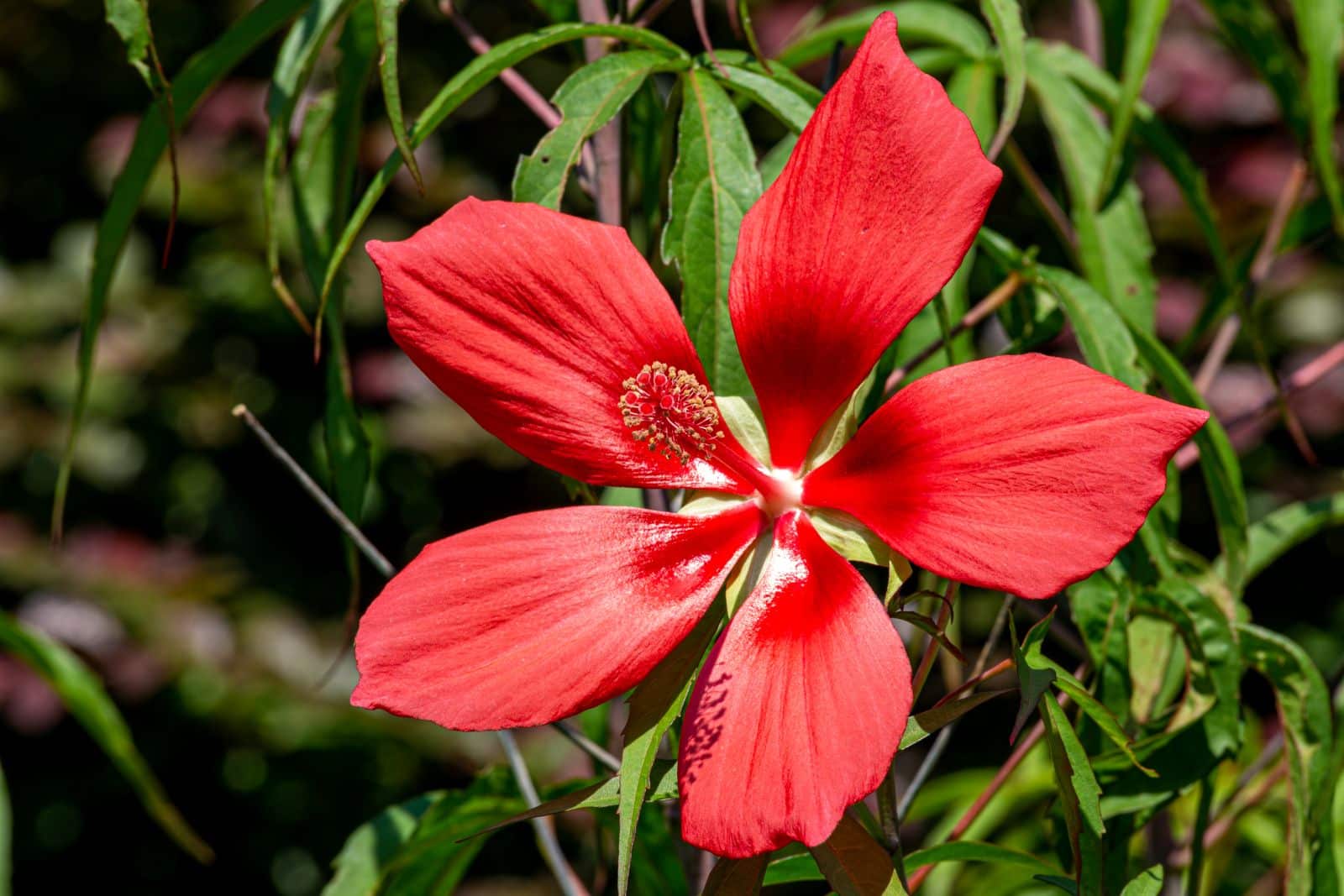
Florida also supports several native hibiscus species, many of which occur naturally in wetlands, marshes, coastal habitats, and seasonally flooded areas. Examples include scarlet rosemallow (Hibiscus coccineus) and swamp rosemallow (Hibiscus grandiflorus).
Native species often provide stronger ecological value for local wildlife and pollinators, but they are not always interchangeable with tropical hibiscus from a landscape design perspective. Their growth habits, flowering periods, and site requirements can be very different.
Related Plants Within the Mallow Family
The mallow family contains many plants that gardeners would never immediately associate with hibiscus.
Relatives include:
- Okra (Abelmoschus esculentus)
- Cotton (Gossypium species)
- Cacao (Theobroma cacao)
- Turk’s cap (Malvaviscus arboreus)
- Marshmallow (Althaea officinalis)
Once the family resemblance becomes apparent, similarities begin to emerge. Many members of the mallow family produce showy flowers, distinctive seed capsules, and related floral structures.
The connection is particularly obvious when comparing hibiscus flowers with those of okra or Turk’s cap, both of which reveal their shared ancestry despite serving very different roles in gardens and agriculture.
History and Cultural Significance
Long before hibiscus became a familiar sight in Florida landscapes, the plant had already traveled across continents, oceans, and cultures. Its history is intertwined with trade, exploration, horticulture, food, art, and symbolism. While modern gardeners often focus on flower color or growth rate, hibiscus has been valued by people for centuries for reasons that extend far beyond ornamental beauty.
Origins of Hibiscus
The hibiscus genus contains species native to many parts of the world, making it difficult to assign a single geographic origin to the group as a whole. Different species evolved across tropical and subtropical regions of Asia, Africa, Australia, the Pacific Islands, and the Americas.
The tropical hibiscus most commonly grown in Florida, Hibiscus rosa-sinensis, likely originated somewhere in tropical Asia, though centuries of cultivation and hybridization have obscured its exact native range. By the time botanists began documenting the species in detail, humans had already been moving hibiscus between regions for generations.
Ancient Uses and Early Cultivation
People were cultivating and using hibiscus long before it became a landscape ornamental. Various species were grown for fiber, food, medicine, dyes, beverages, and ceremonial purposes.
In some cultures, hibiscus flowers were used in traditional remedies. Other species provided useful fibers for rope and textiles. Certain hibiscus relatives eventually became agricultural crops, while ornamental forms were selected and propagated for increasingly showy flowers.
As trade routes expanded across Asia and the Pacific, hibiscus moved with people, becoming established in gardens far from its original range.
Hibiscus Across Asia and the Pacific
Few ornamental plants have spread as successfully throughout tropical regions as hibiscus.
The plant became deeply embedded in the gardens and cultural traditions of China, India, Southeast Asia, Melanesia, Micronesia, and Polynesia. Generations of gardeners selected plants with larger flowers, unusual colors, improved branching habits, and greater ornamental value.
Many of the characteristics modern gardeners enjoy today are the result of centuries of informal plant breeding carried out long before modern horticultural science existed.
By the nineteenth and twentieth centuries, hibiscus had become one of the defining ornamental plants of tropical climates worldwide.
Hibiscus and Polynesian Culture
Throughout Polynesia, hibiscus became associated with beauty, hospitality, celebration, and connection to place.
Flowers were woven into leis, worn in the hair, incorporated into ceremonies, and used as decorative elements in daily life. Different islands developed their own traditions and symbolism surrounding hibiscus and other tropical flowers.
Because hibiscus flowers are large, colorful, and abundant, they naturally became part of the visual identity of many Pacific cultures.
Hibiscus in Hawaii
Few places are more closely associated with hibiscus than Hawaii.
The yellow hibiscus (Hibiscus brackenridgei) serves as Hawaii’s official state flower, while numerous other hibiscus species and hybrids are cultivated throughout the islands. Over time, hibiscus imagery became closely tied to Hawaiian tourism, appearing in advertising, clothing, artwork, souvenirs, and popular culture.
Many mainland Americans first developed their mental image of hibiscus through Hawaiian imagery, even though the tropical hibiscus commonly planted in landscapes is not native to Hawaii.
This connection remains so strong that many people still refer to tropical hibiscus as “Hawaiian hibiscus” despite the plant’s more complex history.
Hibiscus in Art, Textiles, and Ornament
The distinctive shape of a hibiscus flower makes it instantly recognizable.
Artists, designers, and craftspeople have incorporated hibiscus motifs into paintings, carvings, fabrics, ceramics, jewelry, architecture, and decorative arts for generations. Its large petals and bold colors lend themselves naturally to visual design.
Throughout the twentieth century, hibiscus became a recurring symbol of tropical destinations, vacation culture, and warm-weather living. Even today, hibiscus imagery remains one of the most recognizable visual shortcuts for conveying a tropical atmosphere.
Hibiscus Tea and Food Uses
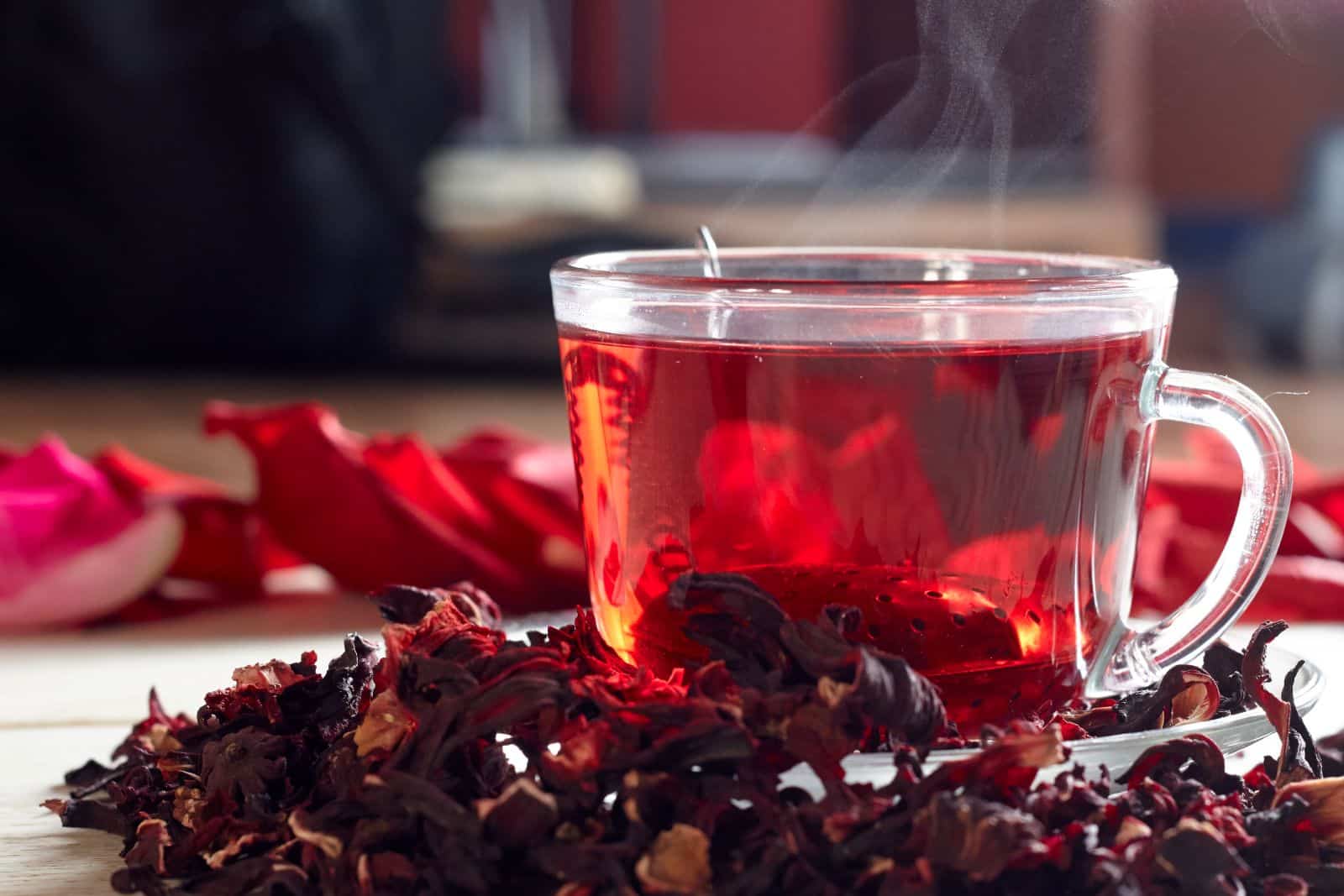
Several species are used in food and beverages around the world, with roselle, Hibiscus sabdariffa, being one of the most important. Roselle is grown primarily for its fleshy red calyces, the cup-like structures at the base of the flower that surround and protect the developing seed capsule. After the flower fades, the calyces enlarge, thicken, and turn deep red. They are harvested, fresh or dried, for teas, juices, jams, syrups, sauces, and other products.
This is an important distinction because the calyces, not the soft flower petals, are the part most commonly used to make hibiscus tea. The deep red color, tart flavor, and high natural acidity come largely from the roselle calyces.
Hibiscus tea is especially popular throughout parts of Africa, the Caribbean, Latin America, and Asia. Depending on the preparation and region, it may be known as sorrel, agua de jamaica, bissap, or karkade.
The tart flavor and deep red color have made roselle one of the world’s most recognizable botanical beverages. Tropical hibiscus flowers used in Florida landscapes may look similar from a distance, but they should not automatically be treated as interchangeable with roselle or used for food unless the plant has been correctly identified and grown for edible use.
Arrival in Florida
Hibiscus likely arrived in Florida through a combination of trade, botanical collections, and ornamental horticulture during the nineteenth century and early twentieth century.
Florida’s climate proved exceptionally well suited to tropical hibiscus, particularly in the southern part of the state. As nurseries expanded and ornamental horticulture became increasingly popular, hibiscus quickly established itself as a desirable landscape plant.
The combination of rapid growth, colorful flowers, and compatibility with Florida’s climate helped drive widespread adoption.
How Hibiscus Became a Florida Landscape Staple
Several factors contributed to hibiscus becoming one of Florida’s signature landscape plants.
The state’s growing population created demand for colorful ornamental plants. The expanding nursery industry introduced increasingly diverse cultivars. Tourism promoted a tropical aesthetic that homeowners sought to recreate in their own landscapes.
Unlike many flowering shrubs that bloom for only a short season, hibiscus could provide recurring color through much of the year. That characteristic alone made it especially attractive for both residential and commercial landscapes.
Over time, hibiscus became a familiar feature of neighborhoods, hotels, public gardens, parks, and resort properties throughout the state.
Hibiscus in Tourism, Resorts, and Tropical Design
Modern perceptions of tropical landscaping are difficult to separate from hibiscus.
The plant’s oversized flowers complement palms, bird of paradise, crotons, gingers, heliconias, and other tropical ornamentals that collectively define the visual language of warm-climate landscape design.
Resorts frequently use hibiscus to create an immediate sense of place and reinforce a tropical atmosphere. Homeowners often do the same, selecting hibiscus because it delivers color, scale, and visual impact that few other shrubs can match.
For many people, hibiscus has become more than a plant. It has become part of the visual identity of tropical living itself.
Types of Hibiscus
One reason hibiscus can be confusing is that the name applies to a surprisingly diverse group of plants. Some grow as evergreen tropical shrubs. Others are native wetland plants. Some are grown primarily for flowers, while others are cultivated for food, beverages, or foliage.
When discussing hibiscus in Florida landscapes, most people are referring to tropical hibiscus and its hybrids. However, several other species deserve attention because they occupy unique niches in Florida gardens and landscapes.
Tropical Hibiscus (Hibiscus rosa-sinensis)
Tropical hibiscus is the plant most Floridians picture when they hear the word hibiscus.
This evergreen shrub produces large, showy flowers in an enormous range of colors and flower forms. Modern cultivars may display flowers only a few inches across or blooms approaching dinner-plate size.
Tropical hibiscus is valued for:
- Long bloom periods
- Wide color selection
- Rapid growth
- Tropical appearance
- Suitability for hedges and specimens
Most plants sold in Florida garden centers belong to this group or are derived from it.
While tropical hibiscus can tolerate brief cool weather, it is not truly cold hardy and may suffer damage during freezes.
Tropical Hybrid Hibiscus
Many hibiscus sold today are not pure species but complex hybrids developed through decades of breeding.
Plant breeders have selected for:
- Larger flowers
- Unusual color combinations
- Improved branching
- Compact growth habits
- Increased flowering
- Unique petal shapes
Some hybrids display dramatic color transitions as flowers age. Others feature contrasting eyes, streaks, ruffles, or multi-colored petals that would be impossible to find in wild populations.
The modern hibiscus collector community has produced thousands of named cultivars, many of which are prized almost as living works of art.
Bush Hibiscus
“Bush hibiscus” is not a separate species but rather the growth form most homeowners encounter.
These plants are maintained as multi-stem shrubs and typically range from 4 to 10 feet tall depending on cultivar and pruning practices.
Bush forms are commonly used for:
- Foundation plantings
- Flowering hedges
- Accent beds
- Pool areas
- Tropical landscape borders
This growth habit offers the greatest flexibility for most residential landscapes.
Standard Hibiscus
A standard hibiscus is created through pruning and training rather than genetics.
The plant is encouraged to develop a single trunk with a rounded canopy above, creating a small tree-like appearance. Standards are popular because they:
- Create vertical interest
- Work well in containers
- Serve as focal points
- Add formality to tropical landscapes
While visually striking, standards generally require more maintenance than shrub forms because their shape must be preserved through regular pruning.
Dwarf Hibiscus
Not every landscape has room for a large flowering shrub.
Dwarf cultivars are selected for compact growth and often mature at only 2 to 4 feet tall. These plants make excellent choices for:
- Small gardens
- Courtyards
- Containers
- Patio plantings
- Limited planting beds
Although smaller in stature, many dwarf cultivars produce flowers comparable in size to those of much larger plants.
Native Florida Hibiscus Species
Florida is home to several native hibiscus species that are often overlooked in favor of tropical hibiscus.
These plants typically provide stronger ecological value, support native pollinators, and contribute to regional biodiversity. They also occupy habitats quite different from the well-drained garden settings favored by tropical hibiscus.
Many native species naturally occur in wetlands, marshes, and seasonally flooded environments.
Scarlet Rosemallow (Hibiscus coccineus)
One of Florida’s most dramatic native wildflowers, scarlet rosemallow produces brilliant red flowers with deeply divided petals that create a star-like appearance.
Plants commonly reach 4 to 8 feet in height and thrive in:
- Wet soils
- Pond edges
- Rain gardens
- Naturalistic plantings
The flowers attract pollinators and provide a striking alternative to traditional tropical hibiscus.
Swamp Rosemallow (Hibiscus grandiflorus)
Swamp rosemallow produces enormous pink flowers that may exceed 8 inches across.
Native to wetlands and coastal marshes, it tolerates conditions that would quickly damage many landscape shrubs.
Distinctive characteristics include:
- Silvery foliage
- Large flowers
- Native status
- Wetland adaptability
Despite its beauty, it remains relatively uncommon in residential landscapes.
Other Native Species
Additional native hibiscus and hibiscus relatives occur throughout Florida. Depending on habitat and region, gardeners may encounter:
- Saltmarsh mallow (Kosteletzkya pentacarpos)
- Coastal hibiscus relatives
- Regional wetland species
- Naturally occurring hybrids
Many of these plants remain underutilized despite their ecological value and adaptation to Florida conditions.
Cranberry Hibiscus (Hibiscus acetosella)
Cranberry hibiscus is grown primarily for its foliage rather than its flowers.
Its deeply lobed burgundy leaves resemble ornamental Japanese maple foliage from a distance, creating a dramatic color contrast in tropical landscapes. Benefits include:
- Exceptional foliage color
- Fast growth
- Tropical texture
- Container adaptability
Flowers are attractive but generally secondary to the plant’s ornamental foliage.
Roselle (Hibiscus sabdariffa)
Roselle occupies a unique position within the hibiscus family because it is often grown as both an ornamental and an edible crop.
The fleshy red calyces surrounding the flowers are harvested and used to produce:
- Hibiscus tea
- Jams
- Syrups
- Beverages
- Culinary products
In Florida, roselle is particularly popular among gardeners interested in edible landscapes.
Confederate Rose (Hibiscus mutabilis)
Despite its common name, Confederate rose is not a true rose.
This large hibiscus relative is known for flowers that change color as they age, often opening white before transitioning to pink and eventually deep rose. In favorable conditions, plants may become large shrubs or small trees exceeding 10 feet in height. Confederate rose is especially valued for:
- Seasonal flower displays
- Large mature size
- Color-changing blooms
- Historic Southern garden associations
While less common than tropical hibiscus, it remains a beloved plant in many traditional Southern and Florida gardens.
Turk’s Cap Mallow and “Sleeping Hibiscus”
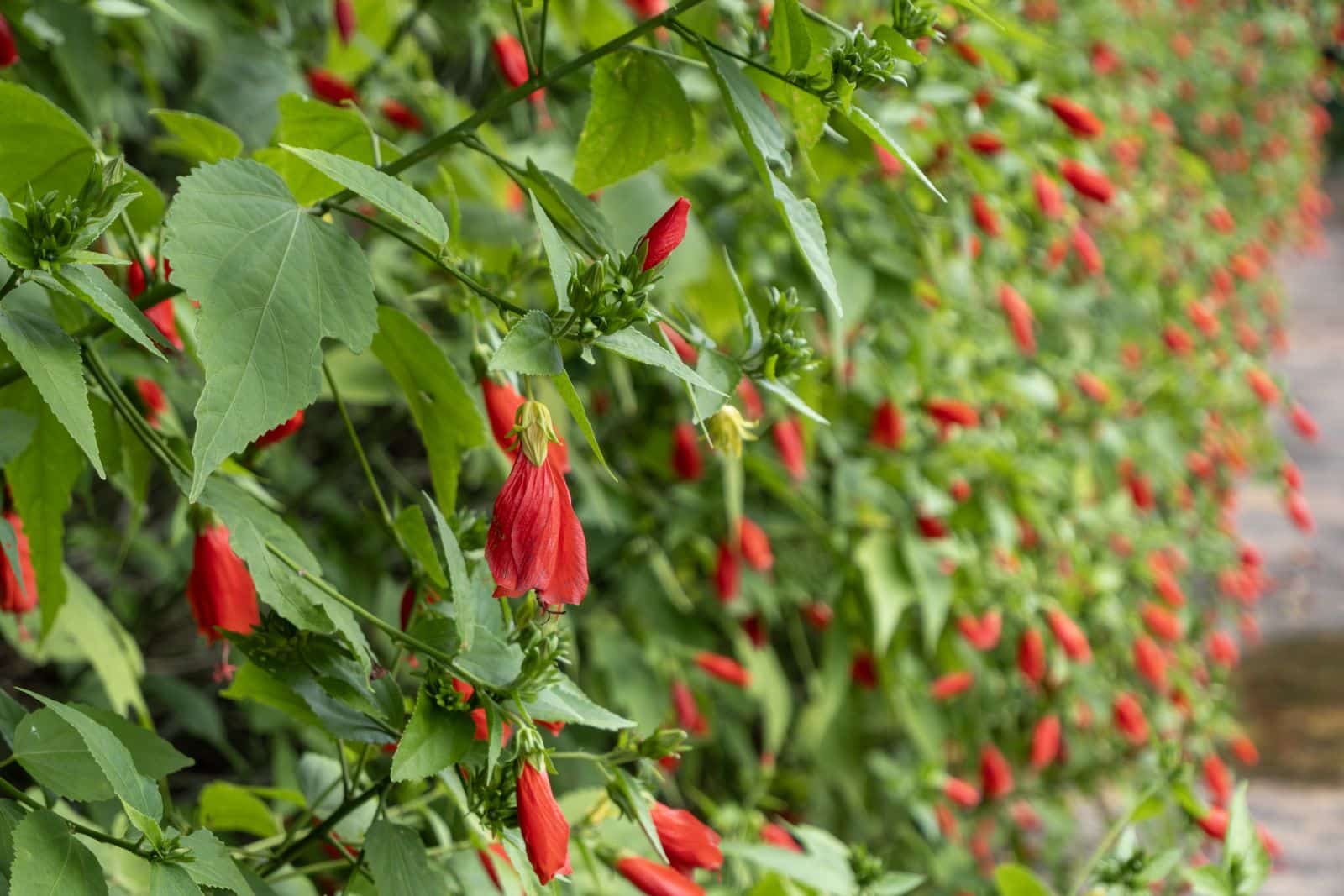
Turk’s cap mallow, commonly called sleeping hibiscus, is one of the plants most often confused with hibiscus in Florida landscapes. Its botanical name is usually Malvaviscus arboreus, though related Malvaviscus plants are also sold under the Turk’s cap name.
It is not a true hibiscus in the genus Hibiscus. Instead, it is a close relative in the same mallow family, Malvaceae. The relationship is visible in the flower structure, foliage, and overall tropical character, but the flowers behave very differently.
Unlike tropical hibiscus, Turk’s cap flowers remain partly folded. The petals twist around the central staminal column and give the impression that the bloom is about to open fully, but it never does. That unusual flower form is the reason for the common name sleeping hibiscus.
Turk’s cap is often more tolerant of part shade than tropical hibiscus and is especially useful in informal Florida landscapes, hummingbird gardens, and mixed shrub beds. The red folded flowers are attractive to hummingbirds, while the plant’s softer habit makes it useful where a full-sun tropical hibiscus would become thin or flower poorly.
Hibiscus Cultivars and Flower Forms
One of the reasons hibiscus remains so popular is the extraordinary variety available to gardeners. Unlike many landscape shrubs that offer only modest differences between cultivars, hibiscus breeders have created plants with dramatically different flower sizes, colors, petal shapes, growth habits, and overall appearances.
Today, thousands of named cultivars exist worldwide. Some were developed for landscape reliability, while others were bred specifically to produce unusual flowers that attract collectors and enthusiasts.
While flower color often receives the most attention, flower form can have an equally significant impact on a plant’s appearance in the landscape.
Single Flowers
Single-flowered hibiscus represent the classic hibiscus form most people recognize.
These flowers typically feature five petals surrounding a prominent central staminal column. The simple structure highlights color, shape, and contrast without overwhelming the flower’s natural form.
Single-flowered cultivars often offer:
- A clean, traditional appearance
- Excellent visibility from a distance
- Strong landscape performance
- Improved resistance to flower damage during rain
Many of the most reliable landscape hibiscus belong to this category.
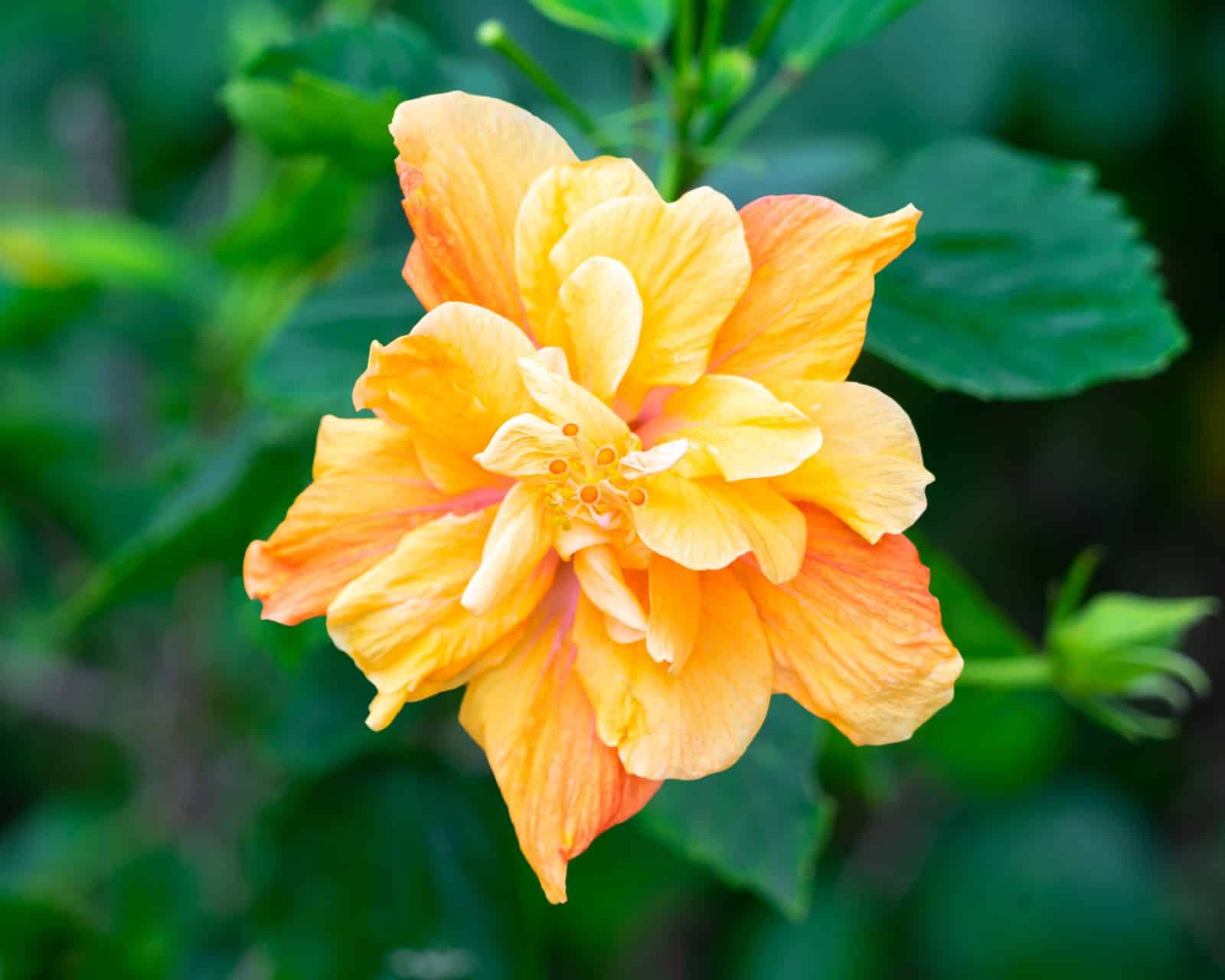
Double Flowers
Double-flowered hibiscus contain additional petals that partially or completely replace reproductive structures within the flower.
The result is a fuller, more layered appearance that can resemble peonies, camellias, or roses.
Double flowers often create a dramatic visual effect but may sometimes appear heavier or more delicate than single forms, particularly after heavy rain.
Many gardeners appreciate double cultivars for their ornamental value and unique appearance, especially when used as focal points.
Ruffled Flowers
Some cultivars produce petals with heavily ruffled, twisted, or undulating edges.
These flowers create movement and texture that can make blooms appear larger than they actually are. The effect becomes especially noticeable when flowers are viewed up close.
Ruffled cultivars have become increasingly popular among hobbyists and hybridizers because they create visual complexity beyond simple color variation.
Novelty Forms
Modern breeding has produced hibiscus flowers that would have seemed impossible a century ago. Novelty cultivars may display:
- Feathered petal edges
- Unusual petal arrangements
- Strong color transitions
- Contrasting bands and patterns
- Speckles and spotting
- Dramatic eye zones
Some flowers appear almost hand-painted due to the complexity of their coloration.
These cultivars are often grown less for landscape performance and more for the flowers themselves.
Giant Flowered Cultivars
Flower size is a major focus of hibiscus breeding.
While many landscape hibiscus produce flowers between 4 and 6 inches across, some cultivars routinely exceed 8 inches and occasionally approach 10 inches or more under favorable conditions.
Large flowers create tremendous visual impact and can serve as focal points even within large landscapes. The tradeoff is that extremely large blooms are sometimes more susceptible to wind, rain, and short-lived display periods.
Compact Cultivars
Not every landscape has room for a large shrub. Compact and dwarf cultivars were developed for:
- Containers
- Courtyards
- Small gardens
- Foundation beds
- Urban landscapes
These selections typically maintain a denser growth habit and require less pruning than vigorous standard cultivars. Many modern compact varieties still produce flowers comparable in size to those found on much larger plants.
Landscape Cultivars
Landscape cultivars are bred primarily for performance rather than novelty. Desired characteristics often include:
- Consistent flowering
- Strong branching
- Dense growth
- Heat tolerance
- Reliability
- Ease of maintenance
These are the cultivars most commonly found in residential and commercial landscapes because they balance ornamental value with predictable performance.
While they may not possess the most unusual flowers, they are often the most practical choice for long-term landscape use.
Collector Cultivars
At the opposite end of the spectrum are collector cultivars.
These plants are often selected for rare flower characteristics rather than landscape durability. Some produce extraordinary blooms with multiple colors, intricate patterns, dramatic ruffling, or unusually large flowers.
Collectors may seek out specific cultivars much like orchid enthusiasts pursue rare orchids or rose enthusiasts pursue specialty roses.
While stunning, collector varieties sometimes require more attention and may not always perform as predictably in the landscape as cultivars bred specifically for landscape use. For many enthusiasts, however, the flowers themselves justify the extra effort.
Flower Colors
One of the defining characteristics of hibiscus is its extraordinary color range. Few landscape shrubs offer as many options, and even fewer can display those colors on flowers that often exceed 5 inches across.
Decades of breeding have produced cultivars in nearly every color commonly found in ornamental plants. While some colors occur naturally, many of the most striking combinations are the result of extensive hybridization and selection.
Flower color alone is often enough to influence where a hibiscus is used in the landscape. Bright reds and oranges create bold focal points, while softer pinks, peaches, and whites can be integrated into more restrained designs.
Red
Red is perhaps the color most strongly associated with hibiscus.
Classic red cultivars have been popular in tropical landscapes for generations and remain among the most widely planted forms today. Their flowers create strong visual contrast against green foliage and are highly visible from a distance.
Many traditional Florida landscapes feature red hibiscus because the color complements palms, crotons, bird of paradise, and other tropical plants.

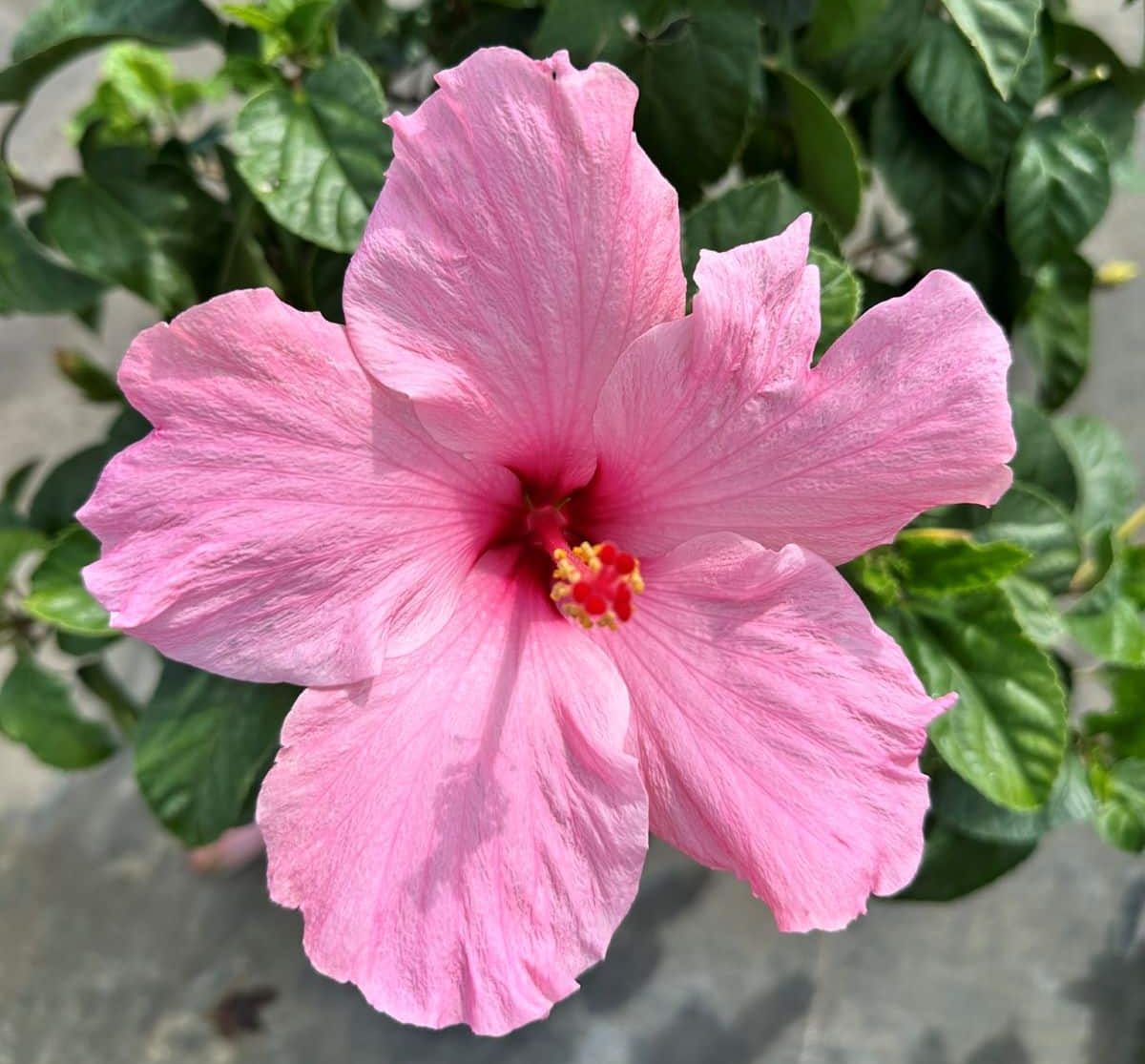
Pink
Pink hibiscus cultivars range from soft pastel shades to vivid hot pinks.
Lighter pink flowers often create a more refined appearance than red cultivars and blend well with cottage gardens, resort-style landscapes, and mixed shrub borders.
Some of the most popular landscape hibiscus varieties fall within the pink color range due to their broad appeal and versatility.
Yellow
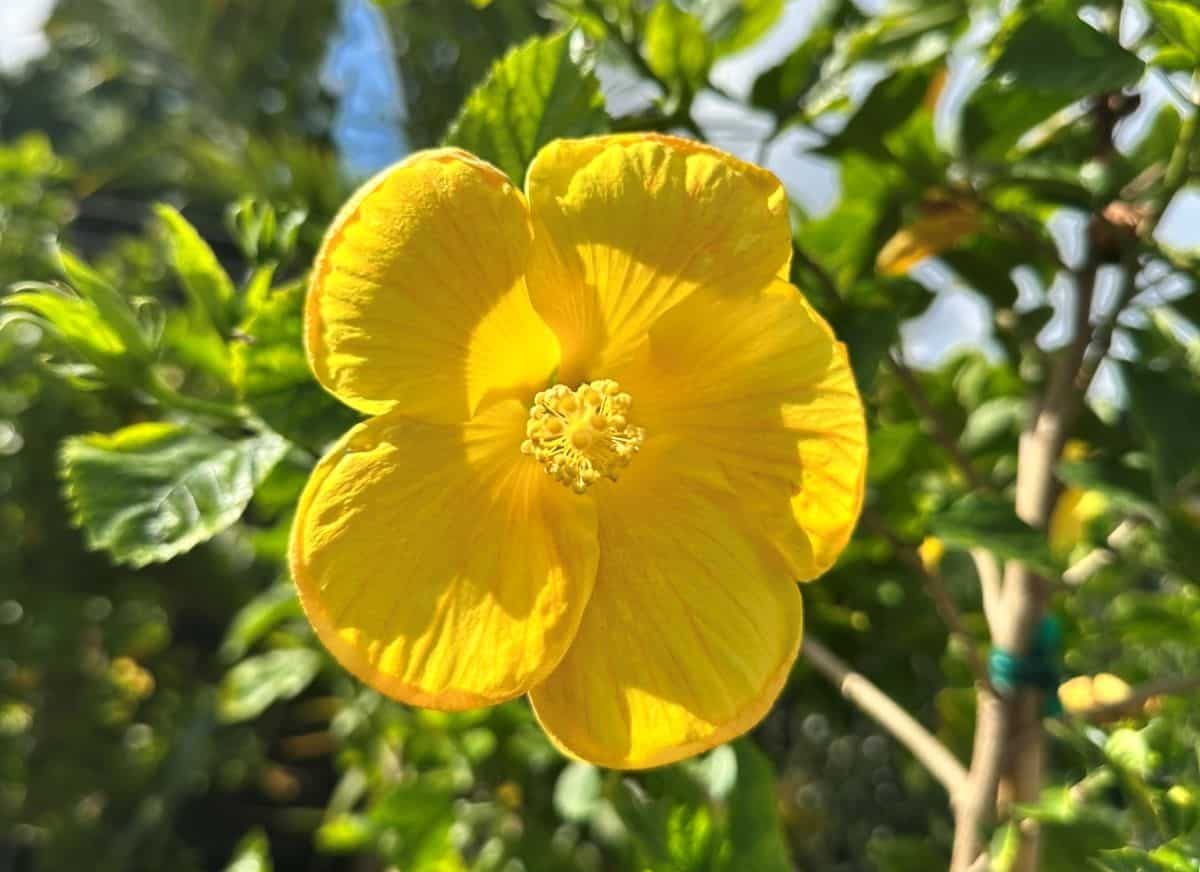
Yellow hibiscus often creates one of the most tropical-looking color combinations available.
Bright yellow flowers stand out strongly against dark green foliage and pair naturally with palms and other warm-climate plants. Depending on the cultivar, yellow flowers may range from pale buttercream tones to deep golden shades.
Many yellow cultivars also feature contrasting red or orange centers that add additional visual interest.
Orange
Orange hibiscus flowers can be difficult to ignore.
The color naturally evokes tropical sunsets, warm climates, and resort landscapes. Orange cultivars often work particularly well when combined with reds, yellows, and burgundy foliage plants such as crotons or cranberry hibiscus.
Some varieties display flowers that shift between orange, gold, and red as blooms mature.
White
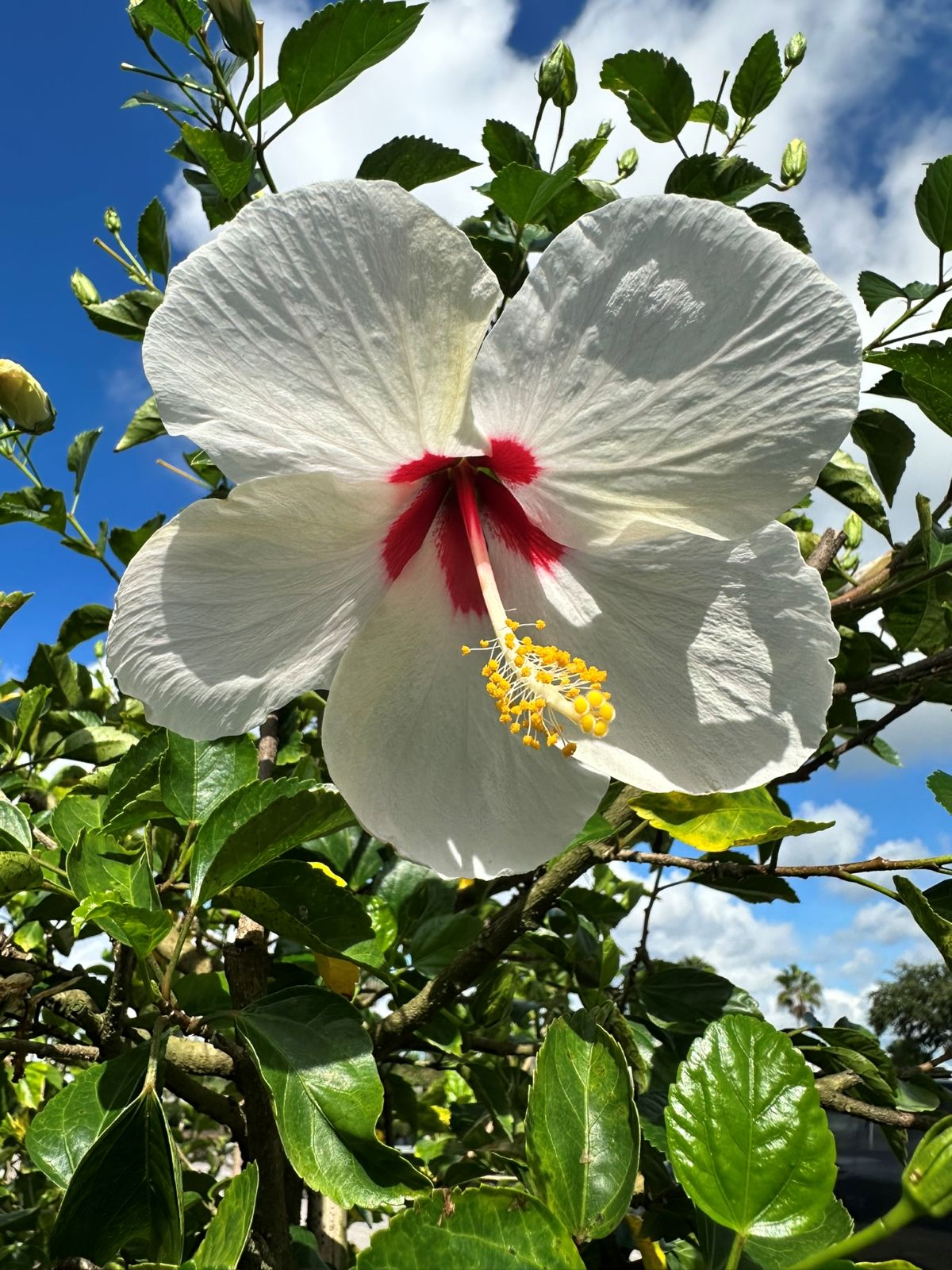
White hibiscus offers a very different aesthetic than many of the brighter colors.
The flowers often appear cleaner, more formal, and more elegant, particularly when used in contemporary landscapes or monochromatic planting schemes.
White cultivars can also be useful in gardens where bright colors would compete with surrounding architectural elements or other focal points.
In evening landscapes, white flowers often remain visible long after darker colors begin to disappear.
Peach
Peach cultivars occupy the middle ground between pink, orange, and yellow.
These softer colors have become increasingly popular because they provide warmth without overwhelming the landscape. Peach flowers often pair well with natural stone, neutral architecture, and coastal design palettes.
Many gardeners find peach cultivars easier to integrate into mixed planting beds than more intense colors.
Lavender
True lavender and purple tones remain relatively uncommon in hibiscus breeding compared to reds, pinks, and yellows.
When available, these cultivars tend to attract considerable attention because the colors feel unusual and unexpected. Some flowers display soft lavender tones, while others approach mauve, violet, or smoky purple hues.
Because true blue pigments are largely absent in hibiscus, lavender shades often represent the closest approximation available.
Multicolor Varieties
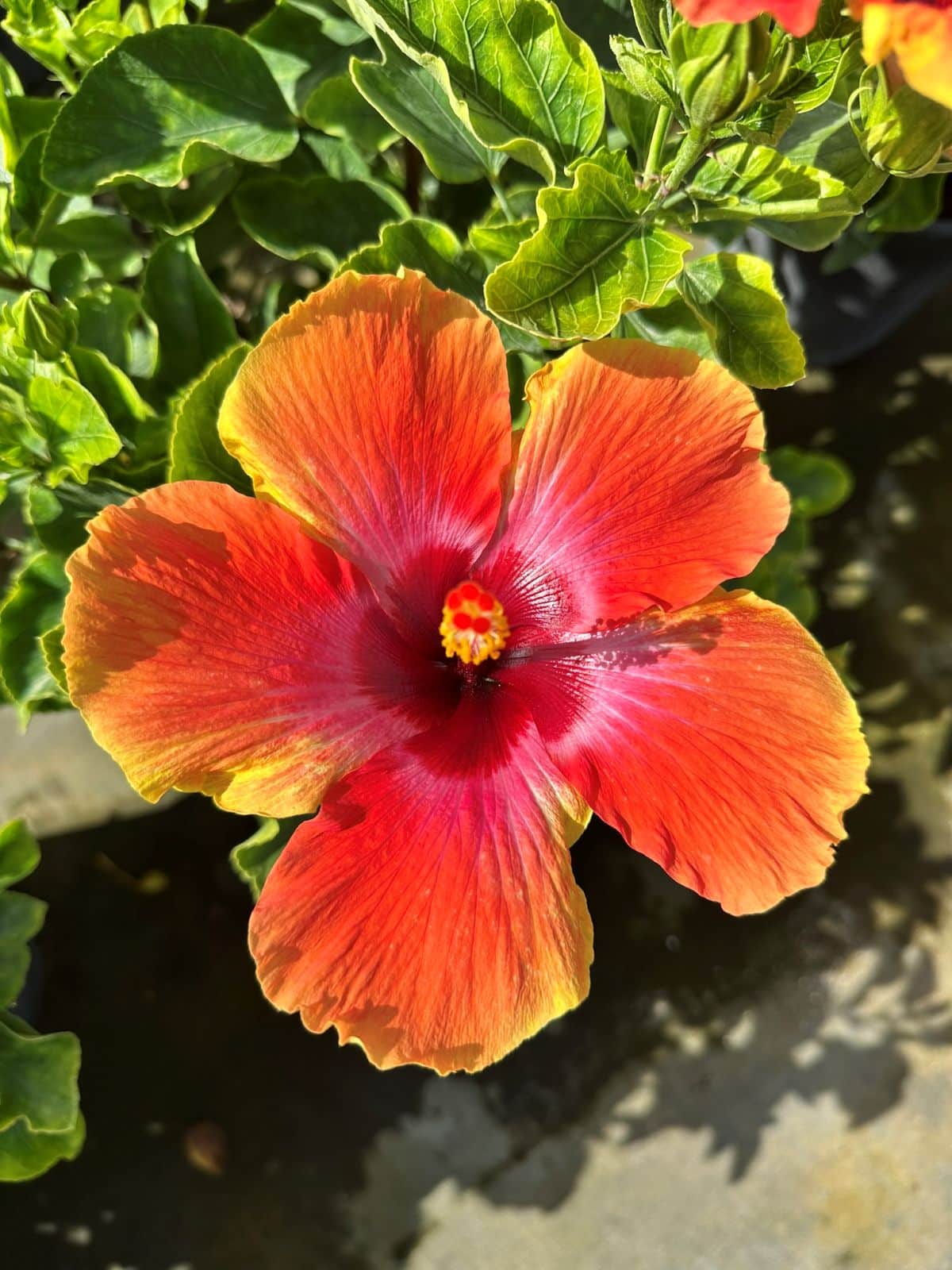
Some of the most dramatic hibiscus flowers combine multiple colors within a single bloom.
Common combinations include:
- Yellow and red
- Pink and white
- Orange and gold
- Lavender and pink
- Red and orange
Color transitions may occur gradually across the petals or appear as sharply defined zones.
Many multicolor cultivars become focal points simply because no two flowers appear exactly the same.
Rare Color Patterns
Modern hibiscus breeding has produced flowers with increasingly complex coloration.
Some cultivars display:
- Contrasting eye zones
- Speckles and spotting
- Feathered patterns
- Halo effects
- Color banding
- Petals that change color as they age
Certain collector cultivars appear almost hand-painted due to the complexity of their markings.
These unusual patterns are one reason hibiscus collecting has developed into a hobby of its own. While most homeowners select plants based on overall landscape performance, enthusiasts may seek out individual cultivars specifically for their unique flowers.
Growth Rate
One of the reasons hibiscus remains so popular in Florida landscapes is that it produces visible results relatively quickly. Compared to many flowering shrubs, hibiscus establishes rapidly, responds well to favorable growing conditions, and can create a mature appearance within a surprisingly short period of time.
That said, growth rates vary considerably depending on cultivar, climate, irrigation, soil conditions, pruning practices, and overall plant health. A hibiscus growing in Miami may behave very differently than the same cultivar growing in Jacksonville.
How Fast Hibiscus Grows
Under favorable conditions, tropical hibiscus is generally considered a moderate to fast-growing shrub.
Most healthy landscape plants can add 1 to 3 feet of growth per year, particularly during the establishment phase. Young plants often grow more aggressively than mature specimens, especially when provided with adequate sunlight, water, and nutrition.
Growth tends to occur in flushes rather than at a perfectly steady rate. During warm weather, new shoots may develop rapidly, followed by periods where the plant focuses more energy on flowering than vegetative growth.
Because flowering and growth occur simultaneously for much of the year, hibiscus often appears productive even when height gains are modest.
Establishment Year Expectations
Many homeowners underestimate how much a newly planted hibiscus can grow during its first year.
A typical nursery plant may initially appear small relative to its mature size, but healthy plants often double or even triple their canopy volume during establishment.
During the first year, homeowners can generally expect:
- Root development to be the primary priority
- Noticeable increases in branching
- Regular flushes of new foliage
- Flower production to continue during active growth
- Growth rates to accelerate after establishment
The exact timeline depends heavily on planting season, irrigation, and climate.
A hibiscus planted in spring will often show substantially more growth by year-end than one installed shortly before winter.
Growth in North Florida
North Florida represents the most challenging part of the state for tropical hibiscus.
Plants typically experience shorter growing seasons and may periodically lose foliage or suffer cold damage during winter. Growth often accelerates dramatically in spring and summer before slowing during cooler months.
While hibiscus can still perform well in many North Florida landscapes, annual growth rates are often lower than those observed farther south.
Cold events also introduce more variability from year to year.
Growth in Central Florida
Central Florida generally provides excellent conditions for tropical hibiscus.
Long growing seasons, abundant sunshine, and relatively mild winters allow plants to remain active for much of the year. Temporary slowdowns may occur during cooler periods, but severe cold damage is less common than in the northern portion of the state.
For many homeowners, Central Florida represents the balance point where hibiscus can deliver strong growth and extended flowering without the year-round tropical conditions found farther south.
Growth in South Florida
South Florida provides some of the best hibiscus-growing conditions in the United States.
Warm temperatures allow for nearly continuous growth, and plants may remain active throughout much of the year. Flowering periods are typically longer, recovery from pruning is faster, and mature plants often reach larger sizes than identical cultivars grown farther north.
Because growth rarely stops completely, hibiscus in South Florida may require more frequent pruning to maintain desired sizes and shape.
Factors That Affect Growth Rate
No two hibiscus plants grow at exactly the same pace. Several factors influence growth, including:
- Cultivar selection
- Sunlight exposure
- Irrigation practices
- Soil drainage
- Fertility
- Root space
- Pruning frequency
- Pest pressure
- Cold damage
Sunlight is often the most important variable. Plants growing in full sun generally develop denser canopies, stronger branching, and faster growth than those planted in shade.
Nutrition also plays a significant role. Hibiscus responds noticeably to proper fertilization, particularly when micronutrients remain available. Plants struggling with nutrient deficiencies may survive but often grow much more slowly than expected.
Finally, pruning can influence perceived growth rates. Regular pruning stimulates branching and canopy density, while neglected plants may become leggy and sparse even when overall growth remains substantial.
The result is that two hibiscus planted on the same day can look dramatically different a few years later simply because site conditions and maintenance practices differed.
Mature Size
One of the most common mistakes homeowners make with hibiscus is assuming the plant will remain close to the size it was when purchased. A 3-gallon hibiscus sitting in a nursery pot may appear compact and manageable, but many cultivars are capable of becoming substantial shrubs within just a few years.
The ultimate size of a hibiscus depends on genetics, climate, pruning practices, growing conditions, and age. Some remain compact throughout their lives, while others can become dominant features within the landscape if allowed to mature naturally.
Understanding mature size before planting helps avoid overcrowding, excessive pruning, and long-term maintenance challenges.
Typical Shrub Sizes
Most tropical hibiscus grown in Florida landscapes mature as medium to large shrubs.
Without aggressive pruning, many common cultivars eventually reach:
- Height: 6–10 feet
- Width: 5–8 feet
Plants maintained as flowering hedges are often kept smaller through regular pruning, but their natural tendency is usually larger than homeowners expect.
Growth is often wider and denser than many newly installed plants suggest. This becomes particularly important when determining spacing near structures, sidewalks, pools, and neighboring plants.
Standard Forms
Standard hibiscus are trained into small tree-like forms with a single trunk supporting a rounded canopy.
Most standards sold in nurseries are maintained between 5 and 8 feet tall, though larger specimens are possible.
Unlike shrub forms, the overall height of a standard includes both the trunk and canopy. As a result, even relatively compact cultivars can create significant vertical presence in the landscape. Standards are often used:
- In containers
- At entryways
- Along patios
- As focal points
- In formal tropical designs
Their mature size is usually controlled more by pruning than by genetics alone.
Dwarf Cultivars
Not every hibiscus becomes a large shrub. Dwarf cultivars are specifically selected for compact growth habits and may mature at only:
- Height: 2–4 feet
- Width: 2–4 feet
- These plants are particularly useful in:
- Small gardens
- Courtyards
- Foundation beds
- Container plantings
- Urban landscapes
Because dwarf varieties require less pruning and occupy less space, they are often a better choice than standard cultivars for homeowners working with limited planting areas.
Large Specimens
In favorable conditions, some hibiscus become surprisingly large.
Older specimens that receive adequate sunlight, water, and nutrition may exceed:
- Height: 10–12+ feet
- Width: 8–12+ feet
These plants often blur the line between shrub and small tree.
Large specimens are most commonly encountered in South Florida, where long growing seasons and minimal cold damage allow uninterrupted growth over many years. Mature plants can become impressive landscape features, particularly when covered in flowers.
While many homeowners never allow hibiscus to reach this size, it remains important to recognize that the potential exists when selecting planting locations.
Growth Over Time
A hibiscus planted today will likely look very different several years from now.
| Hibiscus Form | Typical Height | Typical Width | Best Fit |
|---|---|---|---|
| Common Shrub Forms | 6–10 feet | 5–8 feet | Flowering shrubs, hedges, foundation beds, tropical gardens, and pool landscapes |
| Dwarf Cultivars | 2–4 feet | 2–4 feet | Small gardens, courtyards, containers, foundation beds, and limited-space plantings |
| Standard Forms | 5–8 feet overall | 3–6 feet canopy width | Entryways, patios, containers, formal accents, and focal points |
| Large Specimens | 10–12+ feet | 8–12+ feet | Large planting beds, South Florida gardens, tropical specimens, and mature landscape features |
| Time After Planting | Typical Appearance | Design Implication |
|---|---|---|
| At Installation | Small nursery shrub with limited branching and immature canopy structure | Spacing may look wide at first, but should allow for future spread |
| 1 Year | Noticeably fuller canopy with increased flowering and stronger branching | Early pruning and irrigation habits begin shaping long-term form |
| 3 Years | Well-established landscape shrub approaching functional size | Plant begins to function as a hedge, accent, or visible landscape mass |
| 5 Years | Mature shrub requiring routine size management | Improper spacing becomes more obvious near walls, walks, pools, and other plants |
| 10+ Years | Large specimen capable of dominating a planting bed in favorable climates | Long-term success depends on whether mature size was considered at planting |
What to Expect Over Time
Many landscape guides focus on how a plant looks today. In reality, most of a plant’s life is spent maturing. Understanding how hibiscus changes over time helps homeowners make better decisions about spacing, maintenance, pruning, and long-term design.
A hibiscus planted this year will likely look dramatically different in five or ten years. While growth rates vary by cultivar, climate, and care, most plants follow a predictable progression from establishment to maturity.
First Year
The first year is largely about establishment. Although new growth and flowers are often produced quickly, much of the plant’s energy is directed below ground as roots expand into the surrounding soil. Healthy plants typically become fuller, branch more aggressively, and produce increasingly frequent blooms as they settle into their new environment. During the first year, it is normal to observe:
- New shoots and branching
- Increased flowering
- Periodic transplant stress
- Seasonal fluctuations in growth
- Rapid canopy expansion compared to nursery size
Patience is important during this stage. A hibiscus that appears modest at installation can become substantially larger by the end of its first growing season.
Three Years
By year three, most hibiscus have become recognizable landscape shrubs. The root system is generally well established, flowering is more consistent, and the plant begins to occupy the space originally intended for it.
At this point, many homeowners start to appreciate the importance of proper spacing because neighboring plants may begin competing for light and room. A typical three-year-old hibiscus often displays:
- Dense branching
- Regular flowering
- A developed shrub form
- Increased pruning requirements
- Improved drought tolerance
For many landscapes, this is when the plant begins delivering the visual impact originally envisioned during installation.
Five Years
Around five years of age, many hibiscus reach practical maturity. Growth continues, but the dramatic changes seen during establishment often begin to slow. The plant’s overall form becomes more defined, and maintenance shifts from encouraging growth to managing size, density, and flowering performance. Many five-year-old hibiscus:
- Function as mature landscape shrubs
- Require routine pruning
- Produce substantial seasonal flower displays
- Influence the appearance of surrounding plantings
- Occupy most of their intended planting space
This is also the stage where poor initial spacing decisions become difficult to ignore.
Ten Years
A healthy ten-year-old hibiscus can be surprisingly substantial.
Depending on cultivar and maintenance practices, plants may become large specimens that anchor entire planting beds. In frost-free areas, some hibiscus continue developing impressive canopies and increasingly complex branch structures.
At this stage, the plant often contributes as much architectural value as flowering value.
Many mature specimens display:
- Significant trunk development
- Broad canopies
- Dense branching
- Extensive flowering potential
- Strong visual presence within the landscape
Homeowners are often surprised by how different a ten-year-old hibiscus looks compared to the young nursery plant they originally purchased.
Twenty Years
Although many people think of hibiscus as relatively short-lived ornamentals, healthy plants can remain in landscapes for decades.
A twenty-year-old hibiscus that has been protected from severe freezes and maintained appropriately may become a landscape landmark. Trunks can become thick and textured, branch architecture becomes increasingly complex, and the plant develops a character that younger specimens simply do not possess.
Not every hibiscus reaches this age. Renovations, storms, freezes, disease, and changing landscape preferences often result in plants being removed long before their natural lifespan ends.
Those that remain, however, demonstrate an important lesson: hibiscus is not merely a temporary flowering shrub. Given suitable conditions, it can become a long-term structural component of a Florida landscape.
The difference between a one-year-old hibiscus and a twenty-year-old hibiscus is often greater than the difference between entirely different landscape plants. Understanding that long-term trajectory helps ensure the plant is given the space and care it needs to mature successfully.
Blooming Behavior
Flowers are the reason most people plant hibiscus. Unlike many flowering shrubs that produce a brief seasonal display, hibiscus can bloom repeatedly over extended periods when conditions are favorable. In warm parts of Florida, healthy plants may produce flowers for much of the year, creating a nearly continuous cycle of buds, blooms, and new growth.
Understanding how hibiscus flowers develop helps explain why blooming can be abundant one month, sparse the next, and occasionally absent altogether.
How Hibiscus Produces Flowers
Hibiscus flowers are produced on new growth. As stems elongate and develop fresh shoots, flower buds form near the ends of actively growing branches. This is one reason healthy, vigorous plants tend to bloom more heavily than stressed plants.
Flower production depends on several factors working together:
- Adequate sunlight
- Active growth
- Available nutrients
- Consistent moisture
- Suitable temperatures
When these conditions are present, a healthy plant may produce numerous buds simultaneously, creating the impression of continuous flowering even though individual blooms are short-lived.
Why Most Flowers Last One Day
One of the most surprising things about hibiscus is how briefly individual flowers remain open. Most tropical hibiscus flowers open in the morning, remain attractive for a single day, and begin fading by evening or the following day. This is completely normal and does not indicate a problem.
The plant compensates for the short lifespan of individual flowers by continuously producing new buds. A mature shrub may have dozens of developing buds at different stages, ensuring that new flowers replace old ones throughout the blooming season.
Many homeowners initially worry when flowers drop after a day, only to discover that another bloom opens the next morning.
Peak Bloom Seasons
Blooming can occur almost year-round in parts of Florida, but flower production is rarely uniform throughout the calendar year.
Most hibiscus experience their heaviest flowering during periods of active growth, typically from spring through fall. Warm temperatures, longer days, and vigorous shoot production create ideal conditions for bud formation.
In general:
- South Florida may see blooms during most months of the year.
- Central Florida often experiences peak flowering from spring through late fall.
- North Florida typically has a shorter blooming season due to cooler temperatures.
Even within these broad patterns, weather, cultivar selection, and plant health can significantly influence flowering intensity.
Blooming Cycles
Hibiscus does not always bloom at the same rate.
Many plants naturally cycle between periods of vigorous flowering and periods where growth becomes the priority. A shrub may be covered in blooms for several weeks, produce fewer flowers while generating new shoots, and then enter another heavy flowering phase.
This pattern is especially common following:
- Pruning
- Fertilization
- Weather changes
- Recovery from stress
- Major growth flushes
These fluctuations are usually normal and should not be confused with flowering problems.
Why Blooming Stops
A hibiscus that suddenly stops flowering is often responding to environmental conditions rather than suffering from a serious problem. Common causes include:
- Insufficient sunlight
- Excessive shade
- Improper pruning
- Nutrient deficiencies
- Excessive nitrogen fertilization
- Drought stress
- Overwatering
- Pest infestations
- Cold weather
In Florida landscapes, lack of sunlight is among the most common causes of poor flowering. Plants may survive in partial shade but often produce significantly fewer blooms than those growing in full sun.
Cold weather can also temporarily interrupt flowering, particularly in Central and North Florida.
Encouraging Consistent Blooming
The healthiest hibiscus plants are usually the most floriferous. Consistent flowering begins with proper site selection and continues through regular maintenance. While no plant blooms continuously without interruption, several practices can maximize flower production.
The most important factors include:
- Providing abundant sunlight
- Maintaining proper irrigation
- Avoiding prolonged drought stress
- Fertilizing appropriately
- Monitoring nutrient deficiencies
- Pruning strategically
- Managing pests before infestations become severe
It is also important to avoid overreacting to temporary reductions in flowering. Many blooming interruptions resolve naturally once growing conditions improve or the plant completes a new growth cycle.
A mature, healthy hibiscus rarely produces flowers every day of the year, but it can provide remarkably consistent color compared to most flowering shrubs used in Florida landscapes.
Root System
Roots are one of the least visible but most important parts of any landscape plant. While flowers and foliage attract most of the attention, the root system ultimately determines how effectively a hibiscus accesses water, nutrients, and physical stability.
Fortunately for homeowners, hibiscus roots are generally far less aggressive than those of many large trees commonly planted in Florida. Most concerns about foundations, pools, sidewalks, and utilities can be addressed through proper spacing and realistic expectations.
How Hibiscus Roots Grow
Hibiscus develops a fibrous root system composed of numerous smaller roots rather than a few large structural roots. These roots spread outward from the base of the plant in search of water, oxygen, and nutrients. Most actively growing roots are found in the upper layers of soil where moisture and oxygen are most readily available.
Unlike many trees, hibiscus does not typically produce large surface roots that dramatically alter the surrounding landscape. This fibrous structure also helps explain why hibiscus responds relatively well to transplanting compared to some larger woody plants.
Root Depth
Most hibiscus roots occupy the upper portion of the soil profile. In Florida’s sandy soils, the majority of active roots are often found within the top 12 to 24 inches of soil, although individual roots may extend deeper when conditions allow.
Several factors influence rooting depth, including soil drainage, irrigation practices, water table depth, soil compaction, and available oxygen. Poorly drained soils often encourage shallower root development, while well-drained soils may support somewhat deeper rooting.
Root Spread
Root spread generally exceeds the width of the visible canopy. A mature hibiscus may have roots extending several feet beyond its outer branches, even though most of those roots are relatively small in diameter. This is normal for shrubs and should not be interpreted as aggressive behavior.
A wider root system helps the plant capture water, access nutrients, improve drought tolerance, and maintain stability during wind events. As the canopy expands over time, the root zone typically expands with it.
Are Hibiscus Roots Invasive?
For most homeowners, the short answer is no. Hibiscus is not generally considered an invasive-rooted landscape shrub. It does not have the reputation for damaging infrastructure associated with species such as large ficus trees, banyans, mature live oaks, or certain fast-growing shade trees.
That said, all plants exert some pressure as they grow. A mature hibiscus planted directly against a structure can create maintenance challenges, compete for space, and contribute to localized issues. The solution is not concern about invasiveness but proper plant placement. Most foundation and hardscape concerns involving hibiscus result from insufficient spacing rather than aggressive roots.
Hibiscus Near Foundations
Hibiscus is commonly planted near homes and commercial buildings throughout Florida. When installed with adequate spacing, it generally performs well near foundations and rarely creates structural concerns.
A reasonable rule is to consider the plant’s mature width rather than its nursery size. Allowing sufficient room for future growth reduces pruning requirements and improves airflow around both the plant and the structure. The challenge is usually canopy management, not root damage.
Hibiscus Near Pools
Hibiscus is frequently used around pools because of its tropical appearance and long bloom season. From a root perspective, the plant is generally compatible with pool environments when properly sited.
The larger considerations are mature canopy size, flower drop, leaf litter, maintenance access, and irrigation management. The roots themselves are not commonly viewed as a significant threat to properly constructed pools.
Hibiscus Near Utilities
Most underground utilities are not damaged by hibiscus roots under normal circumstances. Like nearly all plants, roots may grow toward favorable moisture conditions if leaks are present, but hibiscus does not have a widespread reputation for aggressively invading utility infrastructure.
Before planting near utilities, it is still wise to verify utility locations, consider mature plant size, maintain access for future repairs, and allow adequate planting distance. In most Florida landscapes, hibiscus is one of the more infrastructure-friendly flowering shrubs.
Light Requirements
Hibiscus flowers best when it receives abundant light. In Florida landscapes, that usually means full sun or strong part sun. Plants may survive in lower light, but survival and performance are not the same thing. A hibiscus growing in too much shade often becomes thinner, blooms less, and requires more patience than most homeowners expect.
Full Sun
Full sun is generally the best exposure for tropical hibiscus in Florida. In practical terms, this means at least six hours of direct sunlight per day. Plants grown in full sun usually develop denser branching, stronger flowering, and a more compact form than plants grown in shade.
Full sun is especially important when hibiscus is being used as a flowering hedge, specimen plant, or colorful foundation shrub. Without enough light, the plant may still grow, but it usually will not deliver the flower production that made it desirable in the first place.
Part Sun
Part sun can work well for hibiscus when the plant still receives several hours of direct light each day. Morning sun with afternoon protection is often a useful combination, especially in hot inland locations where reflected heat can become intense.
Plants in part sun may flower less heavily than plants in full sun, but they can still perform well if the site is bright and open. The key distinction is that part sun should mean reduced direct sunlight, not dim shade.
Shade Tolerance
Hibiscus is not a true shade plant. It can tolerate some shade, but flowering usually declines as light becomes limited. Plants in heavy shade often become leggy, sparse, and more prone to weak growth.
Shade also affects the way hibiscus responds to pruning. A heavily shaded plant may not fill back in quickly after being cut, which can make corrective pruning frustrating. If flowers are the main reason for planting hibiscus, deep shade is usually the wrong site.
Florida Sun Intensity
Full sun in Florida is not gentle light. A west-facing bed in Tampa, Orlando, Naples, or Miami can expose plants to intense afternoon heat, reflected light from walls, and warm paved surfaces. Hibiscus generally tolerates these conditions better than many flowering shrubs, but newly planted specimens may still need careful irrigation during establishment.
Leaf scorch, wilting, or slowed growth after installation may reflect transplant stress rather than an inability to handle sun. Once established, healthy hibiscus usually adapts well to bright Florida exposures when soil moisture and nutrition are managed appropriately.
Seasonal Changes in Light
Light conditions in Florida landscapes can change throughout the year. Oak canopies thin and refill, nearby shrubs mature, palms cast shifting shadows, and the sun angle changes between winter and summer. A bed that seemed bright during one season may become noticeably shadier during another.
This matters because hibiscus performance often declines gradually as surrounding plants mature. A hibiscus that once bloomed heavily may produce fewer flowers years later simply because it now receives less direct sun. When evaluating poor flowering, light should always be considered before assuming the problem is fertilizer, insects, or disease.
Soil Requirements
One reason hibiscus performs so well across much of Florida is its adaptability. The plant can tolerate a wide range of soil conditions, from sandy residential lots to amended garden beds. That flexibility does not mean all soils are equal, however. Soil quality influences growth rate, flowering, nutrient availability, drought tolerance, and long-term plant health.
Many hibiscus problems that appear to be caused by pests or fertilizer are ultimately rooted in soil conditions.
Florida Sandy Soils
Most Florida landscapes are built on sandy soils with relatively low organic matter and limited nutrient-holding capacity. Water moves through these soils quickly, which can be beneficial for drainage but challenging for plants that require consistent moisture and fertility.
Fortunately, hibiscus generally adapts well to Florida’s sandy conditions. Healthy plants are commonly grown in native soils throughout the state without extensive modification. The tradeoff is that nutrients may leach more quickly than they would in heavier soils, making regular fertility management more important.
Organic Matter
Organic matter improves almost every aspect of soil performance.
Compost, aged organic materials, and decomposed mulch can help improve moisture retention, nutrient availability, microbial activity, and overall soil structure. While hibiscus does not require heavily amended soil, it often responds positively when organic matter is incorporated into planting areas.
The goal is improvement rather than replacement. In most Florida landscapes, modest additions of organic matter are more practical and sustainable than attempting to create an entirely artificial soil environment.
Drainage
Good drainage is one of the most important requirements for long-term hibiscus success.
The plant prefers soils that remain moist but do not stay saturated for extended periods. Roots require oxygen as well as water, and poorly drained soils can create conditions that favor root decline, nutrient deficiencies, and disease. Signs of drainage problems may include:
- Persistent yellowing leaves
- Slow growth
- Repeated wilting despite wet soil
- Root rot
- General decline
A hibiscus planted in average sandy soil often performs better than one planted in rich soil that remains constantly waterlogged.
Soil pH
Hibiscus generally performs best in slightly acidic to neutral soils. Much of Florida naturally falls within an acceptable range, but pH can vary significantly depending on location, irrigation water, construction activities, and previous land use.
Soil pH influences the availability of nutrients rather than the amount of nutrients present. A plant may be surrounded by iron, magnesium, or other essential elements and still develop deficiencies if soil conditions prevent those nutrients from being absorbed.
This relationship explains why yellow leaves are sometimes caused by soil chemistry rather than a lack of fertilizer.
Raised Beds
Raised beds can be useful where drainage is poor, planting space is limited, or greater control over soil conditions is desired.
By elevating the root zone above surrounding grade, raised beds often improve drainage and reduce the risk of prolonged saturation. They can also make it easier to incorporate organic matter and create favorable growing conditions in challenging sites.
Raised beds are not required for most Florida hibiscus plantings, but they can provide meaningful benefits in locations with heavy soils, poor drainage, or recurring root problems.
Soil Improvement Strategies
The best soil improvement strategies are usually simple.
Rather than attempting to completely replace native soil, most successful hibiscus plantings focus on improving existing conditions while working with the site’s natural characteristics. Practices that often provide long-term benefits include incorporating organic matter where appropriate, maintaining mulch, avoiding unnecessary soil compaction, and correcting drainage problems before planting.
A healthy soil environment supports stronger roots, and stronger roots support better growth, flowering, and overall plant performance. Many hibiscus care practices ultimately become easier when the soil beneath the plant is functioning properly.
Irrigation
Water plays a major role in hibiscus performance. Too little water can reduce growth and flowering, while too much can create root problems that are often mistaken for nutrient deficiencies or disease. Hibiscus generally prefers consistent soil moisture, particularly during active growth, but it does not thrive in constantly saturated conditions.
One of the most common mistakes is assuming a flowering shrub needs daily irrigation forever. In reality, water requirements change significantly as plants mature.
Newly Installed Plants
Recently planted hibiscus require the most attention. During establishment, roots are confined to a relatively small area and cannot yet access moisture from the surrounding landscape. Consistent irrigation is critical during this period.
The goal is to keep the root ball and adjacent soil evenly moist while encouraging roots to expand outward. Watering frequency depends on season, soil type, weather, and plant size, but newly installed hibiscus generally require more frequent irrigation than established specimens.
Temporary wilting during hot afternoons is not uncommon immediately after planting, particularly during Florida’s warmer months.
Established Plants
Once established, hibiscus becomes more resilient and less dependent on frequent irrigation. Mature plants can often utilize moisture stored deeper within the soil profile and are generally better equipped to tolerate short dry periods.
This does not mean established hibiscus is drought-proof. Plants that receive inadequate moisture for extended periods may flower less, grow more slowly, and develop a thinner canopy. However, mature plants are usually more forgiving than newly installed ones.
The objective shifts from frequent watering to deep, efficient watering when conditions require it.
Drought Response
Hibiscus typically responds to drought stress in predictable ways. Flower production often declines first, followed by slower growth and reduced vigor. Leaves may droop, curl slightly, or become yellow as the plant attempts to conserve resources.
Prolonged drought can cause:
- Reduced flowering
- Premature bud drop
- Leaf yellowing
- Leaf drop
- Slower growth
Most healthy plants recover once moisture becomes available again, although recovery may take time depending on the severity and duration of the stress.
Overwatering
Overwatering causes more confusion than underwatering because the symptoms can appear similar.
Yellow leaves, poor growth, wilting, and general decline may all occur when roots remain excessively wet. The difference is that drought-stressed plants need water, while overwatered plants often suffer because oxygen is no longer reaching the root system effectively.
Common signs of excessive moisture include:
- Persistently wet soil
- Yellowing foliage
- Slow growth
- Root decline
- Increased disease pressure
When in doubt, evaluating soil moisture is usually more useful than evaluating the appearance of the leaves alone.
Irrigation Scheduling
There is no universal watering schedule that works for every hibiscus in Florida. A plant growing in sandy soil in Tampa behaves differently than one growing in a container in Naples or a shaded bed in Jacksonville. Effective irrigation scheduling considers:
- Soil type
- Plant age
- Sun exposure
- Season
- Rainfall
- Temperature
- Wind
Many established landscape hibiscus benefit more from occasional deep watering than frequent shallow irrigation. Deep watering encourages broader root development and often improves drought tolerance over time.
Seasonal Water Requirements
Water needs fluctuate throughout the year. During spring and summer, active growth and flowering typically increase moisture demand. Higher temperatures, longer days, and increased evapotranspiration often require closer attention to irrigation.
Florida’s rainy season may significantly reduce irrigation needs, although localized conditions still matter. Conversely, winter often brings slower growth and lower water consumption, particularly in Central and North Florida.
The healthiest hibiscus plants are rarely those that receive the most water. They are usually the plants receiving the right amount of water for their site, season, and stage of growth.
Fertilization
Hibiscus responds strongly to nutrition, especially in Florida’s sandy soils where nutrients can move quickly through the root zone. Proper fertilization supports growth, flowering, foliage color, and recovery from pruning or stress. Poor fertilization, however, can create problems just as easily as it solves them. Too little nutrition may produce weak growth and yellow leaves, while excessive or poorly timed fertilizer can increase pests, waste nutrients, and encourage growth that requires more pruning.
Why Hibiscus Is Considered a Heavy Feeder
Tropical hibiscus is often described as a heavy feeder because it grows quickly, flowers repeatedly, and maintains a large canopy of active foliage. Compared with lower-input shrubs, it usually performs better when nutrients are supplied consistently during periods of active growth.
That phrase should not be interpreted as permission to overfertilize. Hibiscus does not need constant feeding, and more fertilizer does not automatically mean more flowers. The goal is steady nutrition that supports healthy growth without forcing excessive soft growth.
Macronutrients
The primary macronutrients in most fertilizers are nitrogen, phosphorus, and potassium. Nitrogen supports foliage growth and overall vigor. Phosphorus supports root development, flowering, and energy transfer within the plant, but it should not be applied casually where soils already contain adequate phosphorus. Potassium supports stress tolerance, water regulation, flowering, and overall plant function.
For hibiscus, balanced nutrition matters more than chasing one nutrient. A plant receiving excessive nitrogen but inadequate potassium or micronutrients may look green for a while but still flower poorly, attract pests, or develop weak growth.
Potassium
Potassium is especially important for flowering plants because it supports many of the processes involved in water movement, stress response, and flower development. In sandy Florida soils, potassium can leach over time, particularly where irrigation or rainfall is frequent.
A hibiscus with insufficient potassium may show weaker growth, reduced flowering, marginal leaf symptoms, or lower overall resilience. These symptoms can overlap with other problems, so potassium deficiency should be considered alongside irrigation, soil pH, root health, and general fertility rather than diagnosed from appearance alone.
Micronutrients
Micronutrients are required in smaller quantities, but they are not optional. Hibiscus commonly shows visible symptoms when micronutrients become unavailable, especially in alkaline soils, heavily irrigated beds, or landscapes where fertility has been inconsistent.
Iron, magnesium, manganese, zinc, copper, and boron all play roles in plant health. The most familiar symptom is yellowing foliage, but not all yellow leaves mean the same thing. The location of the yellowing, the pattern on the leaf, and the age of affected foliage all matter.
Iron
Iron is closely associated with chlorophyll formation, which is why iron-related problems often appear as yellowing leaves with greener veins. This condition is especially common when soil pH limits iron availability, even if iron is physically present in the soil.
Adding more general fertilizer may not correct an iron availability problem. In some cases, the issue is not nutrient quantity but soil chemistry, irrigation water, or root function.
Magnesium
Magnesium is part of the chlorophyll molecule and plays an important role in photosynthesis. Deficiency symptoms often appear on older leaves first because magnesium is mobile within the plant.
In Florida landscapes, magnesium issues may be confused with nitrogen deficiency, potassium imbalance, or general plant stress. As with iron, the pattern of yellowing matters.
Fertilization Schedules
Hibiscus generally benefits from fertilization during active growth, especially from spring through fall in much of Florida. In South Florida, where growth may continue through much of the year, nutrition may be managed more continuously. In cooler parts of the state, fertilization should slow or stop when growth slows.
The best schedule depends on location, soil type, product formulation, irrigation, rainfall, and local fertilizer rules. Slow-release fertilizers are often preferred because they provide nutrients more gradually and reduce the risk of leaching compared with highly soluble products.
Avoid fertilizing immediately before heavy rain, and always keep fertilizer off pavement, driveways, sidewalks, and storm drains. Local ordinances may restrict when and how fertilizer can be applied.
Organic Approaches
Organic fertility programs rely on materials such as compost, composted manure, plant-based meals, organic granular fertilizers, and decomposing mulch. These approaches can improve soil biology and gradually support nutrient availability, especially when paired with good mulching practices.
Organic methods are usually slower and less precise than synthetic fertilizers. That is not necessarily a disadvantage. For homeowners who prefer gradual soil improvement and moderate growth, organic fertility can work well. The main limitation is that visible nutrient deficiencies may require more targeted correction than compost alone can provide.
Synthetic Approaches
Synthetic fertilizers can provide predictable nutrient ratios and faster correction of deficiencies. This can be useful for hibiscus because the plant often responds visibly to improved fertility.
The risk is overuse. Fast-release nitrogen can push soft growth, increase pruning needs, and may worsen pest pressure if applied without considering plant health and site conditions. Products containing micronutrients can be helpful, but they should be selected based on the plant’s symptoms, soil conditions, and maintenance goals.
A good fertilization program for hibiscus is not aggressive. It is consistent, site-aware, and restrained enough to support flowering without creating unnecessary growth or environmental loss.
Hibiscus Across Florida
Florida is a long state, and hibiscus does not behave the same everywhere. The difference between Key West, Miami, Tampa, Orlando, Gainesville, Jacksonville, and the Panhandle is not subtle. In the warmest parts of the state, tropical hibiscus can function as a nearly year-round evergreen flowering shrub. Farther north and inland, the same plant may behave more seasonally and face periodic cold damage.
For most Florida homeowners, the key question is not whether hibiscus can grow in the state. It is how reliable it will be in a specific region, site, and microclimate.
Florida Keys
The Florida Keys offer some of the best conditions for tropical hibiscus in the continental United States. Warm temperatures, minimal freeze risk, and strong sunlight allow plants to grow and flower through much of the year.
The main challenges in the Keys are usually not cold but exposure. Salt spray, wind, shallow soils, reflected heat, and irrigation water quality can influence performance. Hibiscus can be very effective in protected Keys landscapes, but highly exposed oceanfront sites may require more salt-tolerant plants or careful cultivar selection.
In some Keys landscapes, iguanas may also browse hibiscus foliage, shoots, and flowers, especially near canals, seawalls, and other areas where iguanas are already active.
Miami and South Florida
Miami and much of South Florida provide excellent conditions for tropical hibiscus. Plants often remain evergreen, flower heavily, and recover quickly from pruning. Growth can continue through much of the year, especially in protected residential and commercial landscapes.
Because growth is so consistent, maintenance becomes more important. Hibiscus in South Florida may require more frequent pruning, regular nutrition, and closer pest monitoring than plants in cooler regions. The benefit is that healthy plants can provide a level of continuous color that is difficult to achieve elsewhere in the state.
South Florida is also the part of the state where iguana browsing is most likely to become a design constraint. In areas with established iguana populations, hibiscus should not be treated as fully protected ornamental foliage unless the planting location or property layout limits access.
Naples and Southwest Florida
Naples and much of Southwest Florida are also strong hibiscus regions. Warm winters, long growing seasons, and abundant sunlight allow tropical hibiscus to perform well in many residential and commercial landscapes.
Coastal exposure becomes the main variable. Hibiscus can work well near the coast when protected from the harshest salt spray, but it is not a true frontline coastal shrub. Inland Southwest Florida sites may also experience occasional cold snaps, though damage is usually less frequent than in Central or North Florida.
Sarasota and Tampa Bay
Sarasota and Tampa Bay sit in a useful middle zone for hibiscus. In protected coastal and urban locations, tropical hibiscus often performs very well and may flower for much of the year. Inland sites can be more variable, especially during colder winters.
This region is where microclimate begins to matter more. A hibiscus near a south-facing wall in St. Petersburg may perform very differently than one in an open, inland Brandon or Plant City landscape. With good sunlight, drainage, and occasional cold protection awareness, hibiscus remains a practical and common choice throughout much of the area.
Orlando and Central Florida
Central Florida can support excellent hibiscus growth, but plants are more likely to experience seasonal slowdowns and occasional cold damage than they are farther south. Healthy plants often grow vigorously from spring through fall, then slow during cooler weather.
In this region, site selection is especially important. Protected locations near structures, courtyards, pools, and warm urban areas often perform better than open sites exposed to cold air drainage. Hibiscus can be used successfully in Central Florida, but homeowners should expect more seasonal behavior than they would in Miami or Naples.
Gainesville
Gainesville is near the practical northern edge for reliable tropical hibiscus performance in ordinary landscapes. Plants may grow beautifully during the warm season, but winter cold can cause defoliation, stem damage, or dieback during significant freezes.
In Gainesville, tropical hibiscus is often best treated as a warm-season landscape shrub, container plant, or protected specimen rather than a fully dependable evergreen hedge. Native hibiscus species and hardy hibiscus types may be better long-term choices where cold tolerance is a priority.
Jacksonville
Jacksonville can grow hibiscus, but expectations should be more cautious. Coastal microclimates may provide more protection than inland neighborhoods, yet winter cold remains a recurring limitation for tropical hibiscus.
Plants may perform well for several years and then suffer damage during a colder event. For this reason, tropical hibiscus in Jacksonville is often better suited to protected areas, containers, courtyards, or landscapes where periodic recovery pruning is acceptable. It should not be treated with the same confidence as a South Florida evergreen shrub.
Florida Panhandle Considerations
The Florida Panhandle is generally not ideal for tropical hibiscus as a permanent, low-risk landscape shrub. Warm-season growth can be impressive, but winter freezes are common enough that plants may be damaged or killed without protection.
In this region, tropical hibiscus often makes more sense as a container plant, seasonal color plant, or protected specimen. Hardy hibiscus species, native rosemallows, and other cold-tolerant flowering shrubs are usually better suited for long-term landscape structure.
For Panhandle landscapes, the word “hibiscus” should be used carefully. Tropical hibiscus may be possible, but cold-hardy hibiscus types are often more regionally appropriate.
Coastal Performance
Hibiscus can perform well in many Florida coastal landscapes, but it should not be treated as a frontline coastal shrub. Its tolerance is best described as moderate. In protected coastal neighborhoods, courtyards, pool areas, and landscapes set back from direct salt spray, hibiscus can grow and flower successfully. In exposed beachside locations, performance becomes less reliable.
The distinction matters because “coastal” can mean very different things. A landscape three blocks from the Gulf with buildings and vegetation blocking wind is not the same environment as a planting bed facing open water.
Salt Spray Tolerance
Tropical hibiscus can tolerate some salt spray, especially when exposure is occasional or moderated by nearby structures, fences, dunes, or other plantings. Light salt exposure may cause limited leaf spotting, browning, or reduced vigor, but healthy plants often recover when conditions improve.
Problems become more likely where salt-laden wind repeatedly contacts foliage. In those locations, leaves may burn, buds may drop, and the plant may struggle to maintain a dense canopy. Hibiscus is better viewed as a secondary coastal plant than a first-line salt barrier.
Saltwater Exposure
Salt spray and saltwater flooding are not the same issue. A plant that tolerates windblown salt on its leaves may still be damaged by salty water around its roots.
Hibiscus does not perform well in soils repeatedly exposed to saltwater intrusion, storm surge, or standing brackish water. Root-zone salt accumulation can reduce water uptake, damage roots, and cause decline even when the above-ground plant initially appears healthy.
After a coastal flooding event, visible damage may not appear immediately. Leaves may yellow, drop, or brown over time as salt affects the root system and soil environment.
Barrier Island Performance
Hibiscus is common on Florida barrier islands, but success depends heavily on protection. Plants often perform well on the leeward side of buildings, inside courtyards, behind walls, near pools, or within layered landscapes where more salt-tolerant plants absorb the worst exposure.
Open dune edges, oceanfront lots, and unsheltered canal-front plantings are more difficult. In those settings, hibiscus may survive for a time but require more irrigation management, pruning, and replacement than tougher coastal shrubs.
Aapproach is to use hibiscus behind the first layer of coastal defense rather than as the defense itself.
Beachside Landscapes
In beachside landscapes, hibiscus is best used where color is desired but exposure is moderated. It can be excellent near patios, pool enclosures, entry gardens, and protected planting beds where it receives sun without constant salt blast.
For highly exposed beachside sites, more salt-tolerant plants should usually form the structural backbone of the landscape. Hibiscus can then be used selectively as a flowering accent in protected pockets. This placement preserves the tropical color people want while reducing the likelihood that the plant becomes a recurring maintenance problem.
Iguanas and Hibiscus
In parts of South Florida, green iguanas can be a real issue for hibiscus. This is not a universal Florida problem, and many homeowners in Central or North Florida may never deal with it. But in areas where iguanas are established, hibiscus can become part of the buffet.
Iguanas are herbivorous reptiles that feed on leaves, flowers, tender shoots, and fruiting material from many landscape plants. Hibiscus is attractive because it offers soft foliage and large flowers. Damage may appear as missing leaves, stripped branch tips, chewed flowers, broken stems, or plants that never seem to recover fully before being browsed again.

Where Iguana Damage Is Most Likely
Iguana pressure is most common in warmer South Florida landscapes, especially near canals, seawalls, lakes, drainage corridors, golf courses, and dense vegetation where iguanas can bask, hide, and move between properties.
A hibiscus growing in an inland Central Florida subdivision is unlikely to face the same risk as one planted along a Miami canal or a waterfront property in Broward, Palm Beach, or the Keys. Location matters more than the plant itself.
What Iguana Damage Looks Like
Iguana browsing usually looks different from insect damage. Instead of small holes, stippling, honeydew, or distorted new growth, damage often appears as larger missing pieces of foliage or flowers. Tender shoots may be clipped back, and plants may look uneven or repeatedly stripped on the side most accessible to the animal.
A single feeding event may be mostly cosmetic. Repeated browsing can weaken the plant, reduce flowering, and prevent young hibiscus from developing a full canopy.
Are Hibiscus Iguana-Resistant?
Hibiscus should not be considered iguana-resistant. In landscapes with heavy iguana activity, it may be browsed repeatedly.
That does not mean hibiscus cannot be grown where iguanas are present, but expectations should be realistic. A homeowner may need to protect young plants, use hibiscus in less accessible locations, or choose tougher plants for exposed areas where iguanas are already active.
Design Considerations in Iguana Areas
In iguana-prone landscapes, hibiscus is usually better used as a protected accent than as the main structural plant. Avoid relying on hibiscus as the only hedge, privacy screen, or foundation shrub in locations where iguanas are known to feed heavily.
More practical strategies include placing hibiscus closer to active human spaces, using it inside courtyards or fenced areas, combining it with less palatable plants, and avoiding large exposed masses near seawalls or canal edges. Young plants are especially vulnerable because they have less stored energy and less canopy to lose.
Management Expectations
Managing iguana damage is not the same as managing insects or disease. Fertilizer, pruning, and irrigation can help hibiscus recover, but they do not stop browsing. Physical exclusion, habitat modification, professional wildlife management, and plant selection are usually more relevant than plant care alone.
If iguanas are already established on a property, hibiscus should be planted with the understanding that it may need protection or replacement. In those landscapes, the best planting plan is not simply “what looks good.” It is what can survive the animals that already live there.
Wind Resistance
Hibiscus has moderate wind resistance in Florida landscapes. It is not a brittle plant in the way some woody ornamentals can be, but it is also not a structural windbreak. Its branches are flexible enough to bend during normal wind events, yet dense growth, weak branch unions, heavy pruning responses, and exposed coastal conditions can all influence how well a plant performs.
Wind performance depends less on the name “hibiscus” and more on the specific plant form, location, pruning history, and overall health.
Everyday Wind
Healthy hibiscus usually tolerates everyday wind without major problems. Leaves may tear, flowers may drop, and soft new shoots may bend, but established plants generally recover quickly from normal breezy conditions.
Open sites, corner lots, waterfront properties, and areas near buildings can experience stronger localized wind than surrounding landscapes. In these locations, hibiscus may grow more compactly, drop flowers more quickly, or require occasional corrective pruning to maintain shape.
Tropical Storms
Tropical storms can strip flowers, break soft growth, and push poorly rooted or recently installed hibiscus out of position. Newly planted hibiscus is especially vulnerable because the root system has not yet expanded into surrounding soil.Established shrubs usually tolerate moderate storm conditions better than young plants, provided they are not overgrown, top-heavy, or weakened by pests, disease, or poor root conditions. Dense hedges may catch more wind than looser, well-branched plants, which can increase breakage during strong gusts.
Hurricane Performance
Hibiscus should not be considered a hurricane-resistant structural plant. During hurricanes, branches may break, foliage may be stripped, and large shrubs may be severely reduced. However, because hibiscus can regenerate from older wood when the root system remains healthy, many plants recover after wind damage.
Pruning history matters. Plants repeatedly sheared into dense outer shells may have weak interior structure and heavy outer growth. Plants maintained with a more balanced branching habit often recover more cleanly after damage. Overgrown specimens near structures, windows, utilities, or walkways should be evaluated before storm season because size and location often matter more than the plant species itself.
Recovery After Storm Damage
After a storm, hibiscus should be assessed before aggressive pruning. Broken branches, split stems, and hanging limbs can be removed immediately, but heavy corrective pruning is often best delayed until the plant’s condition is clearer.
A damaged hibiscus may push new growth within weeks during warm weather if roots and major stems remain alive. Severe salt exposure, flooding, or root damage can slow recovery or cause delayed decline. In many cases, the best approach is to remove damaged material, restore irrigation to an appropriate schedule, avoid unnecessary fertilizer until active recovery begins, and allow the plant time to show where viable growth remains.
Cold Tolerance
Cold tolerance is one of the main limits on tropical hibiscus in Florida. In warm coastal and South Florida landscapes, plants may remain evergreen and bloom through much of the year. In colder inland areas, the same plant may thin out, stop blooming, suffer stem damage, or die back after a freeze.
This section refers mainly to tropical hibiscus and its hybrids. Hardy hibiscus, native rosemallows, and other related species can tolerate much colder conditions and should not be judged by the same standard.
Temperature Thresholds
Tropical hibiscus prefers warm conditions and performs best when temperatures remain well above freezing. Growth slows as weather cools, and flower production often declines during winter even before visible damage appears.
Frost and freezing temperatures are the real concern. Light damage may occur near freezing, especially on tender new growth, flower buds, and exposed foliage. More serious damage becomes likely when temperatures fall below 32°F, particularly if cold persists for several hours or occurs on multiple nights.
Exact injury thresholds vary by cultivar, plant health, exposure, wind, soil moisture, and microclimate. A hibiscus protected near a wall may survive a cold event with minor damage while another plant in an open yard may be badly injured during the same night.
Frost Damage
Frost damage can occur even when air temperatures are only near freezing. Clear skies, still air, and exposed planting locations allow leaf surfaces to become colder than the surrounding air.
Typical frost damage includes burned foliage, darkened leaves, wilted shoot tips, damaged buds, and sudden leaf drop. The upper and outer portions of the plant are usually affected first because they are most exposed.
Frost damage often looks severe immediately after the event, but it does not always mean the plant is dead. If stems and lower branches remain alive, hibiscus can often push new growth once warm weather returns.
Freeze Damage
Freeze damage is more serious than frost damage because plant tissues may be injured deeper into the stems. Leaves may turn brown or black, soft stems may collapse, and larger branches may die back.
After a freeze, it is usually best not to prune aggressively right away unless branches are broken, mushy, or creating a safety or access issue. Some damaged stems may continue declining, while others may remain alive and resprout later. Waiting until new growth appears helps reveal what is truly dead.
Repeated freezes are more damaging than a single brief cold event. A plant may tolerate one cold night with moderate injury but decline severely after several freezing nights in a row.
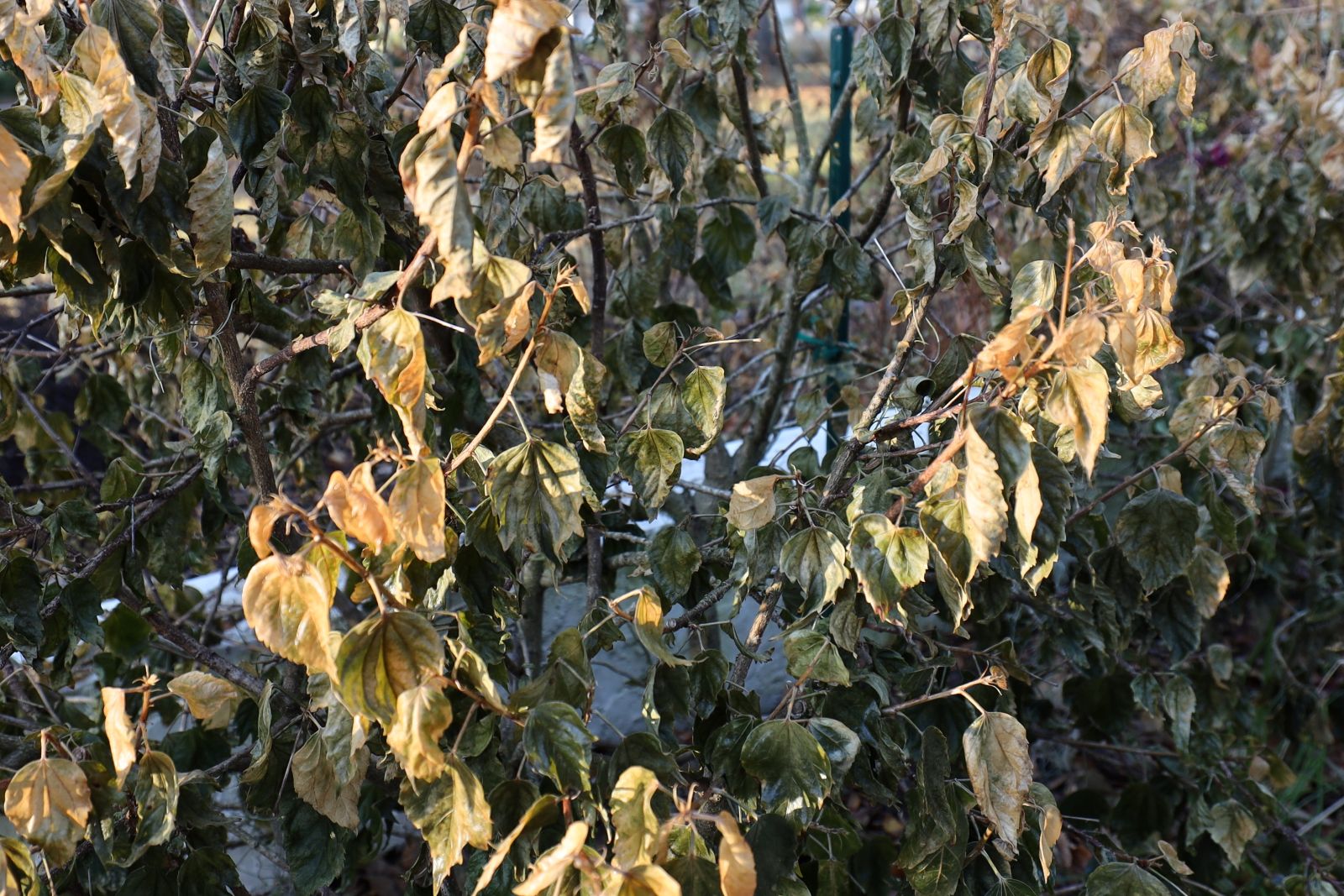
Regional Survival Expectations
Cold risk varies sharply across Florida. In South Florida and the Keys, tropical hibiscus is generally reliable as a long-term evergreen shrub. In Southwest Florida and many coastal areas of Tampa Bay and Sarasota, it usually performs well but may still experience occasional cold damage during unusual winters.
In Central Florida, hibiscus can be very successful, but homeowners should expect more seasonal behavior and occasional freeze injury. Protected sites near buildings, courtyards, pools, and urban heat islands often perform better than open inland locations.
In North Florida, Gainesville, Jacksonville, and the Panhandle, tropical hibiscus is less dependable as a permanent evergreen landscape shrub. It may grow well during the warm season but can be damaged or killed by winter freezes. In those regions, containers, protected microclimates, or cold-hardy hibiscus types are often more practical choices.
Freeze Recovery
Freeze recovery is one of the most misunderstood parts of hibiscus care in Florida. After a hard cold event, tropical hibiscus can look dead even when the lower stems and roots are still alive. The first instinct is often to cut everything back immediately, but that can remove living tissue before the plant has had time to reveal what survived.
Recovery depends on the severity of the cold, duration of exposure, plant health before the freeze, soil moisture, location, and how quickly warm weather returns.
Assessing Damage
The first step is to separate leaf damage from stem damage. Leaves may turn brown, black, limp, or crispy after frost or freezing temperatures, but damaged leaves alone do not mean the plant is dead. Hibiscus can replace foliage when stems remain alive.
Stem damage is more important. Living stems usually remain firm and may show green tissue beneath the bark when lightly scratched. Dead stems become dry, brittle, hollow, or mushy. Damage often progresses over several days or weeks after a freeze, so an immediate assessment can be misleading.
Recovery Timelines
Light frost damage may begin improving within a few weeks once warm weather returns. Plants with moderate stem damage may take longer, especially if they need to push new growth from lower branches or near the base.
Severely damaged hibiscus may not show meaningful recovery until spring growth begins. In Central and North Florida, this delay can be frustrating because cool weather may continue after the initial freeze. A plant that looks inactive in January may still be capable of resprouting later.
When to Prune
Avoid major pruning immediately after a freeze unless stems are broken, mushy, or creating a safety or access issue. Damaged upper growth can provide some insulation for lower portions of the plant during additional cold events, and waiting makes it easier to identify which stems are truly dead.
Once the risk of additional freezes has passed and new growth begins, prune back to healthy wood. Remove dead stems, thin damaged branches, and shape the plant gradually. Heavy pruning too early can expose living tissue to additional cold and may reduce the plant’s ability to recover cleanly.
When to Replace
Replacement should be considered when the main stems are dead to the base, the root system has declined, or the plant fails to produce new growth after warm weather has returned. A hibiscus that repeatedly freezes back in the same location may also be telling you something about the site.
In warmer regions, replacement may only be needed after severe or unusual freezes. In colder inland parts of Florida, repeated freeze damage may indicate that tropical hibiscus is not the best long-term plant for that location. In those cases, a protected microclimate, container planting, or cold-hardy hibiscus type may be a better fit than replanting the same shrub in the same exposed bed.
Toxicity and Pet Safety
Hibiscus is not generally treated as a highly toxic landscape plant, but the word “hibiscus” covers many different species, hybrids, and uses. That matters. A tropical hibiscus hedge, a native rosemallow, a roselle plant grown for tea, and a hardy hibiscus sold in another region are not automatically the same plant from a safety standpoint.
For most Florida landscape situations, hibiscus is better described as a relatively low-toxicity ornamental plant rather than an edible landscape plant. This distinction is important. Low toxicity does not mean pets, children, or livestock should be encouraged to eat it. It means hibiscus is not usually placed in the same concern category as highly toxic ornamentals such as oleander, sago palm, castor bean, or some lilies.
Dogs and Cats
Many common references treat hibiscus as non-toxic to dogs and cats, including ASPCA listings for hibiscus and Rose of Sharon. However, plant identification can be confusing because common names overlap, and pets may still experience stomach upset after eating plant material even when the plant is not considered highly poisonous.
In practical terms, a dog chewing a few hibiscus leaves or flowers is usually a different concern than a dog eating a known toxic plant. Still, ingestion may cause vomiting, diarrhea, reduced appetite, drooling, or temporary digestive upset in some animals. The risk may be higher if a pet eats a large amount, repeatedly browses the plant, or consumes plant material treated with pesticides, fertilizers, oils, or other landscape products.
Cats are less likely than dogs to chew large quantities of hibiscus outdoors, but indoor or patio hibiscus can still attract curiosity. The same basic rule applies: hibiscus should not be treated as a pet snack, even if it is not usually considered a severe toxicity risk.
Horses and Livestock
Hibiscus is usually considered relatively low in toxicity for horses compared with many more dangerous ornamental plants. Cornell’s poisonous plant resources describe hibiscus as generally not toxic and note that hibiscus flowers have been used in human beverages.
That said, ornamental landscape plants should not be intentionally used as forage unless the species is known, the plant has not been treated with landscape chemicals, and the setting is appropriate. Horses, goats, tortoises, chickens, and other animals may browse ornamental plants differently than dogs or cats, and repeated feeding can introduce practical concerns even when a plant is not considered highly poisonous.
Children and Accidental Ingestion
Hibiscus flowers are attractive, colorful, and easy for children to notice. Some hibiscus species are used for food and beverages, but ornamental hibiscus in the landscape should not be assumed edible.
This is especially important because roselle, Hibiscus sabdariffa, is the hibiscus most commonly associated with tea and edible calyces. The large tropical hibiscus flowers used in many Florida landscapes are usually planted for ornamental value, not food use. A child picking a hibiscus flower is not unusual, but eating ornamental flowers or leaves should be discouraged unless the plant has been correctly identified and grown for edible use.
Edible Hibiscus vs Ornamental Hibiscus
The edible hibiscus most people know from tea is usually roselle. Roselle is grown for its fleshy calyces, which are harvested for teas, drinks, sauces, syrups, jams, and seasonal foods. This is not the same use pattern as the common tropical hibiscus hedge found around homes, pools, and commercial landscapes.
Even with edible species, context matters. A roselle plant grown in a vegetable garden is different from an ornamental hibiscus growing in a landscape bed that may have been treated with insecticides, fungicides, fertilizers, or other products not intended for food crops. Identification, plant history, and chemical exposure all matter before any hibiscus is used for consumption.
Pesticide and Fertilizer Exposure
In many landscapes, the larger safety issue is not the hibiscus plant itself but what has been applied to it. Hibiscus may be treated for whiteflies, aphids, mites, scale, thrips, fungal issues, nutritional deficiencies, or general landscape maintenance. Leaves and flowers may carry residues from pesticides, horticultural oils, fertilizers, micronutrient sprays, or irrigation water contaminants.
Pets and children should be kept away from treated plants according to product label directions. This is especially important because hibiscus flowers and leaves are easy to touch, pick, or chew.
When to Call a Veterinarian or Poison Control
If a pet eats hibiscus and shows only mild, brief stomach upset, the situation may not become serious. However, veterinary guidance is appropriate if the animal eats a large amount, symptoms are persistent, the plant identity is uncertain, the plant may have been chemically treated, or the pet shows severe vomiting, diarrhea, lethargy, drooling, weakness, tremors, difficulty breathing, or unusual behavior.
When calling a veterinarian or poison control service, be prepared to provide the plant name if known, a photo of the plant, the part eaten, the amount consumed, the size and species of the animal, and whether any pesticides or fertilizers were recently applied.
Practical Safety Summary
Hibiscus is generally a lower-risk ornamental plant in Florida landscapes, but it should still be treated with normal caution around pets, children, and grazing animals. Do not assume all hibiscus species are edible. Do not allow pets to repeatedly browse ornamental plants. Do not use flowers or leaves for food unless the species and growing history are known. Do not allow animals or children to contact recently treated plants before the product label allows it.
The safest framing is simple: hibiscus is usually not one of Florida’s major toxic landscape concerns, but ornamental hibiscus is still a landscape plant, not a food crop or pet treat.
Wildlife Value
Hibiscus has real wildlife value, but that value depends heavily on the species, cultivar, and how the plant is managed. A tropical hibiscus planted as an ornamental shrub can provide nectar and visual attraction for pollinators, while native hibiscus species generally contribute more directly to local ecosystems because they evolved with regional insects and wildlife.
The distinction matters. A showy hybrid flower may be beautiful and still offer limited ecological function compared with a native rosemallow growing in the right habitat.
Pollinators
Hibiscus flowers can attract pollinators, especially when flowers are open, accessible, and not heavily treated with pesticides. Bees, butterflies, and hummingbirds may visit the blooms for nectar, though visitation varies by cultivar and flower structure.
Single flowers are often more accessible than heavily doubled forms because the reproductive parts and nectar sources are easier for pollinators to reach. In highly bred ornamental cultivars, flower form and color may be more impressive to people than useful to wildlife.
Native Bees
Hibiscus can support native bees, but its value depends heavily on the type of hibiscus. Native hibiscus species, especially scarlet rosemallow and related wetland mallows, are generally more meaningful for native bee ecology than many ornamental tropical hibiscus hybrids used primarily for flower display.
One of the most interesting bees associated with hibiscus is the rose-mallow bee, also called the hibiscus bee, Ptilothrix bombiformis. This is a solitary native bee that specializes on hibiscus and other mallows. It is large enough to be mistaken for a small bumblebee, but it does not live in a honeybee-style colony or hive. Females collect pollen from hibiscus flowers and nest in the ground, often using moist soil conditions associated with wetland edges or nearby water.
In Florida landscapes, native hibiscus species such as scarlet rosemallow are more likely to fit this ecological relationship than heavily bred ornamental tropical hibiscus cultivars. Tropical hibiscus flowers may still be visited by bees, especially open single-flowered forms, but some double, highly modified, or pollen-poor cultivars may be less useful to native bees.
For homeowners who want hibiscus to contribute to pollinator value, the best approach is to include native hibiscus where site conditions allow, choose accessible single-flowered forms, avoid unnecessary pesticide use, and maintain a broader planting mix rather than relying on hibiscus alone. Hibiscus can be part of a bee-friendly landscape, but it should not be treated as the entire pollinator strategy.
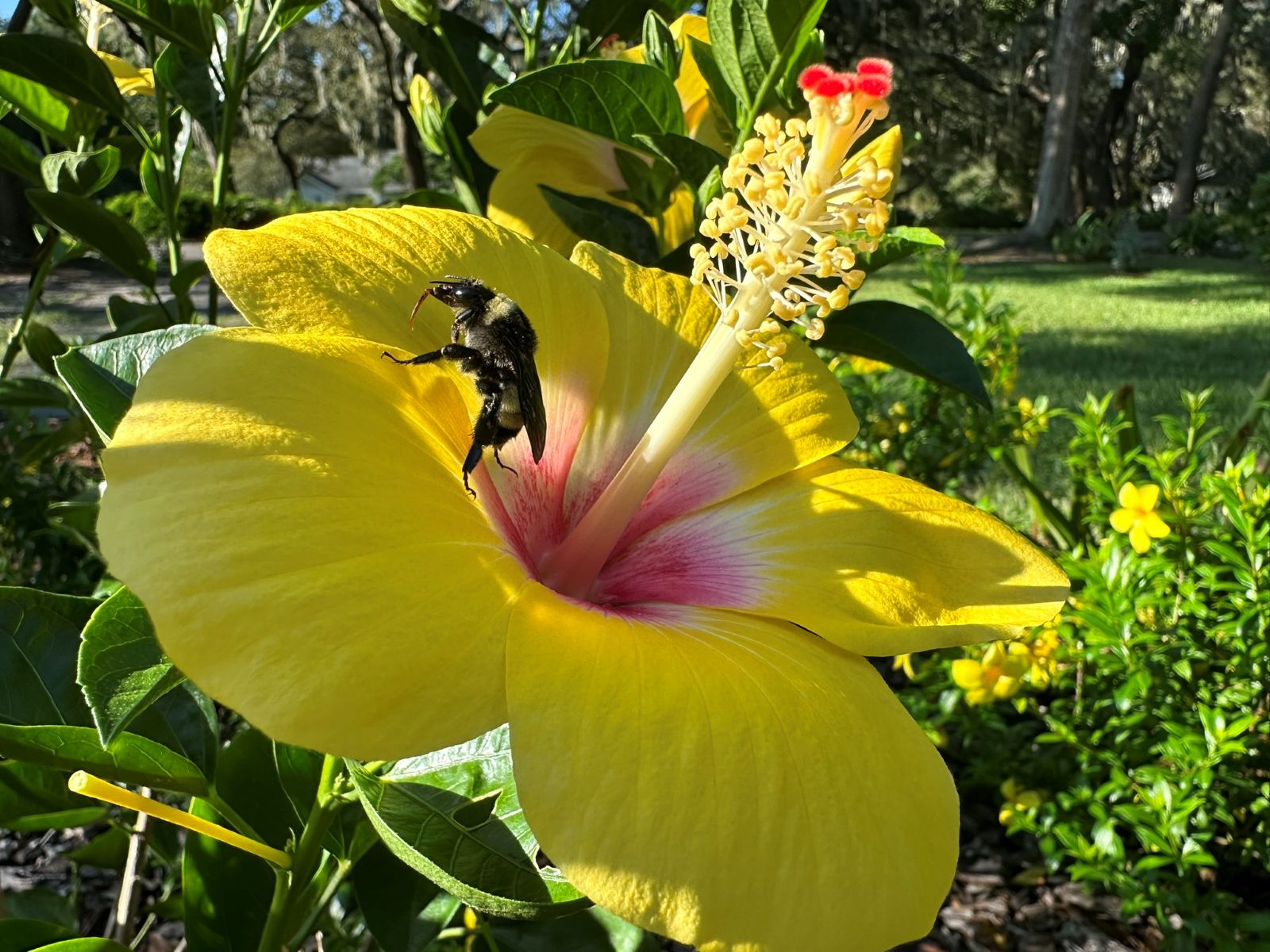
Butterflies
Hibiscus can attract butterflies, but its value depends on the hibiscus species and the role the plant plays in the landscape. Tropical hibiscus may be visited by adult butterflies for nectar, especially when flowers are open, accessible, and not heavily modified. Native hibiscus species can provide deeper ecological value because some serve as larval host plants, meaning caterpillars can actually feed on the plant.
Scarlet hibiscus, also called scarlet rosemallow, is one of the most important Florida examples. The Florida Native Plant Society lists scarlet hibiscus as a larval host for the gray hairstreak, painted lady, common checkered skipper, and tropical checkered skipper. It also notes several moth associations, including pearly wood nymph, yellow scallop moth, io moth, and delightful bird-dropping moth. UF/IFAS also describes scarlet hibiscus as a butterfly-attracting native shrub and notes that its large red flowers attract both butterflies and hummingbirds.
Other native hibiscus species may have similar wildlife relationships. Fairy hibiscus, for example, is also listed by the Florida Native Plant Society as a larval host for gray hairstreak, painted lady, common checkered skipper, and tropical checkered skipper. This reinforces the broader point that native hibiscus and mallow relatives can support butterfly life cycles more directly than many ornamental tropical hibiscus cultivars.
This distinction matters. A hibiscus flower that attracts an adult butterfly for nectar is useful, but it is not the same as a host plant that supports caterpillars. UF/IFAS emphasizes this difference in butterfly gardening: adult butterflies often use nectar from many flowers, while caterpillars usually depend on specific host plants. A landscape designed for butterflies should include both nectar plants and host plants.
Regional butterfly groups can also be useful because butterfly gardening is highly local. The Miami Blue Chapter of the North American Butterfly Association recommends using local plant lists and butterfly-gardening resources, and NABA’s South Florida plant guidance emphasizes the importance of native trees, shrubs, and vines that provide both food and nectar for butterflies. For South Florida landscapes, that local layer matters.
For most Florida homeowners, ornamental tropical hibiscus can contribute to butterfly activity, but it should not be treated as a complete butterfly garden by itself. If butterfly value is a primary goal, include native hibiscus where site conditions allow and combine it with other host and nectar plants such as firebush, passionvine, milkweed, coontie, porterweed, and native wildflowers suited to the site. Hibiscus can be part of the pollinator layer, but the strongest butterfly landscapes are built as systems, not single-plant displays.

Hummingbirds
Hibiscus can attract hummingbirds, especially when the flowers are large, open, brightly colored, and easy to access. Red, orange, pink, and similarly warm-colored flowers are especially visible to hummingbirds, which use their long bills and tongues to feed on nectar. UF/IFAS specifically includes hibiscus among the brightly colored flowering plants that can be used in hummingbird gardens, while also recommending native nectar plants such as coral honeysuckle, firebush, and coral bean for Florida landscapes.
The hummingbird most Florida homeowners are likely to see is the ruby-throated hummingbird. It is the only hummingbird species that regularly breeds in Florida, though other species may appear as migrants, winter visitors, or uncommon visitors. Ruby-throated hummingbirds are small, fast, territorial birds that feed on nectar but also eat small insects and spiders, so a good hummingbird landscape is not only a flower display. It is also a place with layered planting, perching sites, shelter, and reduced pesticide pressure.
Tropical hibiscus can function as a nectar source, but it should not be treated as a complete hummingbird garden by itself. The flowers are useful, especially in sunny landscapes where hibiscus is blooming regularly, but many of the best hummingbird gardens include multiple plants that bloom at different times. This matters because hummingbirds need reliable nectar availability, not one plant blooming heavily for a short period and then resting.
Native hibiscus species can also play a role, particularly scarlet hibiscus, which produces large red flowers and is well aligned with the color and flower form hummingbirds often investigate. In wetter or moisture-retentive sites, scarlet hibiscus can be a strong native option for adding both bold flowers and wildlife value.
For homeowners who specifically want to attract hummingbirds, hibiscus is best used as one piece of the planting system. Pair it with proven Florida hummingbird plants such as firebush, coral honeysuckle, coral bean, porterweed, salvia, and other nectar-rich species suited to the site. Avoid spraying open flowers when hummingbirds or pollinators are active, and be cautious with broad-spectrum insecticides that reduce the small insects hummingbirds also use as food.
A hibiscus flower may bring a hummingbird into view, but a hummingbird garden is built from more than flowers. It needs nectar, insects, cover, perching structure, seasonal continuity, and low chemical disruption. Hibiscus can contribute to that system, but it should not be expected to carry the whole system alone.
Birds
Hibiscus can provide some value for birds, but it should be understood mainly as a cover and perching plant rather than a major food plant. Most tropical hibiscus used in Florida landscapes does not produce the kind of berries, seeds, or fruit that make plants such as Simpson’s stopper, beautyberry, wax myrtle, wild coffee, hollies, seagrape, or sabal palm especially valuable for birds.
The birds most likely to use hibiscus are common landscape songbirds that move through shrub layers in residential areas. Northern cardinals, northern mockingbirds, gray catbirds, common ground-doves, mourning doves, and various warblers may use hibiscus shrubs for temporary cover, shade, movement through the landscape, or protected perching. In South Florida, white-winged doves, blue-gray gnatcatchers, and other small urban or suburban birds may also move through hibiscus and nearby mixed plantings when the shrub is part of a broader vegetated landscape.
Dense hibiscus hedges may offer short-term shelter, especially where plants are allowed to grow with some interior branching rather than being constantly sheared into a thin outer shell. Birds are more likely to use shrubs that provide layered cover, nearby trees, surrounding groundcovers, and reduced disturbance. A single exposed hibiscus in the middle of open turf has far less bird value than hibiscus incorporated into a layered planting with native shrubs, palms, trees, vines, and seed- or berry-producing plants.
Hibiscus may also support birds indirectly by attracting insects. This matters because many birds, including species that adults often recognize as seed or fruit eaters, feed insects and caterpillars to their young. However, ornamental tropical hibiscus should not be treated as a primary insect-support plant in the same way as many native shrubs and trees. Its value depends on cultivar, pesticide use, surrounding plant diversity, and how much insect activity is tolerated.
For bird-focused landscapes, hibiscus is best used as a flowering ornamental layer, not the backbone of the habitat plan. Pair it with stronger bird plants that provide fruit, seeds, nesting structure, and year-round cover. In Florida, that often means native or Florida-adapted plants such as Simpson’s stopper, wild coffee, beautyberry, wax myrtle, marlberry, firebush, seagrape, yaupon holly, coontie, native palms, and canopy trees suited to the site. Hibiscus can contribute color and some shelter, but the strongest bird landscapes are built from diverse layers of plants that provide food, cover, nesting structure, and seasonal continuity.
Ecological Limitations
The main ecological limitation of tropical hibiscus is that many commonly planted cultivars are ornamental selections bred for flower size, color, and appearance rather than wildlife function. Double flowers, sterile hybrids, and heavily managed plants may provide less value than simpler, nectar-accessible flowers.
Pesticide use can also reduce wildlife benefits. Broad-spectrum insecticides may control visible pests but can also harm pollinators and beneficial insects. For landscapes where wildlife value matters, hibiscus should be managed with observation, targeted pest control, and restraint.
Native hibiscus species are usually the better choice when ecological value is the primary goal. Tropical hibiscus remains useful for color, nectar, and garden interest, but it performs best ecologically when included within a diverse Florida planting rather than used alone.
Landscape Design Applications
Hibiscus earns its place in Florida landscapes because it provides something many shrubs do not: sustained color with enough size and structure to matter in the design. It is not just a flowering novelty plant. When placed correctly, hibiscus can define space, soften architecture, frame views, support tropical planting themes, and provide seasonal movement in otherwise static beds.
The main design limitation is that hibiscus is visually active. Large flowers, regular growth, and periodic pruning responses make it less suited to landscapes that require extremely quiet structure or rigid formality. It performs best where color and change are assets rather than distractions.
Foundation Plantings
Hibiscus can work well in foundation plantings when it is given enough space. Its flowers soften walls, windows, and hard architectural lines, while its evergreen foliage provides a consistent base in warmer regions of the state.
The common mistake is planting hibiscus too close to the house. A small nursery plant may look appropriate at installation, but mature plants can become wide enough to crowd walls, windows, walkways, and irrigation heads. Foundation plantings should account for mature width, airflow, access for maintenance, and the need for periodic pruning.
Accent Plantings
As an accent plant, hibiscus is especially useful because a single mature shrub can provide strong color without needing an entire mass planting. This makes it effective near entries, patios, pool areas, garden corners, and transition points between outdoor spaces.
Accent use works best when the surrounding planting is calmer. If hibiscus is placed among too many competing colors, textures, and flower forms, the effect can become visually noisy. A simple background of green foliage often makes hibiscus flowers more effective.
Tropical Gardens
Hibiscus is a natural fit in tropical gardens. Its bold flowers combine well with palms, crotons, bird of paradise, gingers, heliconias, bromeliads, and large-leaved foliage plants. In these settings, hibiscus helps reinforce the warm-climate character people often associate with Florida landscapes.
The strongest tropical plantings usually balance flower color with foliage structure. Hibiscus provides bloom impact, but surrounding plants should carry texture, height, and mass so the design does not depend entirely on flowers.
Resort-Style Landscapes
In resort-style landscapes, hibiscus is often used to create immediate color and a sense of place. It works well near pools, entries, courtyards, walkways, and outdoor seating areas where people experience the plant up close.
This style benefits from hibiscus because the plant feels familiar, tropical, and generous without needing explanation. The maintenance expectation should be clear, though. Resort-style plantings often look relaxed, but they are rarely low-maintenance behind the scenes.
Courtyard Gardens
Courtyards can be excellent locations for hibiscus because they often provide warmth, wind protection, reflected light, and a sense of enclosure. These conditions can improve growth and flowering, especially in Central Florida locations where open yards may be more exposed to cold or wind.
Container-grown standards, compact cultivars, and smaller shrub forms are especially useful in courtyards. The key is scale. A vigorous hibiscus can overwhelm a tight courtyard if the mature size is not considered before planting.
Pollinator Gardens
Hibiscus can contribute to pollinator gardens, especially when open, single-flowered forms are used and pesticide pressure is low. Its flowers may attract bees, butterflies, and hummingbirds, particularly during warm months when plants are actively blooming.
For true pollinator value, hibiscus should be part of a diverse planting rather than the main ecological strategy. Native flowering plants, host plants, grasses, and layered habitat usually provide stronger support for Florida wildlife.
Mixed Shrub Borders
Hibiscus performs well in mixed shrub borders where it can provide color among more structural plants. It pairs especially well with shrubs that offer contrasting foliage, denser evergreen mass, or calmer textures.
A mixed border also helps solve one of hibiscus’s design weaknesses. When blooming slows, cold weather causes thinning, or pruning temporarily reduces the plant’s visual impact, the surrounding shrubs can continue carrying the bed. In this role, hibiscus becomes a seasonal color engine within a broader landscape system rather than a plant expected to do everything by itself.
Hibiscus Hedges
Hibiscus can make a beautiful flowering hedge, but it behaves differently from shrubs selected primarily for screening. A hibiscus hedge is colorful, active, and somewhat informal by nature. It can provide seasonal privacy and strong visual impact, but it should not be expected to perform like a rigid evergreen wall.
The best hibiscus hedges are planned around the plant’s natural growth habit rather than forced into an overly tight shape. When hibiscus is sheared too aggressively or planted too close together, it may develop a dense outer shell with weak interior branching, reduced airflow, and fewer flowers.
Why People Use Hibiscus as a Hedge
Homeowners often choose hibiscus hedges because they want privacy without giving up flowers. Compared with many evergreen screening shrubs, hibiscus offers far more color and a softer tropical appearance.
Hibiscus hedges are commonly used along property lines, pool areas, patios, walkways, and foundation beds where a fully opaque screen is less important than color, movement, and seasonal interest. In the right location, a flowering hibiscus hedge can feel much less severe than a clipped hedge of podocarpus, clusia, or viburnum.
Advantages
The main advantage of a hibiscus hedge is visual impact. Few hedge plants can match the flower size, color range, and tropical character of hibiscus. Healthy plants can bloom repeatedly through much of the warm season, and in South Florida may provide color during much of the year.
Other advantages include moderate to fast growth, relatively easy pruning recovery, container availability, and flexibility in informal designs. Hibiscus also works well when mixed with other shrubs, where it can provide color without carrying the full burden of screening.
Disadvantages
The main disadvantage is maintenance. Hibiscus hedges usually require more attention than shrubs selected purely for structure. They may need regular pruning, fertilization, pest monitoring, and occasional corrective care after cold or storm events.
Hibiscus is also less suitable for deep shade, exposed freeze-prone sites, and locations where year-round dense screening is essential. Flowers and leaves drop naturally, and plants may thin after cold weather or stress. For homeowners seeking a low-maintenance privacy wall, hibiscus is often the wrong tool.
Typical Spacing
Spacing depends on cultivar, starting plant size, desired hedge density, and how quickly the hedge needs to fill in. As a general Florida landscape guideline, tropical hibiscus used for hedging is often planted about 3 to 5 feet on center.
Closer spacing can create a fuller hedge more quickly, but it may also increase competition, reduce airflow, and lead to more pruning over time. Wider spacing allows plants to develop more naturally but takes longer to close gaps.
For most residential hedges, 3-foot spacing is used when faster fill-in is desired, while 4- to 5-foot spacing is more appropriate for larger cultivars, informal hedges, or sites where long-term maintenance matters more than immediate density.
Long-Term Appearance
A young hibiscus hedge may look open at first, especially when installed from smaller nursery containers. With time, plants branch, widen, and begin to merge into a continuous mass. The hedge usually becomes more effective after the second or third growing season, assuming adequate sunlight and care.
Long-term appearance depends heavily on pruning style. A lightly shaped hibiscus hedge can remain full, flowering, and natural. A heavily sheared hedge may look neat from a distance but flower less and develop a woody interior. The best result is usually a managed shrub border rather than a strict geometric wall.
Maintenance Requirements
Hibiscus hedges require periodic pruning to control size, encourage branching, and prevent legginess. Pruning frequency depends on growth rate, season, cultivar, and desired form. In warm South Florida landscapes, maintenance may be needed more often than in Central or North Florida.
Fertility and irrigation also matter. A hedge made of underfed or water-stressed hibiscus often becomes thin, yellow, and inconsistent. Pest issues can spread quickly through a hedge because plants are close together, so regular observation is important.
A hibiscus hedge can be extremely rewarding, but it is not passive infrastructure. It is a living, flowering system that performs best when its need for light, space, nutrition, and periodic care is built into the design from the beginning.
Privacy Uses
Hibiscus can provide privacy, but it should be understood as a flowering screen rather than a dense structural barrier. It works best where partial screening, color, and softness are desired together. For situations requiring a year-round opaque wall, especially along property lines or high-visibility boundaries, other shrubs may be more reliable.
The strongest privacy designs use hibiscus as part of a layered planting rather than asking it to do the entire job alone.
Screening Potential
A mature hibiscus can screen views effectively when it has enough sunlight, space, and maintenance. In many Florida landscapes, plants maintained around 6 to 10 feet tall can soften views into patios, pools, windows, side yards, and neighboring properties.
The screening is usually more informal than a clipped hedge. Hibiscus can become dense, but its canopy naturally opens and closes with pruning, flowering cycles, cold weather, and seasonal growth. This makes it useful for soft privacy but less dependable where complete visual blockage is required every month of the year.
Layered Privacy Designs
Hibiscus is often strongest in layered privacy designs. Instead of relying on one hedge line, the planting combines taller structural plants, mid-height flowering shrubs, lower foliage plants, and groundcover or mulch to create depth.
In this role, hibiscus provides color and mid-level screening while other plants provide more permanent structure. A layered design also helps when hibiscus temporarily thins after pruning, cold stress, pest pressure, or seasonal changes. The surrounding plants continue carrying the screen while hibiscus recovers. This approach usually looks more natural than a single-species hedge and often performs better over time.
Strengths and Limitations
The main strength of hibiscus as a privacy plant is that it screens while flowering. It can make a pool edge, courtyard, or side yard feel tropical and enclosed without creating the hard visual effect of a formal hedge.
The limitation is consistency. Hibiscus requires more care than many privacy shrubs and may not stay equally dense throughout the year. It can thin in shade, suffer cold damage in cooler regions, and respond poorly when repeatedly sheared into a tight wall. Used correctly, it is an excellent privacy accent. Used as a substitute for a low-maintenance evergreen screen, it often disappoints.
Specimen Uses
Hibiscus works well as a specimen plant when its flowers, form, and placement are allowed to matter. Instead of being treated as one shrub in a hedge line, a specimen hibiscus is positioned where it can be viewed, appreciated, and maintained as an individual plant.
This use is especially effective near entries, patios, courtyards, pool areas, garden corners, and windows where the plant’s flowers can be seen up close.
Large Shrubs
Large shrub forms are often the most natural specimen use for hibiscus. A mature plant with good branching can become a broad, colorful focal point that anchors a planting bed without needing a formal shape.
Large shrub specimens work best when they have enough room to develop. Crowding a hibiscus between walkways, walls, and other shrubs usually forces constant pruning and reduces the natural fullness that makes the plant attractive. With proper spacing, a large hibiscus can provide both structure and color.
Standard Forms
Standard hibiscus are trained into small tree-like forms with a single trunk and rounded canopy. They are commonly used in containers, entry gardens, patios, courtyards, and formal tropical settings.
Their appeal comes from vertical structure and a cleaner silhouette. The tradeoff is maintenance. Standards require regular pruning to preserve the canopy shape, and the trunk form makes damage or poor branching more noticeable than it would be on a shrub-form plant.
Feature Plants
A feature hibiscus should be placed intentionally rather than tucked into a crowded bed. The plant needs a clear visual role, enough background contrast, and enough space to mature without constant correction.
Feature use is strongest when the surrounding landscape is quieter. Dark green foliage, simple groundcover, mulch, stone, or neutral architecture can make hibiscus flowers stand out more clearly. When too many competing colors and textures surround the plant, the specimen effect is reduced.
Used well, hibiscus can become one of the most memorable plants in a Florida landscape. Used casually, it often becomes just another flowering shrub fighting for space.
Growing Hibiscus in Containers
Hibiscus is well suited to container growing, especially where planting space is limited or cold protection may occasionally be needed. Containers are commonly used on patios, pool decks, courtyards, balconies, entryways, and small gardens where a full-size landscape shrub would be difficult to manage.
Container hibiscus can bloom heavily and remain attractive for years, but it depends more directly on the person caring for it. In the ground, roots can explore surrounding soil for water and nutrients. In a pot, the entire root environment is limited to the container.
Container Selection
The best container is large enough to support root growth, stable enough to resist tipping, and equipped with drainage holes. Hibiscus does not tolerate sitting in waterlogged soil, so decorative containers without drainage are risky unless used only as outer cachepots.
A small hibiscus may begin in a 3-gallon or 7-gallon container, but larger plants often need considerably more root space over time. Standards are especially prone to tipping if the container is too small or lightweight because the canopy acts like a sail in wind.
Container material also matters. Plastic pots are lightweight and retain moisture longer. Clay and terracotta breathe more but dry faster. Heavy ceramic containers provide stability but can be difficult to move once planted.
Soil Selection
Container hibiscus should be grown in a well-drained potting mix rather than native Florida sand or heavy garden soil. Potting mixes are designed to hold moisture while still allowing oxygen to reach the roots.
A good container mix should drain freely, retain some moisture, and resist compacting into a dense mass. Heavy soil that stays wet can create root problems, while overly coarse mixes may dry out too quickly during Florida’s warm months.
Because container soil gradually breaks down, long-term plants may need periodic repotting or soil refreshing to maintain healthy root conditions.
Water Management
Water management is the main challenge with container hibiscus. Pots dry faster than in-ground planting beds, especially during hot, windy, or sunny weather. At the same time, overwatering can be just as damaging if the container drains poorly or the potting mix remains saturated.
A container hibiscus may need frequent watering during active growth, especially in summer. The goal is to water thoroughly, allow excess water to drain, and then water again when the upper portion of the mix begins to dry.
Wilting is not always a simple signal. A dry plant may wilt because it needs water. An overwatered plant may wilt because damaged roots cannot function properly. Checking the potting mix is more reliable than judging by foliage alone.
Fertilization
Container-grown hibiscus depends on regular fertility because nutrients are limited to the potting mix and can leach out with irrigation. Plants in containers often show nutrient stress faster than plants growing in the ground.
Slow-release fertilizers can provide a steady nutrient supply, while liquid fertilizers may be useful during active growth when applied carefully. The best approach depends on the container size, plant vigor, season, and product used.
Avoid overfertilizing. Containers concentrate both benefits and mistakes. Excess fertilizer can burn roots, push weak growth, or increase pest pressure. A consistent, moderate program is usually better than occasional heavy feeding.
Long-Term Container Care
Over time, container hibiscus may become root-bound, decline in vigor, dry out too quickly, or produce fewer flowers. These are signs that the root environment may need attention.
Long-term care may include repotting into a larger container, refreshing part of the potting mix, pruning roots carefully during repotting, adjusting irrigation, and selectively pruning the canopy to maintain balance between roots and top growth.
Container hibiscus also benefits from periodic rotation so growth remains balanced toward the light. In colder parts of Florida, containers offer the advantage of mobility. Plants can be moved to protected areas during cold events, which may extend their useful life in regions where in-ground tropical hibiscus is less dependable.
A container hibiscus can be extremely rewarding, but it is not a set-and-forget plant. Its success depends on managing a small, artificial root zone with enough consistency to support a fast-growing, heavy-flowering shrub.
Common Problems
Most hibiscus problems are visible before they become severe. Leaves yellow, buds drop, flowers slow down, or the plant begins looking thin and tired. These symptoms are useful, but they are not always specific. The same visible problem can be caused by water stress, nutrient issues, root problems, pests, cold weather, or poor site conditions.
The best approach is to read hibiscus symptoms in context. A yellow leaf after a cold night means something different than yellowing during a wet summer. Bud drop on a newly purchased plant may not have the same cause as bud drop on an established hedge. The plant is giving information, but the site tells you how to interpret it.
Yellow Leaves
Yellow leaves are one of the most common hibiscus complaints in Florida. They may result from normal aging, water stress, nutrient deficiencies, root problems, pests, cold weather, or a sudden environmental change.
A few older yellow leaves are not usually a concern. Widespread yellowing, repeated defoliation, or yellowing combined with poor growth deserves closer attention. The pattern matters. Older leaves yellowing first may suggest one issue, while new leaves turning pale with green veins may suggest another.
Because yellow leaves have many causes, they are addressed in more detail in the next section.

Leaf Drop
Hibiscus may drop leaves after stress. Common triggers include transplant shock, drought, overwatering, cold damage, pest pressure, and sudden changes in light or temperature.
Leaf drop can look alarming, especially when it happens quickly, but it does not always mean the plant is dying. If stems remain firm and new growth appears after conditions improve, the plant is often capable of recovery. Persistent leaf drop, however, usually indicates that the root zone, irrigation pattern, or pest pressure needs to be evaluated.
Bud Drop
Bud drop occurs when flower buds form but fall before opening. This is frustrating because the plant appears ready to bloom and then fails at the final step.
Common causes include drought stress, irregular watering, sudden temperature changes, excessive heat, pests such as thrips or mites, transplant stress, and nutrient imbalance. Container-grown plants are especially prone to bud drop when they dry out between waterings.
Occasional bud loss is normal. Repeated bud drop usually means the plant is under stress during flower development.
Poor Blooming
Poor blooming is usually caused by insufficient light, improper pruning, nutrient imbalance, stress, or immaturity. In Florida landscapes, shade is one of the most common causes. Hibiscus may remain green in partial shade but produce far fewer flowers than expected.
Excessive nitrogen can also encourage foliage growth at the expense of flowers. Heavy pruning at the wrong time may remove developing buds or force the plant into vegetative regrowth. Cold weather, pests, and drought can also interrupt blooming cycles.
A hibiscus that is healthy but not flowering should be evaluated first for sunlight before assuming fertilizer is the answer.
Sparse Growth
Sparse growth usually means the plant is not producing enough healthy branching to maintain a full canopy. Shade, hard pruning, nutrient stress, pest pressure, drought, and old woody growth can all contribute.
A sparse hibiscus may need selective pruning to encourage branching, but pruning alone will not fix an unsuitable site. If the plant lacks sunlight, has poor roots, or is competing heavily with nearby plants, it may continue growing thin no matter how often it is trimmed.
Weak Stems
Weak stems often develop when hibiscus grows too quickly, receives too much shade, or is pushed with excessive nitrogen. Plants may stretch toward light, produce soft growth, or develop branches that bend under the weight of foliage and flowers.
Pruning can help improve structure, but the underlying cause should still be addressed. A hibiscus grown in strong light with moderate fertility usually develops firmer growth than one grown in shade or overfertilized conditions.
Decline After Planting
Decline after planting is usually related to establishment stress. A newly installed hibiscus must adjust from nursery conditions to a landscape environment with different light, water, soil, wind, and temperature exposure.
Common causes include inadequate irrigation, excessive irrigation, planting too deeply, damaged roots, poor drainage, sudden sun exposure, or installation during stressful weather. Some temporary leaf yellowing, bud drop, or wilting may occur after planting, but the plant should gradually stabilize.
If decline continues for several weeks, check the root ball, soil moisture, planting depth, drainage, and pest activity before adding fertilizer. A stressed root system usually needs corrected conditions more than additional nutrients.
Yellow Leaves Explained
Yellow leaves are one of the most common hibiscus problems in Florida, but they are also one of the easiest symptoms to misread. Yellowing is not a diagnosis by itself. It is a visible response that can be caused by normal leaf aging, nutrient deficiency, water stress, root problems, pest pressure, cold damage, or a sudden change in growing conditions.
The pattern matters. Which leaves are yellowing, how quickly it happens, whether the veins remain green, and what else is happening around the plant all help narrow the cause.
Natural Aging
Some yellow leaves are normal. Older interior leaves eventually age, turn yellow, and drop as the plant replaces them with new growth. This is especially noticeable on fast-growing plants, after flowering cycles, or when a hibiscus is adjusting to seasonal changes.
Natural aging usually affects scattered older leaves rather than the entire plant. If the canopy remains full, new growth looks healthy, and flowering continues, occasional yellow leaves are rarely a serious concern.
Nitrogen Deficiency
Nitrogen deficiency often appears as general yellowing, usually beginning on older leaves because nitrogen can move within the plant to support newer growth. The plant may also look pale, slow-growing, or less vigorous overall.
In Florida’s sandy soils, nitrogen can leach quickly with rainfall or irrigation. However, yellow leaves should not automatically trigger nitrogen application. Overwatering, root stress, cold damage, and pests can produce similar symptoms. Fertilizer helps only when nutrient availability is truly the limiting factor.
Iron Deficiency
Iron deficiency commonly appears as yellowing on newer leaves while the veins remain greener than the surrounding tissue. This is often called interveinal chlorosis.
Iron problems are not always caused by a lack of iron in the soil. In many cases, iron is present but unavailable because of soil pH, irrigation water chemistry, root stress, or poor drainage. Adding general fertilizer may not correct the problem if the plant cannot absorb the iron that is already there.
Magnesium Deficiency
Magnesium deficiency usually appears on older leaves first and may show as yellowing between the veins. Because magnesium is involved in chlorophyll production, affected leaves can lose their deep green color while the plant otherwise remains alive and growing.
Magnesium symptoms can overlap with nitrogen deficiency, potassium imbalance, and general stress. This is why deficiency patterns should be interpreted alongside soil conditions, irrigation habits, and overall plant performance.
Water Stress
Both too little water and too much water can cause yellow leaves.
Drought stress may cause leaves to wilt, yellow, curl, or drop as the plant conserves moisture. Overwatering can also cause yellowing because saturated soil limits oxygen around the roots. In that case, the leaves may look thirsty even though the soil is wet.
Before treating yellow leaves with fertilizer, check soil moisture. A hibiscus with a root-zone water problem often needs corrected irrigation or drainage more than nutrients.
Root Problems
Root problems often show up above ground as yellow leaves, weak growth, poor flowering, wilting, or general decline. Causes may include poor drainage, planting too deeply, compacted soil, root damage, container restriction, or chronic overwatering.
When roots are unhealthy, the plant cannot absorb water and nutrients efficiently. This can make a hibiscus look deficient even when nutrients are present in the soil. If yellowing is widespread and combined with poor growth, the root environment should be evaluated before assuming a simple fertilizer issue.
Cold Damage
Cold weather can cause hibiscus leaves to yellow, brown, blacken, or drop. This is especially common after frost, freezing temperatures, or sudden cold events following warm weather.
Cold-related yellowing may appear quickly after the event or develop over several days. In many cases, the leaves are lost but the stems remain alive. If the plant is otherwise healthy, new growth may return once temperatures warm and active growth resumes.
Pests
Hibiscus can attract a frustrating list of pests, especially in warm Florida landscapes where insects and mites remain active for much of the year. A healthy plant can tolerate some pest activity, but repeated infestations can reduce flowering, distort new growth, yellow leaves, coat foliage with honeydew, and make the plant look chronically stressed.
Pest management should begin with identification. Treating before knowing the pest often wastes time, harms beneficial insects, and may make recurring problems worse. The goal is not to sterilize the plant. The goal is to keep pest pressure low enough that the hibiscus can grow, flower, and recover normally.
Integrated Pest Management for Hibiscus
Integrated pest management, often shortened to IPM, means using observation and targeted action rather than automatically spraying at the first sign of damage. For hibiscus, this usually starts with checking new growth, buds, leaf undersides, branch joints, and stems.
A practical pest approach includes identifying the pest, determining whether the problem is minor or spreading, improving plant health where possible, using lower-impact controls when appropriate, and reserving stronger pesticide tools for situations where they are justified. This is especially important on flowering plants because hibiscus may attract bees, butterflies, hummingbirds, and other beneficial visitors.
Before Treating: Identify the Pest First
Many hibiscus pest problems look similar from a distance. Yellow leaves, curling tips, sticky residue, black sooty mold, distorted buds, and poor flowering can be caused by several different pests or by non-pest issues such as irrigation, nutrition, or cold stress.
Before treating, inspect the plant closely. Aphids often cluster on tender new growth. Whiteflies usually rise from leaf undersides when disturbed. Spider mites may produce fine webbing and stippled leaves. Scale insects can look like small bumps on stems or leaves. Thrips are often associated with bud and flower damage.
The correct treatment depends on what is actually present.
Low-Impact and Cultural Controls
Small pest problems can often be reduced without immediately moving to stronger pesticides. Pruning heavily infested tips, washing pests from foliage with water, improving airflow, correcting overfertilization, and reducing plant stress can all help.
Insecticidal soaps and horticultural oils are commonly used low-impact tools for soft-bodied pests when applied according to the label. They work best when they contact the pest directly, so thorough coverage is important. They can also damage plants if applied during extreme heat, drought stress, or improper conditions, so timing matters.
Beneficial insects also play a role. Lady beetles, lacewings, parasitic wasps, predatory mites, and other natural enemies can suppress pest populations. Broad-spectrum insecticides may reduce these beneficial insects and sometimes lead to recurring outbreaks.
Conventional Treatment Options
Conventional pesticides may be appropriate when pest pressure is high, damage is spreading, or lower-impact methods are not effective. Exact product selection should be based on the pest, plant location, infestation severity, label directions, and local rules.
Avoid treating open flowers when pollinators are actively visiting. Do not assume that a product is appropriate for hibiscus simply because it is sold for landscape use. The label determines where and how a pesticide may be applied.
For severe infestations, large hedges, commercial properties, HOA landscapes, or repeated pest cycles, professional pest management may be more appropriate than repeated homeowner trial and error.
Aphids
Aphids are small, soft-bodied insects that often cluster on tender new shoots, buds, and the undersides of leaves. They feed by sucking plant sap, which can distort new growth, reduce vigor, and leave behind sticky honeydew.
Honeydew may lead to black sooty mold, which looks alarming but grows on the sugary residue rather than directly feeding on the plant.
Small aphid populations can often be managed by washing them off with water, pruning infested tips, encouraging beneficial insects, or using insecticidal soap or horticultural oil. Larger infestations may require labeled insecticides, but repeated aphid problems often indicate excessive soft growth, overfertilization, or a lack of beneficial insect activity.
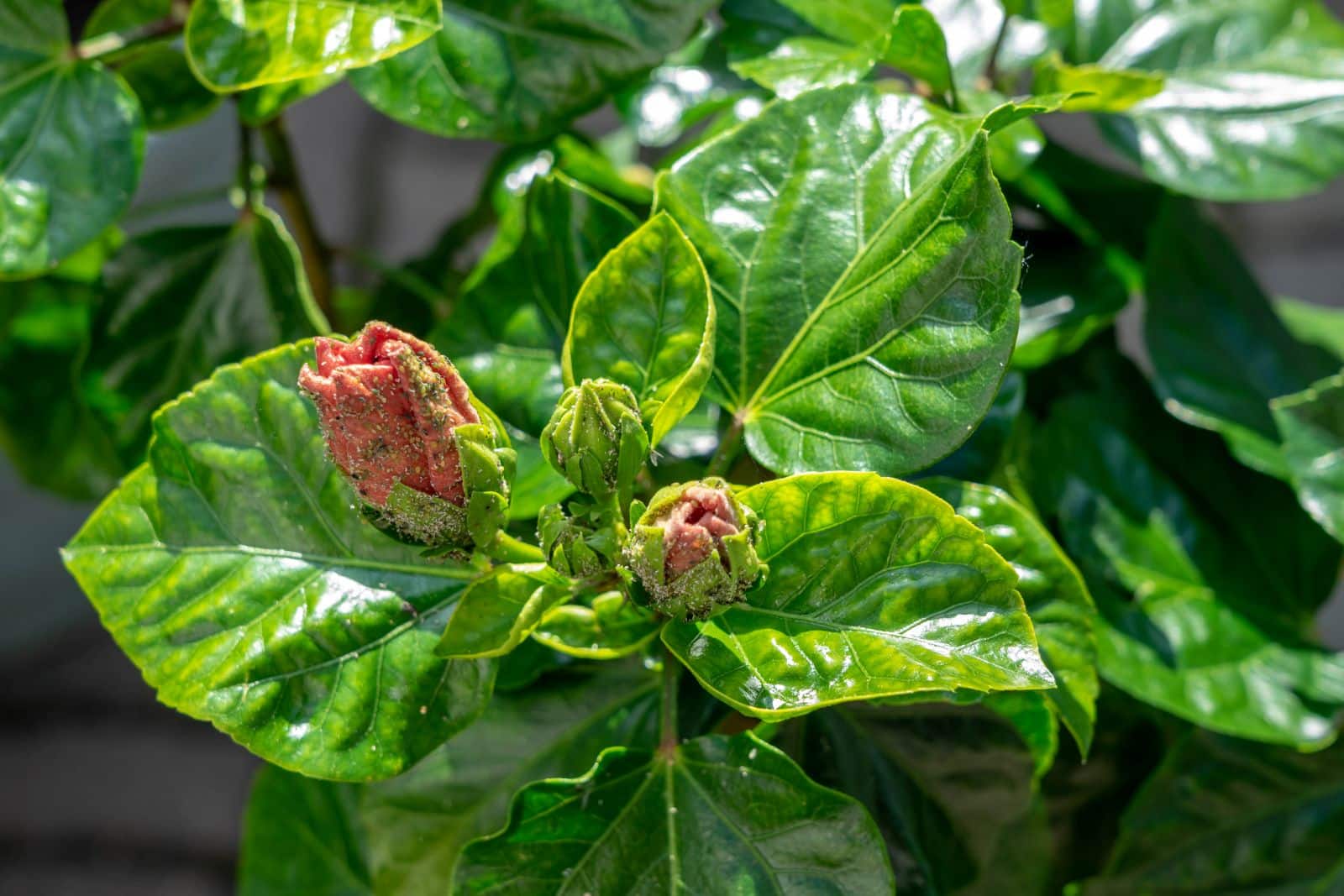
Whiteflies
Whiteflies are among the most common and annoying hibiscus pests in Florida. Adults are small, white, winged insects that often fly up from the undersides of leaves when the plant is disturbed. Immature stages remain on leaf undersides and feed on plant sap.
Whiteflies can cause yellowing, leaf drop, honeydew, sooty mold, and general decline when populations become high. They are especially troublesome because they reproduce quickly in warm weather and can persist in dense plantings.
Management usually requires persistence. Inspect leaf undersides, reduce heavily infested growth when practical, avoid unnecessary broad-spectrum insecticides, and use labeled treatments carefully. Oils and soaps may help when coverage is thorough, but severe infestations may require a more structured pest management program.
Spider Mites
Spider mites are not insects. They are tiny arachnids related to spiders, and they can be difficult to see without close inspection. Damage often appears as fine stippling, dull foliage, bronzing, leaf drop, or fine webbing on leaves and stems.
Mites often become worse during hot, dry conditions or after beneficial predators have been reduced. Plants under drought stress may be more vulnerable.
Light infestations may be reduced by improving plant moisture status, rinsing foliage, and using horticultural oils or labeled miticides when appropriate. Ordinary insecticides may not control mites and can sometimes worsen mite outbreaks by reducing natural predators.
Mealybugs
Mealybugs appear as white, cottony masses on stems, leaf joints, buds, and undersides of leaves. They feed on sap and can produce honeydew, which may lead to sooty mold.
Mealybugs often hide in protected areas of the plant, making them difficult to control with quick surface treatments. Small populations can sometimes be removed by pruning infested growth or physically wiping insects from stems. Horticultural oils, insecticidal soaps, or labeled insecticides may be used where appropriate, but thorough coverage is essential.
Recurring mealybug problems are more common on dense, protected plants with limited airflow or on container hibiscus kept in sheltered locations.
Scale
Scale insects can be subtle at first because they often look like small bumps rather than active pests. They may occur on stems, branches, leaf veins, or undersides of foliage. Some species have hard protective coverings, while others are softer.
Scale feeding can weaken hibiscus over time and may cause yellowing, leaf drop, honeydew, sooty mold, and branch decline. Because scale insects are protected by their coverings, timing and treatment selection matter.
Light infestations can sometimes be pruned out or removed manually. Horticultural oils may help by smothering susceptible life stages when applied thoroughly and correctly. Heavy infestations may require professional treatment, especially on large shrubs or hedges.
Thrips
Thrips are tiny insects often associated with flower and bud damage. On hibiscus, they may cause distorted flowers, streaked petals, bud drop, or blooms that fail to open properly.
Because thrips can hide inside buds and flowers, they are often harder to see than the damage they cause. Tapping flowers over white paper may reveal small moving insects.
Management can include removing damaged buds and flowers, reducing weed hosts nearby, avoiding unnecessary insecticide disruption, and using labeled products when infestations are persistent. Since thrips are closely tied to flowers, treatments should be selected and timed carefully to reduce risk to pollinators.
Caterpillars
Caterpillars chew leaves, buds, and sometimes flowers. Damage is usually easier to recognize than the insect itself because missing leaf tissue, ragged edges, and dark frass may appear before the caterpillar is found.
Not every caterpillar requires treatment. Some damage is minor, and some caterpillars belong to butterflies or moths that homeowners may want to support. The decision depends on the severity of feeding, the plant’s health, and the landscape goal.
Small numbers can often be hand-removed. For more significant feeding, targeted biological products such as those containing Bacillus thuringiensis may be appropriate for certain caterpillars when used according to the label.
Grasshoppers
Grasshoppers are chewing insects that can remove large sections of leaves and flowers. Damage often appears as irregular holes or missing tissue rather than yellowing or distortion.
Because grasshoppers move easily through the landscape, control can be difficult once they are mature. Young grasshoppers are generally easier to manage than adults. Minor damage is usually cosmetic, but heavy feeding can make a hibiscus look ragged quickly.
Management often focuses on tolerance, physical removal where practical, and reducing favorable habitat for large populations. Chemical control may be difficult in ornamental landscapes and should be approached carefully.

Iguanas and Other Browsing Animals
Not all hibiscus damage comes from insects, mites, or disease. In parts of South Florida and the Florida Keys, green iguanas may browse hibiscus leaves, flowers, buds, and tender shoots. This is especially relevant near canals, seawalls, lakes, drainage corridors, golf courses, and warm protected areas where iguanas are already established.
Iguana damage usually looks different from insect damage. Instead of small holes, stippling, honeydew, webbing, or distorted new growth, browsing damage often appears as larger missing sections of foliage, clipped branch tips, stripped flowers, broken tender shoots, or uneven damage on the side of the plant most accessible to the animal.
Hibiscus should not be considered iguana-resistant in landscapes with active iguana populations. A plant may recover from occasional browsing, but repeated feeding can reduce flowering, weaken young plants, and prevent shrubs from filling in properly.
Plant care can help hibiscus recover, but it does not stop the browsing itself. Fertilizer, pruning, and irrigation may support regrowth, but they are not solutions to repeated animal damage. In iguana-prone landscapes, the more relevant tools are plant placement, physical protection, habitat modification, professional wildlife management, or choosing less vulnerable plants for exposed areas.
When Pest Problems Keep Coming Back
Recurring pest problems usually indicate that something broader is happening. The plant may be stressed, overfertilized, crowded, shaded, drought-stressed, or surrounded by other infested plants. A hibiscus hedge may also allow pests to move easily from plant to plant.
When pests repeatedly return, the solution is rarely just a stronger spray. Evaluate light, pruning, irrigation, fertilization, airflow, plant spacing, and nearby host plants. A healthier hibiscus in the right site is much better equipped to tolerate minor pests and recover from damage.
Persistent pest pressure does not mean hibiscus is a bad plant. It means hibiscus is a living plant in Florida, where the insects are also quite committed.
Diseases
Hibiscus diseases are usually tied to moisture, airflow, plant stress, and sanitation. In Florida, the warm humid climate can favor fungal and bacterial problems, especially when plants are crowded, overwatered, heavily sheared, or kept wet for long periods. Many disease symptoms also resemble nutrient problems, pest damage, or irrigation stress, so diagnosis should begin with the whole site rather than a single leaf.
The most common disease-related concerns on hibiscus involve root decline, leaf spotting, sooty mold associated with insects, and general fungal issues. Viral problems are possible but less common in ordinary landscape situations.
Root Rot
Root rot is one of the most serious hibiscus disease problems because it affects the part of the plant homeowners cannot easily see. It usually develops when roots remain too wet for too long, especially in poorly drained soils, containers without adequate drainage, or planting beds that receive excessive irrigation.
Symptoms may include yellow leaves, wilting despite wet soil, leaf drop, poor flowering, slow growth, and gradual decline. This is why root rot is often mistaken for drought stress. The plant looks thirsty because damaged roots cannot move water properly, even though the soil may already be wet.
Prevention is more reliable than rescue. Hibiscus should be planted in well-drained soil, watered according to need, and never allowed to sit in chronically saturated conditions. Once root rot is advanced, recovery can be difficult.
Leaf Spot
Leaf spot appears as small to irregular spots on hibiscus foliage. Spots may be brown, black, tan, reddish, or surrounded by yellow halos depending on the organism involved and the plant’s condition.
Light leaf spotting is common in humid Florida landscapes and does not always require aggressive action. Problems become more concerning when spotting spreads rapidly, leaves yellow and drop, or the plant begins losing canopy density.
Leaf spot is often encouraged by prolonged leaf wetness, poor airflow, overhead irrigation, dense growth, and accumulated leaf debris. Reducing unnecessary moisture on foliage, improving air circulation, removing heavily affected leaves, and cleaning fallen debris can help reduce pressure. Fungicides may be appropriate in some cases, but they work best as part of a broader cultural strategy rather than as a substitute for correcting site conditions.
Sooty Mold
Sooty mold is one of the most visible hibiscus problems, but it is not usually the primary disease. The black coating grows on honeydew, a sticky substance produced by sap-feeding insects such as aphids, whiteflies, scale, and mealybugs.
The mold itself can make leaves look dirty or unhealthy and may reduce photosynthesis when coverage is heavy. The real issue, however, is usually the insect infestation producing the honeydew.
Cleaning the leaves may improve appearance temporarily, but sooty mold will return if the insects remain. Long-term control depends on identifying and managing the pest source, then allowing rain, irrigation, and new growth to gradually improve the plant’s appearance.
Fungal Diseases
Several fungal issues can affect hibiscus in Florida, especially during warm, humid, and wet periods. These may show up as leaf spots, stem dieback, flower blights, root decline, or general canopy thinning depending on the pathogen and plant condition.
Fungal problems are most likely when hibiscus is crowded, shaded, overwatered, or repeatedly wet overnight. Dense hedges that are sheared tightly can be especially vulnerable because the outer canopy may trap moisture while the interior receives limited airflow.
Basic prevention includes proper spacing, selective pruning, irrigation that avoids unnecessary leaf wetness, good drainage, sanitation, and avoiding stress from overfertilization or severe drought. Where disease pressure is persistent, labeled fungicides may be useful, but the product must match the disease and be applied according to the label.
Viral Issues
Viral diseases are possible on hibiscus but are less commonly diagnosed by homeowners than pest, water, or nutrient problems. Viral symptoms may include unusual mottling, ringspots, distorted growth, streaking, or irregular color patterns that do not fit typical nutrient deficiency or fungal disease patterns.
There is usually no curative treatment for a virus-infected hibiscus. Management focuses on sanitation, controlling insects that may spread disease, avoiding propagation from suspicious plants, and removing severely affected specimens when needed.
Because many viral symptoms resemble other problems, suspected viral disease should be diagnosed carefully before major decisions are made. In ordinary Florida landscapes, it is usually more practical to rule out pests, irrigation problems, nutrient issues, and root stress first.
Common Hibiscus Mistakes
Most hibiscus problems are not mysterious. They usually come from predictable mismatches between the plant, the site, and the maintenance approach. Hibiscus is forgiving in many ways, but it does not perform well when treated like a low-maintenance evergreen hedge, a shade plant, or a wetland shrub. The best results come from giving the plant enough light, drainage, nutrition, space, and selective pruning.
Planting in Shade
Planting hibiscus in too much shade is one of the most common reasons for poor flowering. The plant may stay alive, but survival is not the same as performance. In shade, hibiscus often becomes leggy, sparse, and reluctant to bloom.
This mistake is especially common near oak canopies, north-facing walls, narrow side yards, and mature landscapes where surrounding plants have gradually reduced available light. When a hibiscus looks healthy but produces very few flowers, sunlight should be evaluated before fertilizer, pests, or disease.
Overwatering
Hibiscus likes consistent moisture, but it does not like saturated soil. Overwatering can damage roots, reduce oxygen in the root zone, and create symptoms that resemble drought or nutrient deficiency. A plant with wet roots may wilt, yellow, drop leaves, and decline even though it is receiving plenty of water.
The mistake is often caused by irrigation systems set for turfgrass rather than shrub beds. Hibiscus should be watered according to root-zone moisture, soil drainage, plant age, and season, not simply because the sprinkler clock says so.
Under-Fertilizing
Hibiscus is a productive plant. It grows quickly, maintains a leafy canopy, and produces large flowers repeatedly through the warm season. In Florida’s sandy soils, that level of performance often requires regular fertility support.
Under-fertilized hibiscus may become pale, sparse, slow-growing, and less floriferous. Leaves may yellow, blooms may decline, and the plant may look tired even when water and sunlight are adequate. This does not mean hibiscus should be fertilized aggressively. It means a consistent, measured fertility program is usually better than occasional neglect followed by heavy correction.
Over-Pruning
Hibiscus responds well to pruning, but repeated hard shearing can reduce flowering and create poor structure. Since flowers form on new growth, some pruning can stimulate branching and future blooms. The problem occurs when plants are constantly cut into tight shapes or stripped back before they have time to recover.
Over-pruned hibiscus may develop a dense outer shell, woody interior, weak branching, and fewer flowers. For most landscape uses, selective pruning and light shaping produce better long-term results than treating hibiscus like a formal hedge.
Improper Spacing
A small nursery hibiscus can be misleading. Many cultivars mature into shrubs 6 to 10 feet tall and several feet wide. When plants are installed too close together, they compete for light, airflow, water, and nutrients. The result is often a hedge or planting bed that needs constant pruning but still looks crowded.
Improper spacing also increases pest and disease pressure by limiting airflow and making inspection more difficult. Hibiscus should be spaced for its mature form, not its container size at installation.
Ignoring Micronutrients
Many hibiscus leaf problems are related to micronutrients, especially iron and magnesium. In Florida landscapes, these issues may be caused by sandy soils, soil pH, irrigation water, root stress, or nutrient leaching.
The mistake is assuming that all yellow leaves need more general fertilizer. A plant can have nutrients present in the soil but still be unable to use them properly. Micronutrient issues should be evaluated alongside irrigation, drainage, soil pH, root health, and overall fertility.
Misdiagnosing Yellow Leaves
Yellow leaves are a symptom, not a diagnosis. They can result from natural aging, nitrogen deficiency, iron deficiency, magnesium deficiency, drought, overwatering, root rot, cold damage, pests, or transplant stress.
The common mistake is reacting immediately with fertilizer or water without checking the pattern. Older leaves yellowing slowly, new leaves yellowing with green veins, sudden yellowing after cold weather, and yellowing during wet soil conditions all point toward different causes. Correct diagnosis saves time, reduces unnecessary treatments, and prevents small problems from becoming repeated maintenance cycles.
Common Hibiscus Mistakes
Most hibiscus problems are not mysterious. They usually come from predictable mismatches between the plant, the site, and the maintenance approach. Hibiscus is forgiving in many ways, but it does not perform well when treated like a low-maintenance evergreen hedge, a shade plant, or a wetland shrub. The best results come from giving the plant enough light, drainage, nutrition, space, and selective pruning.
Planting in Shade
Planting hibiscus in too much shade is one of the most common reasons for poor flowering. The plant may stay alive, but survival is not the same as performance. In shade, hibiscus often becomes leggy, sparse, and reluctant to bloom.
This mistake is especially common near oak canopies, north-facing walls, narrow side yards, and mature landscapes where surrounding plants have gradually reduced available light. When a hibiscus looks healthy but produces very few flowers, sunlight should be evaluated before fertilizer, pests, or disease.
Overwatering
Hibiscus likes consistent moisture, but it does not like saturated soil. Overwatering can damage roots, reduce oxygen in the root zone, and create symptoms that resemble drought or nutrient deficiency. A plant with wet roots may wilt, yellow, drop leaves, and decline even though it is receiving plenty of water.
The mistake is often caused by irrigation systems set for turfgrass rather than shrub beds. Hibiscus should be watered according to root-zone moisture, soil drainage, plant age, and season, not simply because the sprinkler clock says so.
Under-Fertilizing
Hibiscus is a productive plant. It grows quickly, maintains a leafy canopy, and produces large flowers repeatedly through the warm season. In Florida’s sandy soils, that level of performance often requires regular fertility support.
Under-fertilized hibiscus may become pale, sparse, slow-growing, and less floriferous. Leaves may yellow, blooms may decline, and the plant may look tired even when water and sunlight are adequate. This does not mean hibiscus should be fertilized aggressively. It means a consistent, measured fertility program is usually better than occasional neglect followed by heavy correction.
Over-Pruning
Hibiscus responds well to pruning, but repeated hard shearing can reduce flowering and create poor structure. Since flowers form on new growth, some pruning can stimulate branching and future blooms. The problem occurs when plants are constantly cut into tight shapes or stripped back before they have time to recover.
Over-pruned hibiscus may develop a dense outer shell, woody interior, weak branching, and fewer flowers. For most landscape uses, selective pruning and light shaping produce better long-term results than treating hibiscus like a formal hedge.
Improper Spacing
A small nursery hibiscus can be misleading. Many cultivars mature into shrubs 6 to 10 feet tall and several feet wide. When plants are installed too close together, they compete for light, airflow, water, and nutrients. The result is often a hedge or planting bed that needs constant pruning but still looks crowded.
Improper spacing also increases pest and disease pressure by limiting airflow and making inspection more difficult. Hibiscus should be spaced for its mature form, not its container size at installation.
Ignoring Micronutrients
Many hibiscus leaf problems are related to micronutrients, especially iron and magnesium. In Florida landscapes, these issues may be caused by sandy soils, soil pH, irrigation water, root stress, or nutrient leaching.
The mistake is assuming that all yellow leaves need more general fertilizer. A plant can have nutrients present in the soil but still be unable to use them properly. Micronutrient issues should be evaluated alongside irrigation, drainage, soil pH, root health, and overall fertility.
Misdiagnosing Yellow Leaves
Yellow leaves are a symptom, not a diagnosis. They can result from natural aging, nitrogen deficiency, iron deficiency, magnesium deficiency, drought, overwatering, root rot, cold damage, pests, or transplant stress.
The common mistake is reacting immediately with fertilizer or water without checking the pattern. Older leaves yellowing slowly, new leaves yellowing with green veins, sudden yellowing after cold weather, and yellowing during wet soil conditions all point toward different causes. Correct diagnosis saves time, reduces unnecessary treatments, and prevents small problems from becoming repeated maintenance cycles.
Propagation
Hibiscus can be propagated several ways, but not every method produces the same result. For most Florida homeowners, stem cuttings are the most practical method. Seeds are useful for breeding and experimentation, while grafting and controlled production methods are more common among nurseries, collectors, and hybridizers.
It is also worth noting that many modern hibiscus cultivars are named selections. Some may be patented, trademarked, or otherwise protected, so propagation for resale should not be assumed to be allowed just because the plant is easy to root.
Cuttings
Stem cuttings are the most common way to propagate tropical hibiscus. A cutting taken from healthy stem tissue can produce roots and grow into a new plant that is genetically identical to the parent.
Semi-hardwood cuttings often work better than very soft new growth or old woody stems. The cutting should include several nodes, because roots and new shoots develop from these active growing points. Leaves are usually reduced to limit moisture loss while the cutting forms roots.
A single hibiscus leaf will not produce a complete new plant. The cutting needs stem tissue with nodes, not just a detached leaf.
Air Layering
Air layering is another vegetative propagation method. Instead of removing a cutting first, a section of stem is wounded while still attached to the parent plant, wrapped with moist rooting material, and allowed to form roots before being separated.
This method can be useful for larger stems, difficult-to-root cultivars, or situations where a larger starter plant is desired. It is slower and more involved than ordinary cuttings, but it can produce a more substantial rooted plant when successful.
Air layering is not usually necessary for common landscape hibiscus, but it remains a useful technique for gardeners who enjoy propagation.
Seeds
Hibiscus can be grown from seed, but seedlings do not usually come true to type. This means a seed collected from a named cultivar may produce a plant with different flower color, form, growth habit, or vigor than the parent.
Seed propagation is most useful for breeding, experimentation, or growing species hibiscus where genetic variation is acceptable. It is less useful when the goal is to reproduce a specific cultivar exactly.
For homeowners who simply want another plant like the one they already have, cuttings are usually the better choice.
Grafting
Grafting is used when a desirable hibiscus cultivar is joined to a separate rootstock. This can be helpful for cultivars that have exceptional flowers but weaker root systems, slower growth, or poor rooting from cuttings.
Collectors and specialty growers sometimes use grafting to preserve unusual varieties that may not perform well on their own roots. The grafted plant combines the flower characteristics of the selected cultivar with the root performance of the rootstock.
For ordinary Florida landscape hibiscus, grafting is less common than cuttings. For rare or collector cultivars, it can be an important production method.
Commercial Production Methods
Commercial hibiscus production depends on consistency. Nurseries need plants that root reliably, grow evenly, branch well, flower predictably, and ship or install successfully. For that reason, many landscape hibiscus are produced from vegetative cuttings rather than seed.
Growers may use mist systems, controlled media, rooting hormones, sanitation protocols, pruning schedules, and fertility programs to produce uniform crops. Some specialty hibiscus may be grafted, while breeding programs rely on seed to develop new cultivars.
The method depends on the goal. Landscape production favors uniformity and reliability. Breeding favors variation. Collector production often favors preservation of unusual flower traits. Home propagation usually favors whatever can be rooted successfully on the back patio without turning the garage into a laboratory.
How Much Does a Hibiscus Cost?
Hibiscus cost varies by plant size, cultivar, form, quality, season, and source. A small common hibiscus may be one of the more affordable flowering shrubs in a garden center, while a well-grown standard form, collector cultivar, mature specimen, or large finished plant can cost significantly more.
For an evergreen guide, exact prices should be treated carefully because nursery pricing changes with availability, fuel, labor, season, container size, and market demand. The more useful question is not only “How much does hibiscus cost?” but “What are you actually getting for the price?”
Typical Nursery Sizes
Hibiscus is commonly sold in small containers, 1-gallon pots, 3-gallon pots, 7-gallon pots, 15-gallon containers, and larger specimen sizes. Standard tree-form hibiscus may also be sold by overall height, trunk height, canopy size, or container class.
In general, price increases with container size, plant fullness, production time, cultivar rarity, and form. However, container size alone does not define plant value. A full, well-rooted 7-gallon hibiscus is not the same as a sparse or recently shifted plant sitting in a 7-gallon container.
1 Gallon Plants
One-gallon hibiscus are usually the lowest-cost option and are most useful for patient gardeners, small containers, trial plantings, or situations where immediate size is not important. They are easy to transport, easy to plant, and relatively forgiving during installation.
The tradeoff is time. A 1-gallon hibiscus may take several growing seasons to provide meaningful landscape mass, especially if used for hedging or screening. This size is usually better for experimentation than instant impact.
3 Gallon Plants
Three-gallon hibiscus are often the most practical size for homeowners. They are large enough to establish quickly but still manageable for planting, transport, and spacing adjustments.
This size works well for mixed beds, small hedges, accent plantings, pool areas, and containers. Quality still varies, so buyers should inspect branching, foliage, pests, and root development rather than assuming every 3-gallon plant is equivalent.
7 Gallon Plants
Seven-gallon hibiscus provide a stronger starting point when faster visual impact is desired. They are commonly used for flowering hedges, foundation plantings, pool landscapes, and larger accent placements.
This is also the size where value can become harder to judge. A well-grown 7-gallon hibiscus should feel like a meaningful upgrade from a 3-gallon plant. If the canopy is small, the branching is weak, or the root system is not established in the container, the buyer may be paying for pot volume rather than finished plant quality.
15 Gallon Plants
Fifteen-gallon hibiscus can create immediate presence in the landscape. They may be appropriate for entries, courtyards, pool areas, specimen placements, and high-visibility beds where a smaller plant would look unfinished.
The tradeoff is cost, handling, and risk. Larger plants are heavier, more expensive, and less forgiving if root quality is poor. A healthy 15-gallon hibiscus can be a strong landscape plant, but a weak or poorly rooted one can become an expensive disappointment.
Standard Forms
Standard hibiscus usually cost more than shrub forms because they require additional production time and training. The value is partly in the form itself: a single trunk, elevated canopy, and more formal silhouette.
When buying a standard, inspect the trunk, canopy balance, staking, root stability, and container size. A standard with a weak trunk, lopsided canopy, or undersized root system may be difficult to maintain, especially in windy locations or exposed patios.
Mature Specimens
Mature hibiscus specimens provide the most immediate impact but should be selected carefully. Bigger is not automatically better. A smaller, well-grown plant may outperform a larger stressed plant once installed.
For mature specimens, evaluate canopy density, branch structure, pest pressure, root stability, container condition, and whether the plant appears to have been maintained well in the nursery. Avoid choosing solely based on height or the number of flowers present on purchase day.
Installation Costs
Installation cost depends on plant size, site access, soil conditions, number of plants, irrigation needs, bed preparation, and whether old material must be removed. Small hibiscus can be planted quickly. Larger container plants require more careful handling, more labor, and better establishment watering.
For hedges, spacing also affects cost. Closer spacing increases plant count and upfront cost but can provide faster fill-in. Wider spacing reduces material cost but requires more time for plants to connect visually.
Long-Term Maintenance Costs
Hibiscus is usually a moderate-maintenance plant. Long-term costs may include pruning, fertilizer, mulch, irrigation adjustments, pest management, replacement after severe cold damage, and occasional soil or container work.
A hibiscus planted in the right location is usually manageable. A hibiscus planted in deep shade, poor drainage, tight spacing, or a freeze-prone site can become expensive through repeated pruning, pest treatment, correction, or replacement. The cheapest hibiscus is not always the least expensive one over time.
Buying Tips
Buying hibiscus is partly about price, but it is also about risk. A plant may look beautiful on the sales rack and still carry problems that only appear after planting. Flowers are temporary. Roots, branching, foliage quality, pest pressure, and container condition matter much longer.
The best plant is not always the biggest one, the fullest one, or the one with the most flowers on purchase day. Sometimes that plant is at its retail peak. A slightly smaller plant with cleaner foliage, better structure, active new growth, and a stable root ball may establish more successfully than a larger plant that has already been stressed in the container.
Container Size vs Plant Quality
Container size describes the pot, not the full quality of the plant. A hibiscus sold in a 7-gallon container should not be assumed to have the root system, canopy mass, or maturity of a finished 7-gallon plant.
Some plants are recently shifted from a smaller container into a larger one. These plants may establish successfully with careful handling, but their roots may not yet occupy the larger container. If the root ball collapses when removed from the pot, the practical root system may be closer to the previous container size.
This is not always a reason to reject the plant. It is a reason to understand what is being purchased.
Retail Shelf Time
Plants can sit in retail conditions for a long time. During that period, they may experience inconsistent watering, reflected heat, crowding, repeated flowering cycles, pest pressure, or limited root-zone care. Hibiscus can still look attractive under those conditions, especially if it was recently fertilized or is blooming heavily.
Long shelf time may show up as root-bound growth, yellowing interior leaves, sticky foliage, pest activity, dried root balls, algae-covered pot surfaces, or a canopy that looks tired despite flowers. A plant with many open flowers is not automatically healthier than a quieter plant with strong roots and clean new growth.
Do Not Select by Flowers Alone
Flowers are useful for confirming color, but they should not be the main selection criterion. Hibiscus flowers often last only a day, while the plant’s structure and roots determine how well it performs for years.
A heavily blooming plant may decline after purchase if it is root-bound, under-rooted, overgrown, pest-infested, or stressed from retail conditions. A plant with fewer flowers but better branching, healthier foliage, and a stronger root system may be the better long-term choice.
How to Inspect Before Buying
Inspect the whole plant, not just the top layer of flowers. Look at new growth, older foliage, leaf undersides, stems, branch structure, and the soil surface. Sticky leaves may indicate honeydew from aphids, whiteflies, scale, or mealybugs. Severe yellowing may suggest water stress, nutrient issues, cold damage, or root problems.
A good hibiscus should have reasonably balanced branching, healthy foliage, no major pest infestation, and a canopy that makes sense for the container size. Avoid plants with severe wilt, sour-smelling soil, obvious root rot, heavy pest pressure, or a canopy that is dramatically larger than the root system can support.
Checking the Root Ball
When possible, and only with permission, gently check whether the root ball is stable in the container. A finished container plant should generally hold together when handled carefully. The root system should be established through the container media without being a tight spiral of circling roots.
There are two opposite problems to avoid. An under-rooted plant may fall apart when removed from the pot because the roots have not filled the container. A root-bound plant may hold together too well because roots are circling densely around the inside of the pot. Both conditions can make establishment more difficult.
Big-Box Stores and Independent Nurseries
Hibiscus can be purchased successfully from many sources, including big-box garden centers, independent nurseries, specialty growers, and landscape suppliers. The source matters less than plant quality and handling history.
Big-box stores may offer convenience and attractive pricing, but inventory can vary widely depending on shipment timing, shelf time, watering, staffing, and turnover. Independent nurseries may offer better plant knowledge, cultivar selection, and local advice, but quality still needs to be inspected. No source should be judged automatically. The individual plant still matters.
Buying for Hedges
When buying hibiscus for a hedge, consistency matters. Plants should be similar in size, cultivar, growth habit, and quality. Mixing different cultivars may create uneven height, flower color, growth rate, cold response, and pruning behavior.
For hedges, avoid selecting only the largest plants from a group. A few oversized plants mixed with smaller ones can create an uneven hedge from the start. Uniform, healthy plants often produce a better long-term hedge than a mixed batch of “biggest available” specimens.
Buying for Containers
For containers, root condition and canopy balance are especially important. A top-heavy hibiscus may tip in wind, dry out quickly, or struggle because the canopy is too large for the root zone.
Compact cultivars, smaller shrub forms, and well-balanced standards often work better than the largest plant available. The goal is not to buy the biggest hibiscus that fits in the pot. The goal is to buy a plant that can remain healthy in a limited root environment.
Buying Specialty Cultivars
Specialty hibiscus cultivars may be selected for flower size, color, ruffling, rarity, or collector value rather than landscape durability. These plants can be beautiful, but they may not always perform like common landscape cultivars.
Before buying a specialty cultivar, consider whether the plant is intended for a protected container, collector garden, patio display, or ordinary landscape bed. Some collector plants are worth the extra care. Others may disappoint if expected to behave like a rugged hedge shrub.
Hibiscus vs Other Florida Plants
Hibiscus is often compared with other Florida landscape plants because it overlaps with several common uses: color, hedging, screening, tropical style, foundation planting, and specimen placement. The right comparison depends on what the plant is being asked to do. Hibiscus is strongest where flowers and tropical character matter. It is less ideal when the primary goal is dense evergreen structure, low maintenance, or extreme toughness.
Hibiscus vs Ixora
Ixora and hibiscus are both tropical flowering shrubs, but they create very different effects. Hibiscus produces larger individual flowers, while ixora produces clusters of smaller flowers that often create a more continuous mass of color.
Ixora is usually more compact and formal in appearance, making it useful for low hedges, foundation beds, and colorful mass plantings. Hibiscus is larger, looser, and more visually dramatic. If the goal is bold tropical flowers, hibiscus often wins. If the goal is a lower, denser, more controlled flowering shrub, ixora may be easier to manage.
Hibiscus vs Jatropha
Jatropha is often used as a flowering shrub or small ornamental tree in warm Florida landscapes. Compared with hibiscus, it generally has a lighter, more open structure and smaller flowers, but it can bloom for long periods and attract butterflies.
Hibiscus provides larger flowers and a fuller shrub form. Jatropha often feels more airy and informal. For a colorful hedge or foundation shrub, hibiscus is usually the stronger choice. For a loose flowering accent with pollinator activity and a small-tree feel, jatropha may be more appropriate.
Hibiscus vs Croton
Croton is grown primarily for foliage color, while hibiscus is grown primarily for flowers. This makes the comparison useful because both plants provide tropical color, but they do it in different ways.
Croton offers color every day through its leaves, even when it is not flowering. Hibiscus offers larger bursts of color through blooms that are temporary but highly visible. Croton is often better for consistent foliage contrast. Hibiscus is better when flower display is the goal.
In many tropical landscapes, the two work well together because croton provides permanent color and hibiscus provides seasonal floral impact.
Hibiscus vs Allamanda
Allamanda and hibiscus are both bold tropical flowering plants, but allamanda often has a more sprawling or vine-like habit depending on the species and cultivar. It is commonly used for fences, trellises, slopes, informal screens, and tropical accents.
Hibiscus is usually easier to maintain as a shrub. Allamanda can provide strong yellow flower color, but it may require more space, support, or directional pruning. For a managed flowering shrub, hibiscus is usually simpler. For a looser tropical display where the plant can spread, allamanda may be effective.
Hibiscus vs Clusia
Clusia and hibiscus are often used in similar spaces, but they serve very different landscape roles. Clusia is primarily a structural evergreen shrub used for privacy, screening, and coastal durability. Hibiscus is primarily a flowering shrub used for color, tropical character, and visual interest.
Clusia is generally stronger when the goal is dense evergreen screening. Hibiscus is stronger when the goal is flowers. A hibiscus hedge may be beautiful, but it will usually require more maintenance and provide less consistent privacy than clusia. In layered designs, clusia can provide the background structure while hibiscus adds color in front or nearby.
Hibiscus vs Podocarpus
Podocarpus is a structural screening plant, not a flowering color plant. It is commonly used for formal hedges, narrow screens, privacy walls, and clean evergreen structure.
Hibiscus cannot replace podocarpus when a dense, formal, low-variation screen is needed.
Podocarpus cannot provide the tropical flowers and color that hibiscus provides. The comparison is less about which plant is better and more about design intent. Podocarpus is structure. Hibiscus is color and movement.
Hibiscus vs Oleander
Oleander and hibiscus are both flowering shrubs that can tolerate warm Florida conditions, but they carry very different considerations. Oleander is generally tougher in drought, salt, and exposure, and it can be used as a large flowering screen in harsh sites. Hibiscus usually provides larger individual flowers and a softer tropical appearance.
The major caution with oleander is toxicity. All parts of the plant are highly toxic if ingested, which makes it a poor fit for some homes, schools, pet areas, and public landscapes. Hibiscus is usually the friendlier choice where tropical flowers are desired near everyday living spaces. Oleander is more of a tough exposed-site shrub where its risks and maintenance needs are clearly understood.
Hibiscus vs Firebush
Firebush is one of the strongest native alternatives to hibiscus where wildlife value matters. It produces tubular orange-red flowers, attracts hummingbirds and butterflies, and generally supports Florida ecology better than many ornamental tropical hibiscus cultivars.
Hibiscus produces larger, showier flowers and a more classic tropical landscape look. Firebush is often better for native and wildlife-focused landscapes, while hibiscus is better for large flower display and ornamental color. In many designs, firebush belongs in the ecological layer and hibiscus belongs in the ornamental color layer.
Hibiscus vs Turk’s Cap
Turk’s cap is a hibiscus relative with smaller, partially closed red flowers and strong hummingbird appeal. It tolerates more shade than tropical hibiscus and can be useful in informal, wildlife-friendly landscapes.
Compared with hibiscus, Turk’s cap is less showy from a distance but often more forgiving in mixed garden settings. Hibiscus is better for bold flowers and visual impact. Turk’s cap is better where a softer, more naturalistic, pollinator-friendly shrub is desired.
Hibiscus vs Bougainvillea
Bougainvillea provides intense color, drought tolerance, and strong tropical character, but it behaves very differently from hibiscus. It is thorny, sprawling, and often requires support or careful pruning. Its color comes from papery bracts rather than large hibiscus-style flowers.
Hibiscus is easier to use as a conventional shrub. Bougainvillea is better for walls, trellises, hot exposed sites, and dramatic color where its thorns and growth habit are acceptable. For family spaces, pool areas, and maintained shrub beds, hibiscus is often easier to live with.
Hibiscus vs Plumbago
Plumbago is a softer, looser flowering shrub known for blue flowers, which hibiscus generally does not offer. It can work well in informal beds, cottage-style landscapes, and mixed borders.
Hibiscus provides more structure and larger flowers. Plumbago provides a lighter texture and cooler color palette. Where bold tropical impact is desired, hibiscus usually has more presence. Where softness and blue color are desired, plumbago fills a niche hibiscus cannot.
Hibiscus vs Thryallis
Thryallis is a yellow-flowering shrub with a lighter, more informal habit than hibiscus. It is often used in sunny Florida landscapes for seasonal color, mixed borders, and low to medium-height plantings.
Hibiscus provides larger flowers and a more tropical appearance. Thryallis is generally more restrained and less visually heavy. For strong specimen color, hibiscus is usually more dramatic. For a sunny mixed shrub border where yellow flowers and fine texture are useful, thryallis may fit better.
Hibiscus vs Plumeria
Plumeria and hibiscus are both associated with tropical landscapes, but they occupy different design roles. Plumeria is a small tree or large shrub with fragrant flowers and a sculptural branching habit. Hibiscus is a leafy flowering shrub with denser foliage and more frequent visual mass.
Plumeria is stronger as a specimen or seasonal flowering feature. Hibiscus is stronger as a shrub, hedge, or container plant. In tropical gardens, plumeria often provides overhead character and fragrance while hibiscus provides lower color and foliage mass.
| Plant | Primary Strength | Best Used For | Compared With Hibiscus |
|---|---|---|---|
| Hibiscus | Large tropical flowers | Flowering shrubs, accents, hedges, containers, and tropical gardens | The reference point for bold flowers and tropical color |
| Ixora | Dense clusters of color | Low hedges, mass plantings, foundation beds, and tropical borders | More compact and controlled, with smaller clustered flowers |
| Jatropha | Long-season blooms and pollinator activity | Loose accents, small-tree forms, butterfly gardens, and informal plantings | Airier structure and smaller flowers, but strong butterfly appeal |
| Croton | Permanent foliage color | Tropical color, foliage contrast, containers, and mixed beds | Color comes from leaves rather than flowers |
| Allamanda | Strong yellow tropical blooms | Fences, trellises, informal screens, and tropical accents | More sprawling and less shrub-like than hibiscus |
| Clusia | Evergreen structure | Privacy hedges, screening, coastal buffers, and property edges | Better for dense screening, but not grown for flowers |
| Podocarpus | Formal evergreen structure | Narrow hedges, privacy walls, clean screens, and formal landscapes | Much stronger as a structural screen, with no flower display |
| Oleander | Tough flowering screen | Exposed sites, large buffers, drought-prone areas, and salt-tolerant plantings | Tougher than hibiscus, but highly toxic and less suitable for some properties |
| Firebush | Native wildlife value | Pollinator gardens, native plantings, informal color, and hummingbird gardens | Better ecological value, with smaller flowers and a looser habit |
| Turk’s Cap | Shade tolerance and hummingbird value | Part-shade gardens, informal beds, wildlife plantings, and native-style landscapes | Less showy from a distance, but often more forgiving in shade |
| Bougainvillea | Intense color and drought tolerance | Walls, trellises, hot exposed sites, and dramatic tropical displays | More dramatic in color mass, but thornier and less shrub-like |
| Plumbago | Soft blue flowers | Mixed borders, cottage-style beds, informal color, and softer landscapes | Softer and cooler in color, with less bold tropical impact |
| Thryallis | Fine texture and yellow blooms | Sunny borders, informal flowering shrubs, and mixed beds | Lighter in texture and less visually dominant than hibiscus |
| Plumeria | Fragrant tropical flowers | Specimens, small trees, pool landscapes, and sculptural tropical accents | More tree-like and fragrant, but less useful as a hedge or shrub mass |
Common Myths
Hibiscus is familiar enough that many people assume they understand it, but familiar plants often collect bad information. Some myths come from confusing tropical hibiscus with hardy hibiscus. Others come from treating container plants, landscape shrubs, and native species as if they all behave the same way. In Florida, the truth is usually more conditional.
Hibiscus Is an Annual
Tropical hibiscus is not an annual in warm Florida landscapes. It is a woody perennial shrub that can live for many years when protected from severe cold and grown in suitable conditions.
The confusion often comes from colder climates, where tropical hibiscus is sold as seasonal color and discarded after winter. In South Florida and many protected Central Florida sites, hibiscus can function as a long-term landscape plant. In colder parts of the state, it may behave more like a tender perennial or container plant.
Hibiscus Cannot Survive Florida Winters
Tropical hibiscus can survive Florida winters in many parts of the state, but reliability depends on location and exposure. South Florida and the Keys are generally favorable. Coastal and protected Central Florida sites can also support long-term plants. Inland North Florida, Gainesville, Jacksonville, and the Panhandle are much less dependable for tropical hibiscus without protection.
The better statement is that tropical hibiscus is cold-sensitive, not impossible. A plant may survive many winters and still be damaged during an unusually cold event.
Hibiscus Requires Constant Water
Hibiscus likes consistent moisture, but constant watering is not the goal. Once established, in-ground hibiscus can tolerate short dry periods and usually performs best when watered deeply and appropriately rather than kept wet all the time.
Overwatering can be as damaging as underwatering. Saturated soil limits oxygen around the roots and can lead to yellow leaves, wilting, root decline, and disease. The right irrigation pattern depends on soil, season, plant age, sun exposure, and rainfall.
Hibiscus Only Blooms in Summer
Hibiscus often blooms heavily during warm months, but it is not limited to summer in Florida. In South Florida, healthy tropical hibiscus may bloom through much of the year. In Central Florida, flowering is often strongest from spring through fall, with slowdowns during cooler weather. In North Florida, the blooming season is usually shorter because winter cold limits active growth.
Blooming depends on sunlight, temperature, nutrition, pruning, water, and cultivar. Summer is important, but it is not the whole story.
Hibiscus Is Always High Maintenance
Hibiscus is not maintenance-free, but it is not automatically high maintenance either. The plant usually falls into the moderate-maintenance category. It benefits from pruning, fertilization, irrigation awareness, and pest monitoring, especially when used as a hedge or specimen plant.
Most frustration comes from using hibiscus in the wrong role. A hibiscus planted in full sun with good drainage and enough space can be very manageable. A hibiscus planted in shade, crowded into a tight hedge, overwatered, or expected to behave like podocarpus will feel much more demanding.
Hibiscus rewards attention more than neglect. That does not make it difficult. It makes it a plant with a performance curve.
Interesting Facts
Hibiscus is familiar enough to feel ordinary, but the plant has a more interesting background than its common landscape use suggests. The same broad group that gives Florida its tropical hedges also includes native wetland plants, edible species, tea plants, cultural symbols, and collector cultivars with flowers that look almost engineered.
Largest Hibiscus Flowers
Some hibiscus and hibiscus relatives produce enormous flowers. Tropical hibiscus cultivars commonly produce blooms several inches across, while certain hardy hibiscus and rosemallow types can produce flowers that approach dinner-plate size.
In Florida, large-flowered native species such as swamp rosemallow can be especially striking because they combine oversized blooms with wetland adaptation. The largest flowers are not always found on the most common landscape hibiscus. They are often found among species and hybrids selected specifically for flower size.
Edible Hibiscus Species
Not every hibiscus should be treated as edible, but some species are intentionally grown for food and beverages. Roselle, or Hibiscus sabdariffa, is the best-known example. Its fleshy red calyces are harvested and used in teas, syrups, jams, sauces, and seasonal drinks.
Other hibiscus relatives also have culinary value. Okra, for example, belongs to the mallow family and is closely related enough that the floral resemblance becomes obvious once you look for it. The important distinction is species. Ornamental hibiscus in the landscape should not be assumed edible unless the plant has been correctly identified and grown for that purpose.
Hibiscus Tea
Hibiscus tea is usually made from roselle, not from the large tropical hibiscus flowers commonly planted around Florida homes. The dried calyces produce a deep red drink with a tart flavor and are used in many cultures around the world.
Depending on the region, hibiscus drinks may be known as sorrel, agua de jamaica, bissap, or karkade. This is one reason hibiscus has a broader cultural footprint than many ornamental plants. It is not only something people plant to look at. In many places, it is something people drink, cook with, and associate with holidays or family traditions.
National Flowers
Hibiscus holds official or symbolic importance in several places. The yellow hibiscus, Hibiscus brackenridgei, is Hawaii’s state flower. Hibiscus is also strongly associated with tropical island imagery, especially in Hawaii and the Pacific, even though not every hibiscus used in that imagery is native to those places.
This is where common names can become confusing. “Hawaiian hibiscus” may refer to native Hawaiian species, cultivated tropical hibiscus, or simply the visual association between hibiscus flowers and Hawaiian culture. Botanically, those are not all the same thing.
Record Specimens
Hibiscus is not usually thought of as a record-setting plant in the way giant trees are, but old specimens can become surprisingly substantial. In warm, frost-free locations, tropical hibiscus can develop thick stems, broad canopies, and long-term character that looks very different from the small nursery plant most people start with.
Large specimens are most likely in South Florida, protected coastal areas, old gardens, and sites where plants have avoided repeated freezes and severe renovation pruning. These older plants are a reminder that hibiscus is not merely seasonal color. Under the right conditions, it can become a long-term landscape shrub.
Unusual Cultivars
Modern hibiscus breeding has produced flowers with remarkable variation. Some cultivars have ruffled petals, contrasting eyes, unusual color bands, speckling, feathered edges, or color changes as the flower ages. Others are selected for giant flowers, compact growth, double blooms, or collector-level novelty.
These unusual cultivars can be fascinating, but they are not always the best landscape performers. A plant bred for an extraordinary flower may require more protection, better culture, or more attentive care than a common landscape cultivar. For collectors, that tradeoff may be worth it. For ordinary landscape use, reliability often matters as much as flower drama.
Frequently Asked Questions
General Questions
Planting Questions
Growth Questions
Blooming Questions
Pruning Questions
Pest and Disease Questions
Iguana Questions
Cold Weather Questions
Landscape Design Questions
Cost Questions
Container Questions
Further Reading & Sources
The following sources were reviewed in preparing this guide. They are included to support Florida-specific horticultural guidance, botanical accuracy, native plant context, and broader hibiscus reference information.
UF/IFAS Publications
UF/IFAS Gardening Solutions: Hibiscus
UF/IFAS: Scarlet Rosemallow, Hibiscus coccineus
UF/IFAS Gardening Solutions: Roselle
UF/IFAS Assessment: Hibiscus rosa-sinensis
UF/IFAS: Profitability and Cost Estimates for Producing Tropical Hibiscus in South Florida
Florida Native Plant References
Florida Native Plant Society
Plant Real Florida: Florida Association of Native Nurseries
Botanical and Taxonomic References
USDA PLANTS Database: Hibiscus rosa-sinensis
USDA PLANTS Database: Hibiscus coccineus
Missouri Botanical Garden Plant Finder: Hibiscus rosa-sinensis
Missouri Botanical Garden Plant Finder: Hibiscus coccineus
Hibiscus Societies and Cultivar References
American Hibiscus Society
James E. Hendry Chapter of the American Hibiscus Society
Additional Horticultural References
North Carolina Extension Gardener Plant Toolbox: Hibiscus rosa-sinensis
Smithsonian Gardens: Care of Hibiscus rosa-sinensis


You must be logged in to post a comment.