Winter Landscaping Mistakes That Ruin Spring Growth
Winter landscaping mistakes often start with good intentions. Florida’s mild winters can create a sense of restlessness in the landscape. As growth slows and dormancy sets in, it’s natural to feel the urge to tidy up, make changes, or “get ahead” of spring. That impulse usually comes from a good place—a desire to care for the landscape and set it up for success.
Unfortunately, many well-intentioned winter actions do the opposite. Instead of helping, they quietly undermine spring growth, with the consequences only becoming visible months later.
Winter is not an inactive season. It’s a period of preparation—for plants and the soil that supports them. Understanding which actions disrupt that process, and why restraint often works better than intervention, is key to a strong spring recovery.
Overcorrecting Too Early
After months of active growth, a winter landscape can look tired. Thin canopies, bare areas, and stalled plants often trigger a sense that something needs fixing. Homeowners respond by planting, amending soil, or reworking beds in an effort to preempt spring problems.
The issue is timing.
Even in Florida, winter soil temperatures are lower and biological activity slows significantly. Dormant or semi-dormant plants aren’t prepared to establish new root systems or efficiently process nutrients. Installing new material too early forces it to endure the remainder of winter without the biological support it needs to succeed.
Disturbing soil at this stage can also interrupt beneficial processes that are quietly taking place below the surface. What looks like inactivity is often consolidation. Acting too soon introduces stress at a moment when the landscape is least equipped to handle it.
A winter landscape’s appearance is temporary. Treating it as a problem to solve, rather than a phase to respect, is one of the most common ways to compromise spring growth.
Cutting Back for Appearance
Few winter habits are as common—or as damaging—as aggressive cutting back for the sake of tidiness.
Brown stems and sparse foliage often look unkempt, but they serve an important purpose. That “dead-looking” material protects the plant’s crown, insulating sensitive growth points from temperature swings and cold snaps. Removing it exposes living tissue at the most vulnerable time of year.
Hard pruning can also stimulate new growth during brief warm spells. When that tender growth is inevitably hit by the next cold front, the damage is often worse than if the plant had been left alone. The result is energy loss, delayed recovery, and reduced spring performance.
What feels like responsible cleanup is frequently a short-term cosmetic gain at the expense of long-term plant health.
Ignoring Soil Protection
Winter attention tends to focus on what’s visible above ground, but the real work of the season happens below it.
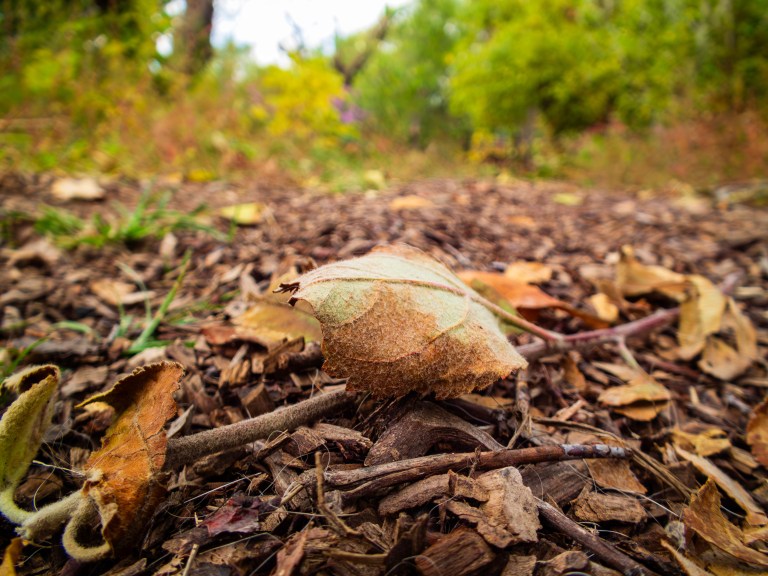
Fallen leaves and organic debris form a natural protective layer. This blanket moderates soil temperature, reduces moisture loss, and supports the slow decomposition process that feeds soil biology. That microbial activity is essential for nutrient availability when growth resumes.
Aggressively raking beds clean removes this protection. Bare soil is more vulnerable to compaction from winter rains, erosion from wind, and temperature extremes. Over time, this degrades soil structure and reduces the landscape’s ability to support vigorous spring growth.
A tidy surface can come at the cost of a weakened foundation.
Making One-Size-Fits-All Decisions
Florida landscapes are shaped by microclimates. Coastal exposure, elevation, soil composition, drainage patterns, and sun angle all influence how a yard behaves in winter. Yet many decisions are made using generalized advice or rigid calendars that ignore those variables.
What works in one yard may fail completely in another—even on the same street.
Applying blanket rules for pruning, fertilizing, or planting without considering site-specific conditions introduces unnecessary risk. In winter, when plants are already under environmental stress, those mistakes are amplified. A single mistimed action can create setbacks that take an entire growing season to correct.
Effective winter care starts with diagnosis, not assumption.
How Professionals Avoid These Winter Landscaping Mistakes
If you watch experienced landscape professionals in winter, you may notice something counterintuitive: restraint.
This isn’t neglect. It’s intentional.
Winter is used for observation rather than intervention. Professionals watch how water moves through the site, where cold settles, which areas receive winter sun, and how different plants respond to seasonal stress. They recognize organic debris as a soil asset and dormant growth as built-in protection.
Instead of reacting to visual imperfections, they wait for biological signals—consistent soil warming, stable night temperatures, and active growth. When action is taken, it’s timed to support the landscape’s natural momentum rather than fight it.
That patience is what produces reliable spring results.
Final Thoughts
Many spring landscape failures aren’t caused by neglect. They’re caused by well-meaning actions taken too early or for the wrong reasons.
By resisting the urge to overcorrect, leaving protective growth in place, preserving soil health, and making decisions based on your specific site—not a generic calendar—you align your efforts with the natural rhythms of your environment.
Often, the most effective winter landscaping choice isn’t what you do. It’s what you choose not to do yet.