Cold Damage to Plants in Tampa: Why Landscapes Decline Weeks Later
Published: Late January 2026
Tampa does not usually experience cold this way—or so it seems. Historically, cold snaps and damaging freezes have always been part of the region’s climate. NOAA historical weather data for the Tampa region, based on long-running observations at Tampa International Airport (TPA), shows repeated cold events over past decades—even if recent winters have been milder.
This winter has not been defined by a single hard freeze or a dramatic overnight low for Tampa landscapes. It has been defined by duration—multiple frost events, shortened recovery windows, and another cool period already on the forecast. That pattern matters far more than any individual temperature reading, and it explains why many landscapes appeared “fine” one week and uncertain the next.
This is not a cold-weather panic piece. It is a status check. An explanation of what this specific winter is doing to Zone 9B landscapes right now, what should not be rushed, and why the decisions made over the coming weeks will matter more than what has already happened.
Why This Winter Feels Different for Tampa Landscapes
Most Tampa winters give plants time to recover. Cold nights arrive, then warmth returns long enough for tissues to stabilize, energy reserves to rebuild, and growth systems to reset. That recovery window is what allows zone-pushing landscapes to function here most years.
This winter has not offered that margin.
Back-to-back frost events, followed by brief rebounds and another cool stretch, have created cumulative stress. Plants that would normally recover quietly never fully reset. Energy reserves decline. Root activity lags. Tissue that survived the first event becomes more vulnerable during the second or third.
This effect is most visible in landscapes designed to lean tropical. Zone-pushing succeeds in Tampa precisely because recovery time usually offsets brief cold exposure. When recovery time disappears, the margin disappears with it.
What the Forecasted Cool Weather Next Week Actually Changes
The upcoming cool period does not automatically mean new damage. In many cases, temperatures may not be low enough to cause additional injury.
What it does do is slow recovery.
Plants already stressed from earlier events remain in a holding pattern. Metabolic activity stays suppressed. Water movement remains inefficient. That delay is why some plants that appeared stable after the last frost may still decline later—even if next week never reaches freezing.
This is also the window in which well-intentioned intervention causes the most harm.
Why Cold Damage to Plants Appears Weeks After Frost or Freeze Events
It is tempting to assume that after multiple cold events, waiting no longer applies. In reality, stacked cold makes patience more important, not less.
Stacked cold makes patience more important, not less.
Early pruning removes insulation that is still providing protection. Fertilizing forces growth before vascular systems have recovered. Replacing plants before viability is clear often results in repeating the same failure under the same conditions.
Delayed decline is not evidence that nothing should have been done earlier. It is simply how plants under cumulative stress declare themselves.
For a deeper explanation of how this process unfolds in Zone 9B landscapes, see our evergreen guide: Cold Events in Zone 9B: Survival & Recovery.
What This Winter Is Quietly Revealing About Design
Extended cold periods function as stress tests. They expose assumptions that mild winters allow to persist.
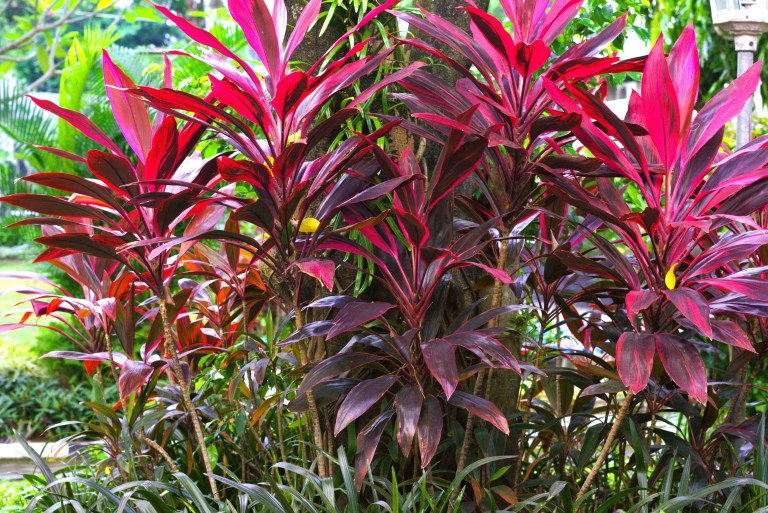
Across Tampa, the same patterns are emerging: tropical material installed without buffering layers or wind protection, cold-sensitive plants placed in radiative frost pockets, recent installations without established root mass, and repeated failures of the same species in the same microclimates.
These are not mistakes. They are design tradeoffs. Winters like this are when those tradeoffs finally become visible.
A tropical-forward landscape can still be a valid choice in Tampa. But it must be understood as managed risk, not a guaranteed outcome.
When Intervention Makes Sense (and When It Still Doesn’t)
At this stage of the season, intervention is rarely about saving foliage. It is about protecting structure and preventing compounding stress.
Targeted frost protection may still be appropriate for high-value, cold-sensitive plants if additional frost is forecasted. Broad, reactive measures typically add complexity without benefit.
In most cases, the correct response right now is observation, documentation, and restraint. The meaningful decisions—selective pruning, replacement, redesign—belong weeks ahead, not during an active cold pattern.
The Takeaway
This winter is not an anomaly so much as a reminder. Zone 9B is not stable; it oscillates. Mild winters expand the palette. Colder winters define its limits.
The goal is not to eliminate risk entirely. It is to understand it, price it, and design for it intentionally. The worst outcomes this winter will not come from the cold itself. They will come from reacting too quickly to it.
If there is uncertainty about whether to act now or wait, waiting is usually the technically safer choice.
Zone-Pushing Isn’t the Problem. Pretending It’s Free Is.
Many of the landscapes under stress this winter were not poorly conceived. They were intentionally designed to lean tropical—often successfully—for years.
Zone-pushing is a valid strategy in Tampa. It is one of the reasons the region’s landscapes are as visually compelling as they are. But zone-pushing is not a passive decision. It carries responsibility.
Zone-pushing works in Tampa precisely because recovery time usually offsets brief cold exposure. When recovery time disappears, the margin disappears with it.
Cold-sensitive plants require protection, redundancy, or a realistic replacement budget. When none of those are in place, the design is no longer intentional—it is hopeful.
This winter is exposing that distinction.
A mature tropical landscape that has thrived through a decade of mild winters is not suddenly “wrong” because it struggled this year. But it is revealing whether contingency was ever part of the plan. In Zone 9B, pushing the palette means accepting that some winters will test the limits—and that those tests require answers beyond disappointment.
Responsibility Looks Different Depending on the Strategy
There are multiple ways to push zones responsibly.
Some landscapes rely on physical buffers such as canopy cover, wind breaks, thermal mass, or microclimate shaping. Others depend on active protection during rare cold events. Still others accept periodic loss as part of the cost of maintaining a specific aesthetic.
All of those approaches can work. What does not work is treating tropical material as if it carries no downside in a marginal climate.
This winter is not invalidating tropical design in Tampa. It is reinforcing that tropical-forward landscapes are managed systems, not static installations.
A tropical-forward landscape can still be a valid choice in Tampa — but it should be understood as managed risk, not a guaranteed outcome.
When Replacement Is the Plan, It Needs to Be an Informed One
In some cases, replacement is not a failure—it is the intended response.
Replacing cold-damaged material with mature specimens restores function and appearance quickly, but it is not a neutral-cost decision. Larger material carries higher sourcing costs, greater installation complexity, and higher risk if site conditions have not been adjusted.
That option only makes sense when it is understood ahead of time—not as a surprise after a stressful winter.
At Pennate, zone-pushing is treated like any engineered system: capable of exceptional performance when its constraints are acknowledged, budgeted for, and revisited after real-world stress tests like this one.
What This Winter Should Change Going Forward
For homeowners who choose tropical-forward landscapes, this winter offers clarity—not condemnation.
It clarifies where protection mattered, where buffers helped, where assumptions held, and where they did not. It also clarifies whether the long-term plan included adaptation—or simply relied on the weather continuing to cooperate.
None of this requires abandoning tropical design in Tampa. It requires treating it with the same seriousness as any other high-performance system operating near its limits.
Frequently Asked Questions:
Q: Why does cold damage to plants appear weeks later in Tampa?
A: Most plant losses don’t occur during the cold night itself. They appear weeks later when recovery fails after cumulative cold stress.
Q: Should I prune or replace plants with cold damage immediately?
A: In most cases, no. Early pruning or replacement during stacked cold events often causes more harm than waiting for damage to fully declare.
Q: Is cold damage permanent for tropical plants in Florida?
A: Not always. Many tropical plants recover if roots and structure remain viable, but recovery depends on exposure, duration, and site conditions.