
Mature Specimen Installations
Palms, Canopy Trees, and Large Landscape Anchors — Installed Correctly
Pennate installs mature palms, canopy trees, and large landscape specimens for homeowners throughout Tampa Bay, Sarasota, and Florida’s Gulf Coast.
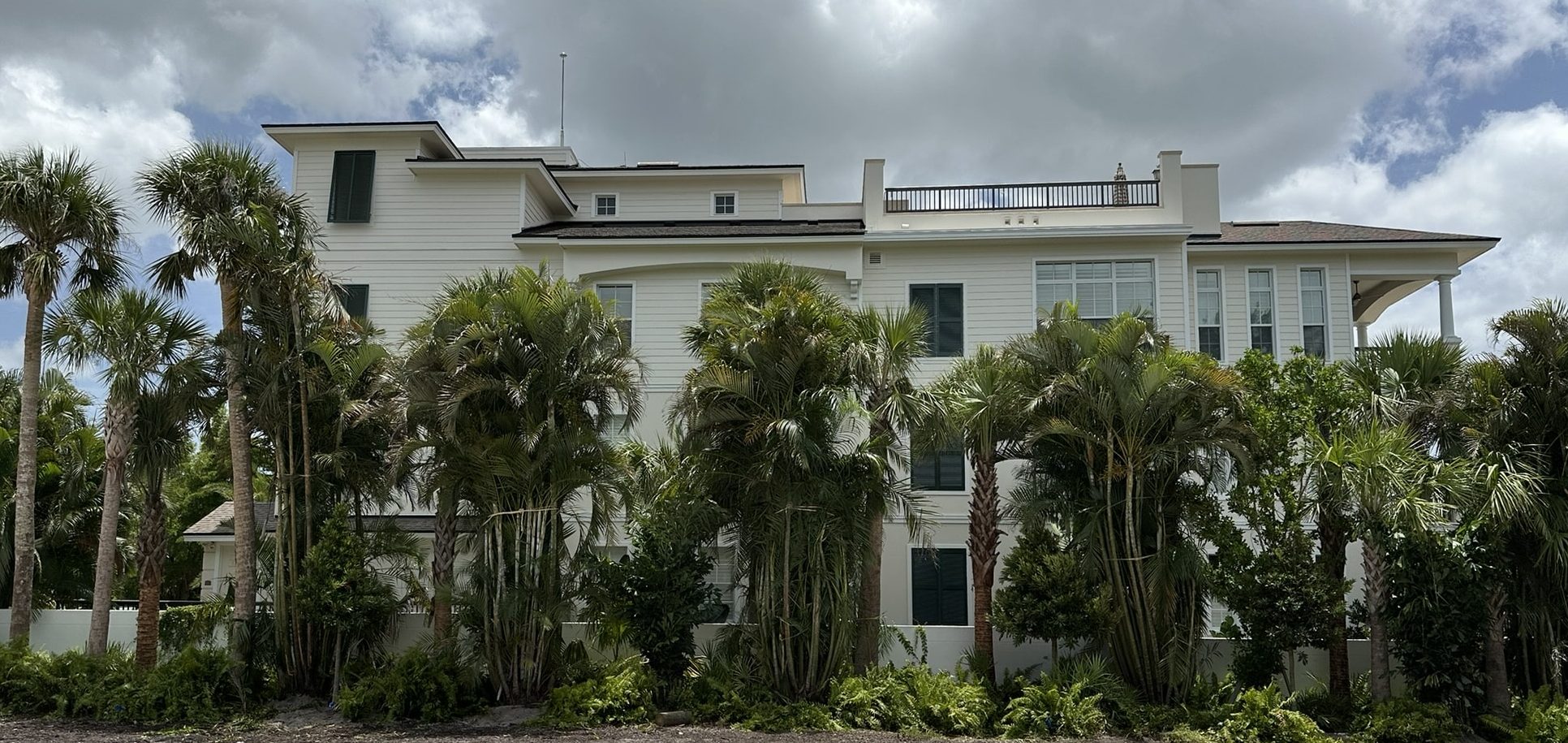
This Is Not Standard Landscaping
If you’ve ever admired the towering palms at resorts, campuses, or coastal estates and wondered whether that level of scale is possible at a private residence, the answer is yes. What’s far less common is finding a company that understands how to do it correctly — not just visually, but structurally, biologically, and logistically.
Mature specimen installations sit at the intersection of landscape design, engineering judgment, and construction logistics. It is not an extension of standard landscaping work. It is a different category entirely, and it demands a different level of planning and execution.

What We Install
Pennate regularly sources, transports, and installs mature specimens that require equipment, access planning, and on-site decision-making.
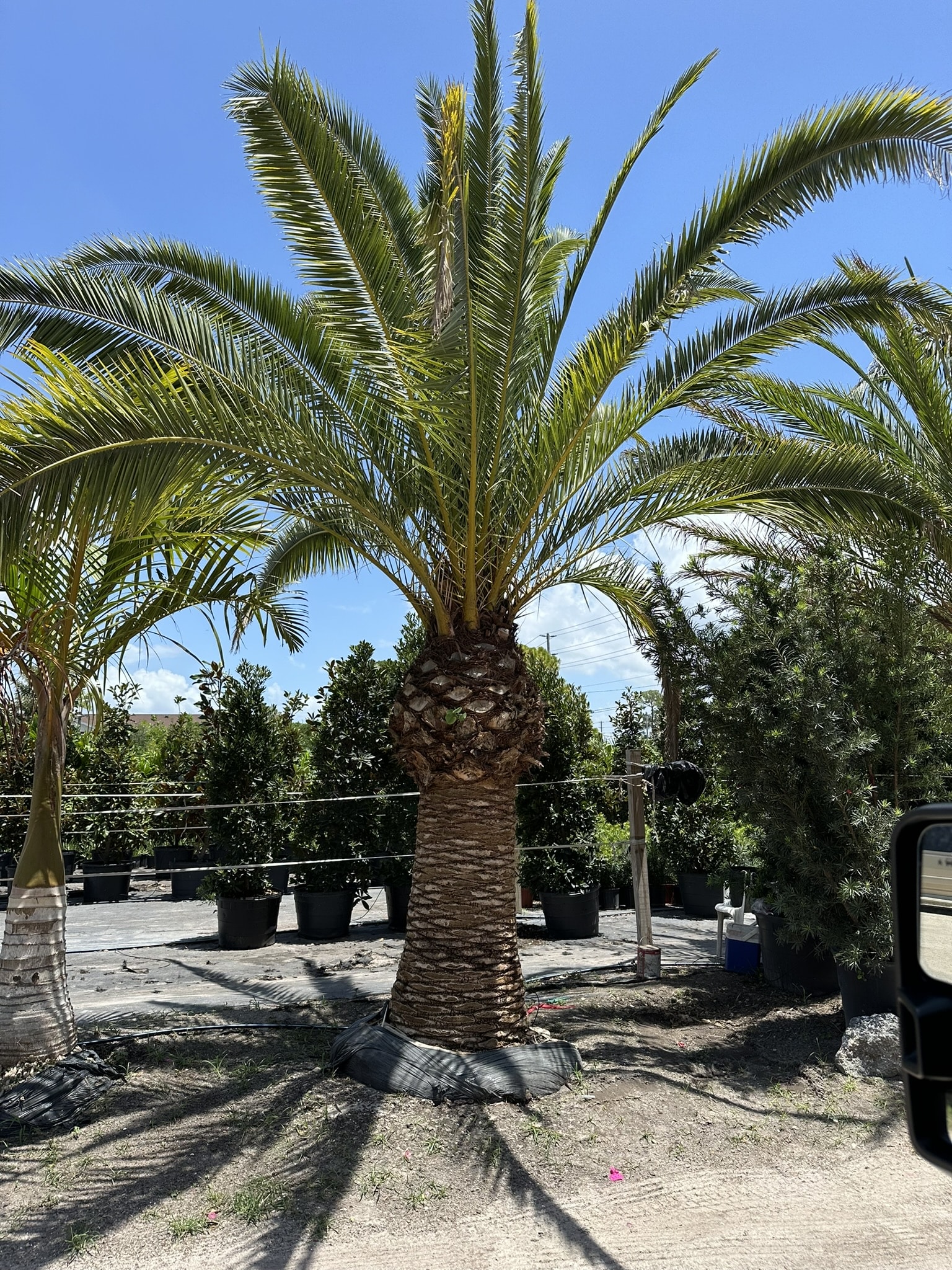
- Large date palms (Medjool, Canary Island, multi-stem pygmy clusters)
- Sylvester, Royal, and Christmas palms
- Mature live oaks and large canopy trees
- Native screening specimens (Simpson stopper, marlberry, pigeon plum, cocoplum)
- Flowering anchors where scale matters (cassia, crape myrtle)
If a specimen cannot be installed safely by hand crews alone, it belongs in this category. That threshold is where most companies stop. It’s where Pennate begins.
Why Mature Trees?
Because Waiting a Decade Isn’t a Design Strategy.
Many landscapes are designed around the idea that they will eventually fill in. Small plants go in, and time is expected to do the rest.
High-end properties operate differently.
Coastal homes, architectural renovations, and premium residences require immediate structure. They need shade where people actually use the space. They need scale that matches the architecture. They need privacy now, not after a decade of growth and correction.
A mature specimen changes the feel of a property instantly. It establishes proportion. It anchors the design. When selected and installed properly, it also performs better in wind and weather than many smaller, recently planted trees. This is not about impatience — it is about intent.
Real-World Pennate Work
Much of Pennate’s specimen experience comes from projects that leave no room for error: institutional campuses, public-facing sites, and large commercial properties where execution is visible and consequences are real. These are environments where access is tight, tolerances are narrow, and mistakes are expensive.
That same level of planning and care is applied to residential mature specimen installations. The difference is not standards — it is scale and access.
On private properties, the constraints are often greater for mature specimen installations. Equipment has to move through narrower clearances. Surfaces must be protected. Trees must be placed precisely, not just functionally. This is where experience shows up quietly, in decisions most homeowners never see but immediately benefit from.
When these installs are done well, they disappear into the landscape. When they are done poorly, the failure usually doesn’t show up right away. That delay is what makes this work unforgiving over time.


Pricing: What Homeowners Can Expect
Mature specimen isntallation pricing reflects more than the plant itself. It includes logistics, equipment, soil preparation, stabilization, and the labor required to set a living structure safely into place.
For palms, installed pricing typically ranges from $800–$2,400 for multi-stem pygmy date palms, $2,500–$6,500 for mature Sylvesters, $4,500–$18,000 or more for large Medjool date palms, $2,500–$8,500 for Royal palms, and $6,000–$25,000+ for Canary Island date palms.
Large canopy and native trees such as live oaks, Simpson stoppers, and marlberries vary widely based on size and access, with installed ranges commonly falling between $600 and $12,000+.
Equipment access matters. Telehandlers or cranes may add $450–$2,000 depending on site constraints, overhead clearance, and surface protection requirements. These costs are not add-ons for convenience; they are part of doing the work correctly.
Why Pricing Varies
At this scale, pricing isn’t about the tree — it’s about what it takes to place it correctly. Access constraints, equipment coordination, soil preparation, and stabilization all change from property to property. That’s why identical specimens can carry very different installed costs.
Regen vs. Non-Regen Palms
Why This Distinction Matters More Than Most Homeowners Realize
This is one of the most misunderstood aspects of palm installation, and it’s where many long-term failures originate.
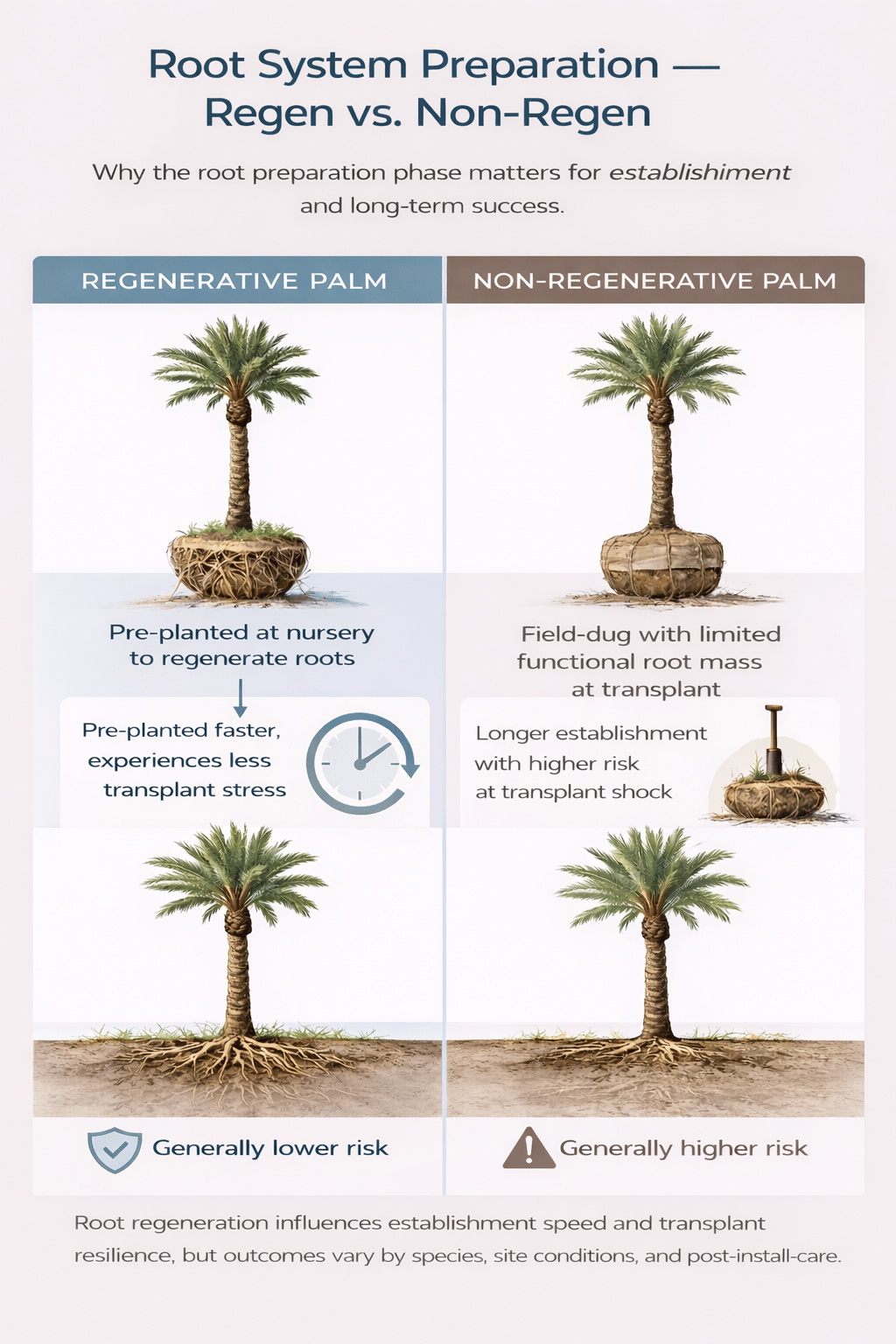
Root regeneration practices vary by species. Palms such as Sabal palmetto are naturally transplant-tolerant, while many date, royal, and feather palms benefit significantly from pre-regenerated root systems.
Regenerative palms are dug and held long enough to develop an active root system within a defined root ball. They establish faster, experience less transplant shock, and generally carry higher survival rates. They also cost more, and for good reason.
Non-regenerative palms are field-dug without a fully regenerated root mass. They can succeed, but they demand disciplined watering, careful depth control, and patience during establishment.
We spend more time on this decision than most people expect, because once the palm is in the ground, the outcome is largely set. This is not a place to chase price. It’s a place to make a clear-eyed decision based on the site, the exposure, and the expectations for the property.
Further reading: UF/IFAS Extension — Palm root regeneration and transplant behavior.
What Homeowners Should Know Before Installing a Mature Specimen
Most failures of mature specimen installations do not happen on install day. They are set up weeks earlier through access assumptions, soil shortcuts, or improper depth.
Equipment access is the first constraint. Telehandlers typically require six to nine feet of clearance. Cranes introduce overhead considerations and coordination. Tight urban yards can often still work, but only when access is planned intentionally and surfaces are protected.
Soil preparation is the next point of failure. Large specimens do not tolerate guesswork below grade. Depth, backfill composition, and compaction must be balanced carefully. Too loose and the tree moves. Too tight and the roots suffocate. This is where experience matters more than product selection.
Watering is not intuitive at this scale. Mature specimens have exponential water demand during establishment. We provide clear watering guidance and, when appropriate, integrate irrigation solutions that make long-term care manageable.
Stabilization and bracing are not aesthetic decisions. They are structural ones. Our systems reflect standards used on institutional projects because wind does not distinguish between residential and commercial sites.
Finally, size selection matters. Bigger is not always better. The right height and clear trunk should complement the architecture, not overpower it. This is a design decision as much as a technical one.
Why Pennate Is Different
Most landscaping companies approach large specimens as oversized versions of standard installs. That mindset is where problems begin. The process of mature specimen installations combines artistry and technical skill.
Pennate approaches specimen work the way engineers approach systems. We inspect at the nursery. We verify root balls. We assess trunk health and orientation. We plan placement on site before equipment arrives. We make decisions slowly where it matters, and efficiently where it doesn’t.
This approach comes from experience on projects where failure is not an option — including public gardens, corporate campuses, and high-visibility properties. That experience carries forward into residential work quietly, without spectacle.
Once you’ve seen this level of planning applied to a private property, it’s difficult to unsee the difference.
Our Service Workflow for Mature Specimen Installations
Site Review & Constraints
We evaluate access, utilities, overhead clearance, wind exposure, and soil conditions to confirm the site can support a mature specimen safely and correctly.
Specimen Selection & Verification
Each specimen is vetted at the nursery for root structure, trunk health, scale, and orientation to ensure it is suitable for the site and the intended design.
Coordinated Install & Establishment
Each specimen is vetted at the nursery for root structure, trunk health, scale, and orientation to ensure it is suitable for the site and the intended design.
This process exists to protect the investment — both the plant and the property. Understanding the process of mature specimen installations can help ensure a successful project
Ready to Bring Home a Mature Palm or Specimen Tree?
If you’re considering a mature palm or large specimen, you’re already thinking differently about your landscape. Pennate works with homeowners who value doing this once, correctly, and with intention.
Not sure if your property qualifies? Let’s evaluate it honestly. Not every property is a fit — we’ll tell you if it isn’t.
You must be logged in to post a comment.